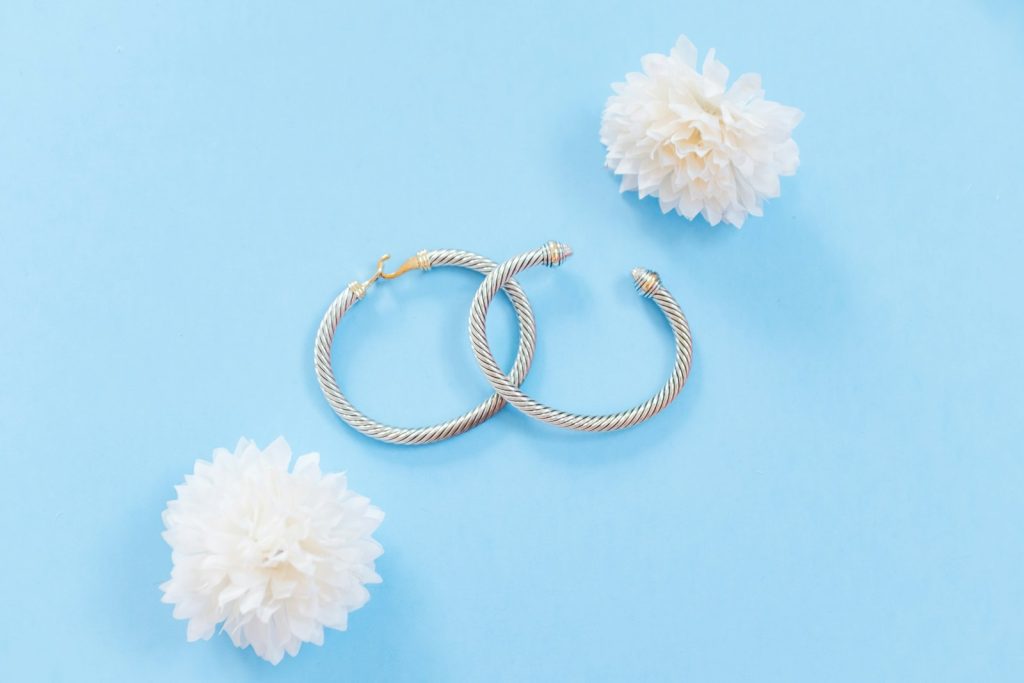
Wholesale stacking rings are thin 925 silver bands supplied in volume for brands that sell mix‑and‑match ring stacks. In practical trade terms, wholesale stacking rings are lightweight rings (typically 0.5–1.5 g/pc) optimized for high-velocity DTC, Etsy and marketplace sales, supplied in bulk with predictable sizing runs and margins.
At Celuk Silver Wholesale, this is one of the fastest-moving SKUs we handle for repeat export buyers: simple bands, micro‑granulation, braided motifs, hammered finishes and mixed-metal micro-plating built into sets.
—
What Counts as a “Stacking Ring” in 925 Wholesale?
In B2B silver, “stacking ring” is more about construction and weight than fashion language.
Core product definition
Most importers define 925 stacking rings wholesale using four basic criteria:
– Profile: Thin bands designed to be worn in multiples (often 1.0–2.0 mm band width).
– Weight: Roughly 0.50–1.50 g per ring in 925 for plain bands in common sizes.
– Design simplicity: Minimal stones or very small accents, so they layer without bulk.
– Repeatability: Stable design that can be reordered in consistent gram weights across many seasons.
Celuk’s traditional strengths—fine filigree and granulation—translate well into dainty stacking rings. Even intricate Balinese work can be kept light if the frame is a thin 925 band.
Main stacking ring types in silver
For wholesale, the common subcategories are:
– Plain micro-bands
Round or half-round bands, sometimes knife-edge. Polished or matte. Your classic “fill the stack” piece.
– Textured / hammered bands
Light hammering, brushed, sandblasted, or diamond-cut surfaces. Good for visual variety with minimal extra cost.
– Filigree and granulated rings
Balinese wirework or granules on a simple shank. Good perceived value at low silver usage if designed efficiently.
– Chevron and V rings
Simple V-shapes that frame a center ring. Very high DTC demand, especially in gold-plated variants.
– Front-accent bands
Small dots, beads, or minimal motifs on the front third of the band. The rest remains slim for stacking.
– Micro-stone or CZ accents
1–2 mm CZ or birthstone colors. Good for “premium” stack sets, but keep total stone count per ring low to protect margins and simplify QC.
—
Why Silver Stacking Rings Move Fast for DTC and Etsy Sellers
From our export desk, silver stacking rings in bulk stand out as top reorders for small and mid-sized DTC labels. The pattern is consistent across brands in North America, the EU, the UK and Australia.
1. Entry price points with healthy margins
Light 925 rings use less silver, meaning:
– Lower FOB base vs. heavy signets or gemstone settings.
– Flexibility to absorb freight, duty and marketplace fees.
– Easier to create “multi-buy” offers (e.g., 3-for bundles) without compressing margin.
Brands commonly land stacking rings into retail at:
– Single rings: “Everyday” price tiers—affordable gift/self-purchase.
– 3–5 pc sets: Higher average order value (AOV) but efficient pick/pack since SKU count is low.
Your margin will depend on your brand position, but the product mechanics support healthy markups because the perceived design value is higher than the raw silver content.
2. Simple sizing, simple returns
Stacking rings are generally:
– Narrow bands with a bit of flex in fit perception.
– Often worn across different fingers, so customers “make them work” more readily than a tight solitaire.
That tends to reduce size-related returns versus statement rings. Many DTC brands offer:
– XS–XL runs rather than strict numeric sizes (US 5–9 mapped to labels).
– “Stack packs” where small sizing variance is less of a problem because customers distribute rings across fingers.
3. Easy photography, fast content production
For marketplace sellers, content velocity matters:
– Simple bands photograph quickly with basic props.
– Rings stack nicely in a single frame for variety.
– Oxidized details show up well in macro shots.
You get more SKUs live per shooting day—which matters if you are building catalog depth fast.
4. High repeat purchase behavior
Your customer rarely stops at one. Once buyers like your:
– Band comfort
– Color (bright vs. oxidized)
– Plating durability (for vermeil / gold-look variants)
they often return to:
– Add new textures.
– Add different metals (e.g., silver base, light gold flash over selected bands).
– Replace lost or gifted rings.
From a wholesale perspective, this shows up as consistent reorders on the same base SKUs, sometimes with small design tweaks or new plating colors.
—
Weights, Band Widths and Volume Economics
In 925 wholesale stacking rings, grams and widths drive your landed cost and margin.
Below is an indicative range based on typical Celuk-style production (wire-based, not cast-heavy). Actual numbers will vary by exact design and size mix.
Typical gram weights (per ring)
For US size 7 (or equivalent mid-size):
– Ultra-thin bands (approx. 1.0 mm width): ~0.40–0.70 g
– Standard dainty bands (approx. 1.3–1.5 mm): ~0.70–1.10 g
– Textured / hammered 1.5–1.8 mm: ~0.90–1.40 g
– Filigree / mini-granulation on a thin shank: ~1.00–1.60 g
Larger ring sizes increase weight, but not linearly; a full run (US 5–9) typically averages +5–10% grams above the size 7 baseline once you include all sizes in stock.
How gram weights impact pricing tiers
Assuming standard 925 alloy and consistent finishing:
– Silver is a minor component of total cost at these low weights.
– Labor (soldering, filing, granulation), finishing and overhead are the bigger factors.
– However, shaving even 0.15–0.25 g from a design can make a visible difference to FOB at scale, especially in mixed-finish sets.
For OEM/private-label orders, we often:
– Prototype in two weight variants: a very lean version and a slightly heavier “comfort” version.
– Let the buyer compare feel vs. cost before confirming the master.
—
Mixed-Finish Sets: Bright, Oxidized and Plated
Balinese workshops are used to combining finishes across a single jewelry line. For stacking rings, this gives you a cost-effective way to create variety without new base molds.
1. Bright-polished 925
– Highest mirror shine.
– Pairs well with plain micro-bands and minimalist aesthetics.
– Shows scratches faster in daily wear, but also easiest for end customers to re-polish.
2. Intentional Balinese oxidation
Oxidized stacking rings use liver-of-sulfur or equivalent to darken recesses:
– Highlights granulation, filigree and line patterns.
– Hides light surface wear better than bright-only finishes.
– Important: This is an intentional design choice, not a defect. Dark recesses with bright high points are normal for Balinese work.
Buyers should distinguish:
– Controlled oxidation in grooves and textures (design feature).
– Patchy, uneven, or rainbow-colored surface issues (potential QC or process problem).
Our QC parameters treat oxidation as acceptable only where shown on the approved master sample or agreed finish swatch.
3. E-coat anti-tarnish layers
To slow tarnish, many stacking ring programs use:
– Clear e-coating (lacquer): Microscopic layer applied over 925.
– Sometimes combined with anti-tarnish dips pre-coat.
Pros:
– Keeps bright silver visually consistent during transit and early shelf life.
– Helps DTC brands reduce “it tarnished in two weeks” messages.
Trade-offs:
– Very heavy e-coat can slightly “soften” sharp edges and ultra-fine textures.
– E-coat is not permanent; heavy ring wear will eventually break it down.
For stacking rings, we typically recommend light, even e-coat on bright-only pieces and careful masking on heavily oxidized designs.
4. Rhodium and gold-flash options
Some buyers layer higher-end finishes on top of 925:
– Rhodium flash: Bright, white finish, higher perceived value, better initial tarnish resistance.
– Adds cost.
– Good for plain or lightly textured bands.
– Gold flash / light vermeil programs: Thin gold over 925.
– Popular in mixed stacks (e.g., 2x silver, 1x gold-look).
– Requires clear marketing claims on micron thickness in your market to meet local regulations.
For private-label work, we lock-in:
– Micron thickness tolerance.
– Color reference (e.g., 14K tone vs 18K tone).
– Expected wear behavior disclosures so you can set correct product copy expectations.
—
Sizing Runs, Curves and Inventory Planning
Rings are inventory-intensive. Stacking programs are no exception, but they are more forgiving.
Standard sizing runs we see reordered
Most export buyers use one of three strategies:
1. US 5–9 (core women’s run)
– Size 7 or 6.5/7 typically highest unit volume.
– Good starting point for Etsy and Shopify brands.
2. US 4–10 (extended)
– Adds long-tail sizes for inclusivity.
– Good for established DTC brands with data on their customer curve.
3. Alpha sizing (XS–XL)
– Ring sets labeled S/M/L etc., internally mapped to numeric sizes.
– Reduces complexity in product listing and customer support.
Size curve recommendations
Your exact curve should be validated with your own sales data, but common wholesale opening orders might look like:
– For a single design, US 5–9:
5: 10%
6: 20%
7: 30%
8: 25%
9: 15%
– For set packs labeled S/M/L:
– S pack: US 5/6/7
– M pack: US 6/7/8
– L pack: US 7/8/9
You can also treat stacking rings as “multi-finger jewelry”: sets containing different sizes (e.g., 5, 7, 9) intended for midi, standard and index wear in one SKU.
OEM imprinting and logo placement
On very thin stacking rings, logo application must be done carefully:
– Too large a stamp weakens the shank.
– Poorly positioned stamp can warp the ring or disturb the inner comfort surface.
Typical practice:
– 925 mark on the inner shank (as small and clear as compliance allows).
– Brand logo only if the inner width can safely accommodate it.
– On ultra-thin bands, some brands skip the logo stamp and brand via packaging instead.
Our QC checks ensure:
– Hallmark legibility under magnification.
– No cracking or deformation around stamps.
—
Indicative FOB Bands, MOQs and Incoterms
We do not publish fixed prices. Silver, labor and FX move. However, we can outline typical structures that importers use when sourcing 925 stacking rings wholesale from Bali or similar hubs.
All ranges below are indicative only and should be cross-checked via a current quotation. Assume “last verified June 2026” and ex-works/FOB Southeast Asia for reference.
MOQ patterns for silver stacking rings bulk
– Ready designs (supplier’s catalog):
– MOQs per size often start around 30–60 pcs per design per size.
– Total per design (all sizes) can land in the 150–300 pcs range.
– OEM tweaks (existing design with minor adjustments):
– Slightly higher MOQ: expect 200–500 pcs per design across all sizes.
– Full custom/private-label designs (new master, new tooling):
– MOQs typically 500–1,000 pcs per design, especially if you specify custom plating or multi-finish variants.
For multi-ring sets (e.g., 3-ring packs), MOQ complexity increases as you must balance:
– Total units per size combo.
– Individual ring production quantities if designs are shared across sets.
Indicative FOB price bands
Actual FOB depends on:
– Design complexity and grams.
– Finish (bright vs oxidized vs rhodium vs gold flash).
– Order volume and assortment.
For basic benchmarking:
– Plain bright-polished micro-bands (no stones, light weight):
– Lower price band.
– Hammered/textured bands without stones:
– Slightly above plain bands due to finishing steps.
– Filigree / granulation with oxidation:
– More labor, sits higher than plain/textured.
– Rhodium- or gold-flash over 925:
– Incremental cost over corresponding non-plated version.
Use these bands to sanity-check quotes between suppliers. If one quote is far below typical ranges:
– Verify silver content (ask for random assay results or spot-check via an external lab).
– Check finishing steps and coatings.
– Confirm 925 stamping and actual alloy used.
Incoterms: FOB vs EXW vs CIF
For most stacking ring buyers:
– FOB port of loading is a practical middle ground.
– Supplier handles inland freight and export clearance.
– You or your forwarder take over from port.
– EXW (Ex-works) gives you maximum control but more admin; feasible if you have local consolidation.
– CIF/CFR can be convenient if your volumes are large enough and you want “one number” including sea freight, but you should still check underlying freight quotes.
We recommend you:
– Obtain at least two freight quotes via your own forwarder to benchmark supplier-arranged CIF offers.
– Confirm packing list weights vs. invoice weights and 925 grams declared, to avoid customs queries.
If you need help scoping landed cost scenarios, you can request a wholesale quote to Celuk or set up a WhatsApp call for direct trade-desk style planning.
—
Quality Control for 925 Stacking Rings
High-velocity SKUs amplify small QC issues. DTC brands cannot afford a flood of “ring bent in a week” or “turned my finger green” reviews.
925 content and hallmarking
Base requirements we recommend importers enforce:
– Alloy: Minimum 92.5% silver content, with the balance typically copper and small modifiers.
– Marking:
– Clear “925” or local-assay mark, placed so as not to weaken the band.
– For ultra-thin bands, some buyers accept micro-marks or focus on batch assay certification instead.
We encourage periodic independent assay (e.g., sending random samples to a 3rd-party lab) especially on new supplier relationships or very low-priced offers.
Finishing consistency: bright vs oxidized
QC should differentiate intentional oxidation from:
– Polishing residue.
– Contamination.
– Uneven e-coat.
For Balinese-style stacking rings, our QC sheets typically include:
– Reference photos of “acceptable oxidation range” on the master sample.
– Checks for:
– No oxidation on areas designated as fully bright.
– Even darkness in recesses; no streaking or random spotting.
Plating and e-coat thickness
For rhodium and gold-tone stacking rings:
– Confirm plating micron targets and ranges in writing.
– Use salt-spray tests or simple wear tests on pilot batches if your brand promises longevity claims.
For clear e-coat:
– Visual checks under magnification for bubbles, runs or pooling.
– Adhesion test on pilot batches (light bend or tape tests where appropriate).
Mechanical strength on thin bands
Dainty stacking rings are by definition slim, but they must survive:
– Basic bending during sizing try-on.
– Everyday hand use and light knocks.
QC will:
– Check solder joints under magnification.
– Sample-bend a small number of rings within an agreed angle to check for cracking.
– Reject rings with visible pits or file marks that create weak points.
We encourage importers to specify a minimum acceptable resistance to deformation, understanding that no thin ring is indestructible, but obvious “malleable like wire” pieces are not acceptable at scale.
—
Working With a Dainty Stacking Rings Supplier in Celuk
Celuk village near Ubud, Bali, is a long-standing 925 production cluster. The strengths for stacking rings are:
– Skilled wireworkers for filigree and granulation.
– Familiarity with oxidized finishes.
– Flexible small and mid-size batch production.
Advantages of Celuk for stacking rings
– Wire-based expertise:
– Ideal for ultra-fine bands and intricate looking, low-weight designs.
– Design language:
– Balinese motifs can be toned up or down. Many DTC brands start with very subtle ethnic cues: small granules, simple braids, minimal scrolls.
– Flexible OEM capacity:
– Easy to start from a supplier’s catalog and gradually shift into custom private-label patterns as you see what sells.
What to verify yourself
As an importer, you should still:
– Request dimensioned technical drawings or annotated photos with:
– Band width.
– Approximate weight per size.
– Finish description (e.g., bright/oxidized + e-coat/rhodium).
– Ask for:
– Physical master samples before committing bulk.
– Evidence of prior export shipments, especially if you need specific documentation for your customs.
– Verify third-party reports:
– If a supplier mentions lab tests or certifications, ask to see the actual PDFs, expiry dates, and which entity is named.
Our desk can coordinate these verifications for Celuk-origin goods, but the final responsibility to comply with your jurisdiction’s regulations remains with you.
—
Sample Product Structures and Comparison
To help you frame your range planning, here’s a simplified comparison of three typical stacking ring categories many buyers run side by side.
| Category | Example Band Width | Approx. Weight (US 7) | Finish Options | Perceived Value to Customer | Typical Use in Range |
|---|---|---|---|---|---|
| Plain Micro-Band | 1.0–1.2 mm | 0.4–0.7 g | Bright, light e-coat, optional rhodium | Entry price, minimalist | Volume filler; multi-buy offers |
| Hammered/Textured Band | 1.3–1.8 mm | 0.9–1.4 g | Bright or light oxidation, optional e-coat | More “artisanal”, visible texture | Core hero SKU in stack photos |
| Filigree/Granulation Band | 1.5–2.0 mm visible pattern | 1.0–1.6 g | Oxidized recesses, bright highlights | High perceived craftsmanship | Higher ticket items, gifting focus |
Use a matrix like this to decide:
– How many SKUs you want in each category.
– Which should be offered as singles vs 3- or 5-piece sets.
– Where to anchor your “entry price” vs “premium” offers.
—
Building a 925 Stacking Rings Program With Celuk Silver Wholesale
Celuk Silver Wholesale acts as an independent sourcing and export desk for 925 production in Celuk and surrounding workshops. For stacking rings, we typically support buyers in three phases:
1. Spec and sampling
– Align on:
– Target band widths and weights.
– Finish stack (bright/oxidized/e-coat/rhodium/gold-flash).
– Size runs and preliminary curves.
– Arrange:
– Shortlist of existing designs (for fast onboarding).
– OEM tweaks or new masters where required.
– Produce:
– Marked master samples with agreed finish references and QC notes.
2. First production and QC
– Coordinate MOQs across sizes to avoid over-weighting slow movers.
– Implement QC based on:
– 925 content and hallmarking.
– Finish consistency (especially oxidation).
– Basic mechanical strength checks.
– Prepare export documentation:
– Packing lists reflecting actual grams and unit counts.
– HS codes aligned with your broker’s needs.
3. Scale-up and reorders
– Review sell-through data with you (if shared) to:
– Adjust size curves.
– Promote certain designs into evergreen status.
– Retire slow movers and replace with new textures or mixed finishes.
If you want to map a stacking ring range to your brand positioning, you can request a wholesale quote to Celuk or arrange a WhatsApp session for line-building and QC scoping before you commit tooling budgets.
—
FAQs: Wholesale Silver Stacking Rings
What is a realistic MOQ for 925 stacking rings wholesale?
For existing catalog designs, many Celuk workshops start around 30–60 pcs per size per design, often totalling 150–300 pcs per design across a basic size run. OEM or fully custom designs usually sit higher, around 500–1,000 pcs per design depending on complexity and plating. Always confirm current MOQs with the supplier or through us, as they can change with capacity and material markets.
How do I check that my silver stacking rings are genuine 925?
First, confirm that each ring is stamped (typically “925”) in a sensible location on the inner shank. Second, request documentation of alloy composition or prior assay results from the supplier. For higher confidence, periodically send random samples to an independent testing lab. Simple consumer tests (magnets, home acids) are not sufficient for serious import programs.
Do oxidized Balinese stacking rings tarnish faster?
Controlled oxidation is an intentional darkening of recessed areas; it is different from uncontrolled tarnish. Properly oxidized rings with light e-coat or stable surface treatment do not inherently tarnish faster. However, like all 925, exposed bright surfaces can still dull over time, especially in contact with sweat, cosmetics and chemicals. Clear aftercare instructions in your product pages help manage customer expectations.
Can very thin stacking rings be hallmarked without weakening them?
Yes, within limits. On ultra-thin bands, the hallmark must be small, clean and positioned on the widest feasible section of the shank. Over-stamping can distort or weaken the ring. Some brands choose to prioritize structural integrity and rely on batch documentation and outer packaging for branding rather than forcing a large logo stamp onto a very slim ring.
How should I decide my size curve for silver stacking rings in bulk?
Start from your key markets’ common sizes; for many women’s DTC brands this is US 5–9 with a peak around 6–7. Allocate the highest percentage of units to your core middle sizes and fewer to the extremes. After your first or second reorder, refine the curve using your own sales data by design and by channel. If you sell multi-size sets, you can also use XS–XL groupings to simplify stock while you learn your customer’s preferences.