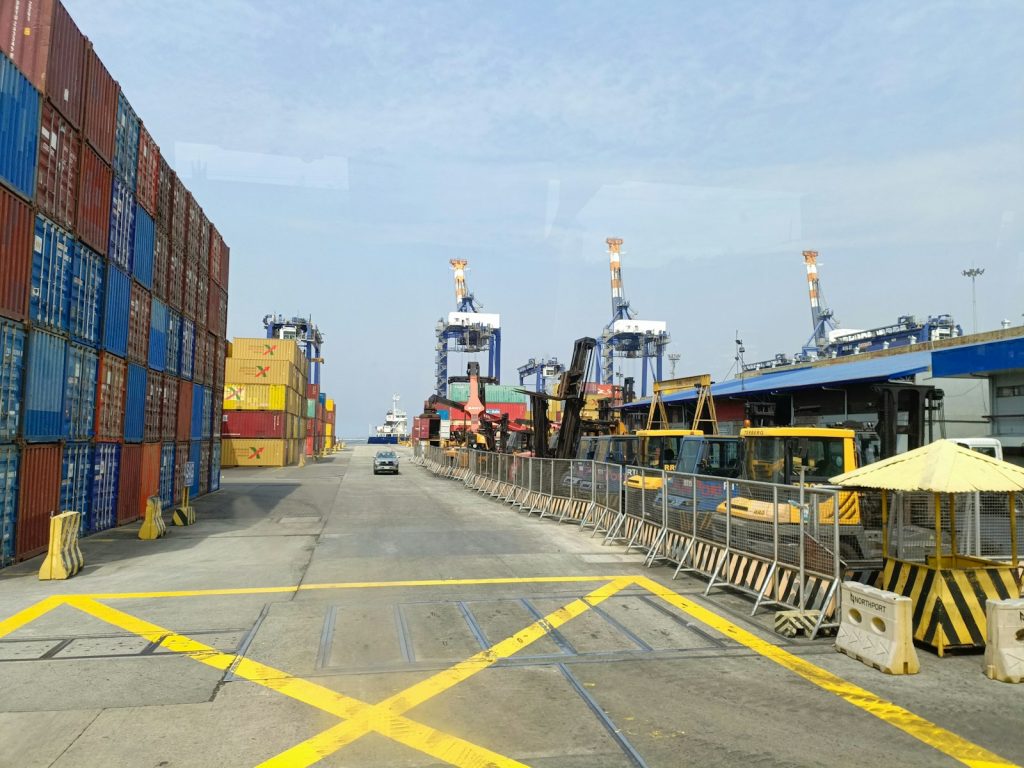
FOB vs CIF jewelry is about who pays and who carries the risk between your factory and your country: FOB puts main transport and risk on the buyer after export; CIF includes ocean freight and insurance paid by the seller. For small, high‑value sterling‑silver jewelry shipments, choosing the wrong Incoterm usually costs more in delays and confusion than in freight dollars.
EXW, FOB, CIF Basics for Jewelry Imports
Quick definitions
EXW (Ex Works) – Seller makes the goods available at their premises. Buyer arranges and pays for everything from factory pickup onwards, including export customs.
FOB (Free on Board) – Seller clears export and loads goods onto the international carrier nominated by the buyer. Risk and cost transfer once the goods are handed to that carrier (airport or seaport).
CIF (Cost, Insurance and Freight) – Seller pays for main carriage and minimum cargo insurance to the destination port named in the contract. Risk still passes to the buyer once goods are loaded with the first carrier; cost responsibility changes later than risk.
For incoterms jewelry import decisions, these three cover 90%+ of real jewelry cases: courier shipments, postal, air freight, small LCL ocean. DAP and DDP exist, but for regulated products like 925 silver jewelry they come with serious compliance caveats, which we will unpack below.
Why Incoterms Matter More for Jewelry Than for T‑Shirts
High value per kilo, small cartons
Sterling-silver orders are often 3–60 kg shipment weight with very high FOB value per kilo. One small carton can hold tens of thousands of dollars in rings, chains and findings. That means:
- Insurance, packing and sealing matter more than the carton size suggests.
- Misunderstanding who carries risk at each leg can get expensive very fast.
HS 7113 compliance and document quality
Most finished silver jewelry moves under HS heading 7113 (e.g. 7113.11 / 7113.19, exact subheading depends on your country’s tariff schedule and product detail). For this chapter, customs officers are more alert to:
- Under‑valuation vs daily silver-spot benchmarks.
- Hallmarking / fineness declarations (e.g. “925 sterling silver”).
- Origin declarations and any free‑trade or preference claims.
Incoterms do not change duty rates or tax, but they influence who is legally the importer of record and who is responsible for classification and valuation. That is where EXW, FOB, CIF, DAP, DDP start to diverge in risk.
Always confirm your HS 7113 subheading and duty/VAT with your own customs broker in your country. No blog (including this one) can replace local tariff advice.
EXW / FOB / CIF Explained in Detail for Silver Jewelry
EXW – Good for heavyweight buyers with their own local office
What EXW means in practice for jewelry:
- Your forwarder or courier picks up cartons directly at the workshop or consolidator.
- Your side (or your appointed agent) handles export customs clearance and any export licenses or declarations.
- Risk transfers when the goods are made available at the seller’s premises.
Pros:
- Full control over logistics and chosen carriers.
- Cleaner cost comparison across suppliers: silver cost + labor only, logistics fully your side.
Cons for smaller importers:
- Export clearance complexity: many micro‑workshops are not set up for EXW‑style third‑party export paperwork.
- Higher coordination overhead: pickup booking, airway bill, export docs all on your desk.
Who EXW usually fits: trading companies or brands with an office or long‑standing consolidator in Indonesia that already operates an export license and can legally appear as exporter of record.
FOB – The default choice for most wholesale jewelry buyers
FOB is the most common answer to “EXW FOB CIF explained in one sentence” for jewelry: the seller brings the shipment through export and up to the airline or vessel, then the buyer takes over.
For high‑value, low‑volume jewelry, FOB tends to give the cleanest split of responsibility:
- Seller: packing, local trucking to airport/seaport, export documents, export customs clearance.
- Buyer: main carriage (air/ocean/courier), insurance if wanted, import customs clearance, duty/VAT, local delivery.
FOB Denpasar meaning in this context: for air freight ex‑Bali, people loosely say “FOB Denpasar” to mean the seller hands over goods to your nominated carrier at DPS airport with export clearance done. Incoterms 2020 technically use FOB for sea/inland waterway, and FCA for air, but in trade conversations “FOB airport” is still common. The commercial risk split is the same: seller until handover at the airport, buyer afterwards.
Why FOB works well for silver jewelry:
- Suppliers in established export hubs are already used to clearing HS 7113 and preparing commercial invoices and packing lists with correct metal descriptions and weights.
- Buyers keep control over transit time vs cost by choosing carrier and service level (express vs regular air, LCL vs FCL).
- Risk handover is clear: once the carton is scanned into the carrier’s system, it is on your side.
CIF – More inclusive on paper, less control in practice
CIF means the seller arranges and pays for main carriage and a basic level of insurance all the way to the destination port named in the contract (typically an ocean freight term).
In jewelry trade, CIF is less common for three reasons:
- Most jewelry travels by air or courier, not by full-conainer sea freight.
- Small shipments often use integrators (DHL/UPS/FedEx etc.) with their own integrated insurance options, so CIF adds less value.
- Buyers lose price visibility: freight and insurance are embedded in the unit cost, making supplier‑to‑supplier comparison harder.
CIF in practice for silver jewelry:
- Seller chooses the carrier and service level, often optimizing for their own network, not necessarily your preferred transit time.
- You still handle import customs clearance and local delivery from the destination port/airport.
- Insurance cover is usually the minimum required (e.g. 110% of invoice value under Institute Cargo Clauses C type coverage). Many jewelry buyers prefer to arrange stronger coverage themselves.
CIF can be useful if you are starting out and want a single landed‑to‑port price, but expect to move to FOB once your volumes and logistics comfort level increase.
Risk & Cost Allocation – Side‑by‑Side Comparison
The table below summarises the main responsibilities for EXW, FOB and CIF for a typical finished 925 silver jewelry shipment (rings and chains, HS 7113). “Seller” means your factory or export desk; “Buyer” means you or your appointed forwarder.
| Step | EXW | FOB (or FCA airport) | CIF (typically ocean) |
|---|---|---|---|
| Packing & carton prep | Seller | Seller | Seller |
| Loading at seller’s premises | Buyer | Seller | Seller |
| Local transport to airport/port | Buyer | Seller | Seller |
| Export customs clearance | Buyer | Seller | Seller |
| Risk transfer point | At seller’s door | When handed to first carrier | When loaded with first carrier |
| Main international freight cost | Buyer | Buyer | Seller |
| Cargo insurance cost | Buyer | Buyer | Seller (minimum cover) |
| Import customs clearance | Buyer | Buyer | Buyer |
| Duties, VAT, local taxes | Buyer | Buyer | Buyer |
| Final delivery to your warehouse | Buyer | Buyer | Buyer |
Key point: Incoterms define cost and risk, not ownership or payment terms. You can pay 30/70 T/T or L/C on any of these; that is a separate negotiation.
Courier vs Freight for Jewelry: Does Incoterm Change?
Express courier (DHL, UPS, FedEx, etc.)
For cartons up to around 50–70 kg chargeable weight, many silver jewelry importers use express couriers integrated door‑to‑door. The Incoterm still matters, but operationally it looks like this:
- FOB / FCA airport:
- Seller prepares the cartons, export docs, and hands over to your courier account at pickup or at the courier’s airport hub.
- From that point your account is charged for international shipping and any ancillary fees.
- CPT/CIP or DAP by express:
- Seller ships using their own courier account and invoices you freight as a line item or embeds it into unit cost.
- Risk transfer depends on chosen term (not just the label “courier”).
For small parcels, the difference between FOB and CIF on a cost basis can be minor, but the difference in control and transparency is large.
Air freight (consolidated) and ocean LCL
For 70 kg+ or repetitive shipments, many buyers move to:
- Air freight consolidations (airport–airport, then local handling + delivery).
- Ocean LCL if volume and lead times justify it.
Here, Incoterms drive negotiation more clearly. FOB or FCA is normally cleaner than CIF for air shipments: you appoint the forwarder, and your supplier handles export only.
If you want to map your current or planned order pattern to an appropriate term and mode, you can request a wholesale quote with our desk via email or WhatsApp; we can walk you through EXW/FOB/CIF impacts on your specific HS 7113 lines and carton weights.
DAP and DDP for Jewelry: Why to Be Careful
DAP – Delivered at Place
DAP means the seller arranges and pays for transportation all the way to a named place in your country (e.g. your warehouse or a local depot), with risk transferring when the goods are ready for unloading. Import duties and taxes remain your responsibility.
Pros:
- One‑line freight quote to your door.
- Useful if you do not yet have a broker relationship and need a temporary stop‑gap.
Cons for silver jewelry:
- You can lose visibility on the breakdown between product cost and freight.
- You still need to coordinate duty/tax payment and may get limited say in the customs broker used.
DDP – Delivered Duty Paid
DDP looks attractive: seller appears to “handle everything,” including duties and taxes. For jewelry (HS 7113) this is where red flags start.
Risks of DDP for jewelry:
- In many jurisdictions, only a local entity can act as importer of record. Your overseas seller may use third‑party importers with their own compliance and margin structures.
- Lack of direct relationship with the customs broker handling your classification, valuation and any audits.
- Difficulty reconciling declared value vs your actual purchase price, which can matter later for audits or resale tax calculations.
For high‑value, regulated categories like jewelry, most professional importers prefer to control their own customs entries via FOB/FCA/CIF plus a domestic broker, and avoid DDP except in tightly controlled pilot cases.
Always confirm with your customs broker:
Which Incoterms they are comfortable supporting for HS 7113 imports in your country, and whether there are any local restrictions on non‑resident importers engaging in DDP or similar structures.
Silver‑Spot Pricing, FOB Value and Insurance
How FOB value is typically composed
For 925 sterling-silver jewelry, FOB value often breaks down into:
- Metal content: net gram weight of 92.5% silver per piece × agreed silver rate (usually benchmarked against recent spot, last verified June 2026, plus a fabrication margin).
- Labor and design: casting, hand-making, stone setting, polishing, QC.
- Overheads and margin: workshop overhead, admin, profit.
- Packing and export handling: boxes, polybags, barcoding if any, export admin, local delivery to airport.
Under EXW you may see the last component broken out differently, but the key for FOB vs CIF jewelry comparisons is separating product value from logistics. That clarity helps in two places:
- Customs valuation: many customs authorities want clear FOB breakdown to compare against silver-spot and labor ranges.
- Insurance: typical cargo policies are calculated on CIF or CIP value (FOB value + freight + 10%).
Duty and tax on jewelry: check locally
Import duty and VAT/GST on HS 7113 jewelry vary by country and by any trade agreements. Some markets differentiate between plain silver, silver with base metal, and silver set with stones.
You must confirm:
- Correct HS 7113 subheading in your local tariff.
- Applicable MFN duty rate and any preferential rate (if origin documentation allows).
- Whether your customs calculates duty on FOB, CIF, or CIF+local charges.
Your Incoterm should be chosen around these rules, not in hope of avoiding them; customs will re‑compute CIF‑style values as needed.
Practical Scenarios: Which Term Makes Sense?
Scenario 1 – First test order, 10–20 kg via courier
Profile: new importer, mixed SKUs, modest first order. You want predictability and to test a supplier.
Typical approach:
- Negotiate FOB airport pricing with clear breakdown of silver grams and labor.
- Use your own courier account or a forwarder with jewelry experience.
- Ask your customs broker up front for HS 7113 duty/VAT and any license or hallmarking requirements.
CIF or DAP through a courier account can also work, but FOB keeps responsibilities cleaner as you scale.
Scenario 2 – Repetitive collections, 50–200 kg per shipment
Profile: established brand, regular seasonal launches, consistent SKUs and QC framework.
Typical approach:
- Standardise suppliers on FOB Denpasar (air) or FOB named port if experimenting with LCL sea freight.
- Run all shipments through your house forwarder with a negotiated rate sheet.
- Maintain your own open cargo insurance policy covering jewelry, with clauses tailored to high‑value, small‑parcel risk.
EXW is an option once you have a consolidation warehouse and export entity in the sourcing country; CIF is rarely needed at this scale for jewelry.
Scenario 3 – OEM / private‑label with multi‑country sourcing
Profile: you buy from several countries and want consistent landed cost modeling.
Typical approach:
- Use FOB/FCA as a global standard; ask every supplier to quote in FOB terms regardless of origin.
- Centralize freight purchasing and insurance per region.
- Work with your broker to standardise HS 7113 subheadings and valuation methodology across suppliers.
This lets you compare Bali silver vs other origins on a like‑for‑like FOB basis without logistics noise.
Choosing Your Incoterm: A Simple Checklist
Questions to ask before you decide
- Who is better placed to handle export customs for HS 7113 – you (via a local entity) or your supplier?
- Do you already have a freight partner and cargo insurance that understands jewelry risk?
- How important is direct control over carrier choice and routing for your business model?
- Does your customs broker have any preference or restriction for importer of record structures?
- Is this a one‑off sample or the start of a repeating lane you want to standardise?
Rule of thumb many importers settle on: start with FOB (or FCA airport) for most HS 7113 silver jewelry shipments, test CIF or DAP only when you have a specific reason, and tread carefully around DDP.
If you want to discuss Incoterm implications for a specific SKU mix, order weight and destination, you can request a wholesale quote with our trade desk. We usually begin with WhatsApp or email, then map your options carrier‑by‑carrier before you place a PO.
FAQs: Incoterms for Silver Jewelry Imports
Is FOB cheaper than CIF for jewelry?
Not automatically. FOB vs CIF jewelry cost comparisons depend on how competitive your own freight rates are versus your supplier’s, and what insurance level you choose. FOB simply makes the split visible: you see product and export cost from the supplier, and you see freight and insurance from your forwarder. That clarity is usually more important than a small freight difference.
Can I use FOB for courier shipments, or is it only for sea freight?
Incoterms 2020 technically recommend FCA for air and courier, and FOB for sea. In jewelry practice, many contracts and emails still say “FOB Denpasar” even when the shipment flies courier. Legally, you can use FCA with the named airport or courier facility while following the same cost/risk logic: seller handles export and handover, buyer handles everything after.
Who is responsible for HS 7113 classification under FOB?
Under FOB, the exporter (seller) is normally responsible for accurate export declarations in the origin country, and the importer (buyer or their broker) is responsible for import classification at destination. They should align on product descriptions, silver fineness (925), and basic category (rings, chains, etc.), but your customs broker has the final say for your country. Always confirm classification locally.
Does choosing CIF change my duty or VAT rate?
No. Incoterms do not change tariff rates. Your customs authority may calculate duty on a CIF‑style value whether you buy on EXW, FOB or CIF, but the percentage duty and VAT rates come from your tariff schedule. Confirm with your broker which charges your country folds into the customs value (e.g. freight, insurance, certain local costs).
Is DDP a good idea for small jewelry orders?
DDP can seem convenient for small test orders because it hides complexity, but you lose visibility and control over classification, declared value and importer of record arrangements. For regulated, high‑value items like HS 7113 silver jewelry, many importers and brokers prefer FOB or FCA plus a local broker. If you are considering DDP, discuss the structure with your customs broker first to understand any compliance risk.