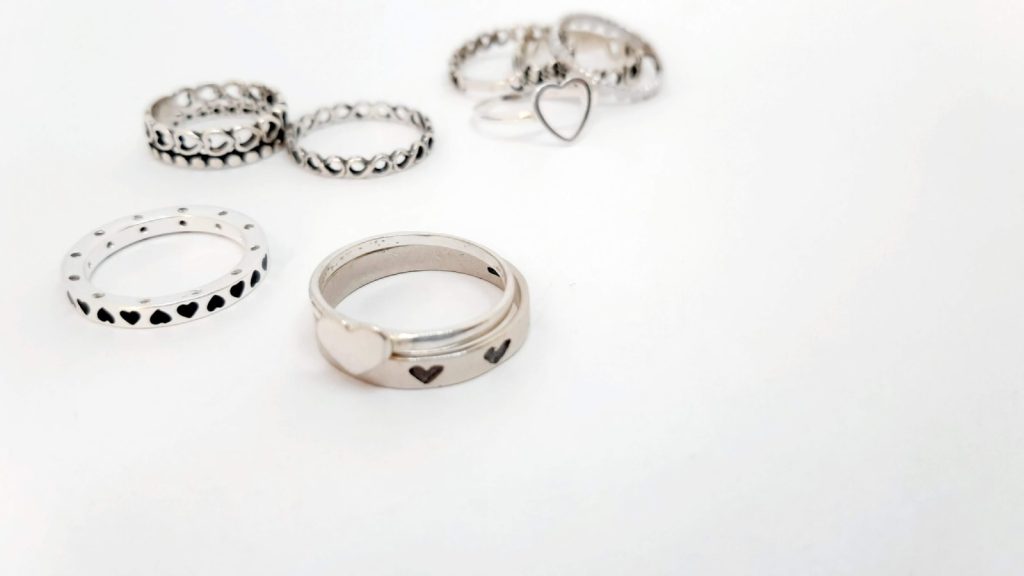
Wholesale silver rings are bulk 925 sterling rings purchased by gram weight and design, usually on FOB terms with defined MOQs and sizing runs. On this page, we explain how wholesale silver rings are specified, priced, quality-checked and exported from Bali, so trade buyers can compare offers ring‑to‑ring instead of guessing from photos.
Celuk Silver Wholesale: Independent 925 Ring Desk in Bali
Celuk Silver Wholesale is a sourcing and export desk based near the Celuk silversmithing cluster in Bali. We are not a single workshop; we work with a short list of audited Balinese 925 ring producers and finishing houses, and we sit in the middle as your bulk silver rings supplier and QC filter.
Our focus is 925 silver rings wholesale: OEM and private-label programs for importers, retailers and brands that need consistent gram weights, stable finishing and predictable export documentation. We consolidate production, run independent quality checks, and ship under agreed Incoterms from Indonesia.
On this page you’ll find:
- Types of rings available (band, signet, gemstone, stacking, Balinese motif and more)
- How sizing, gram weight and design affect your landed cost
- FOB Denpasar price bands (indicative, spot-linked; last verified June 2026)
- Finishing choices: bright polish, oxidized, e‑coating, rhodium
- What handmade variation to expect and where our QC actually adds value
If you already have a spec sheet or reference samples, you can share them and we’ll map them to feasible Celuk production routes. If you are still designing your 925 silver ring line, this page gives you a realistic starting point.
What Counts as a 925 Wholesale Silver Ring?
For trade purposes, a 925 sterling ring from Bali usually means:
- Alloy: 92.5% pure silver, balance copper (typical Balinese sterling) unless you specify a hypoallergenic alloy variant.
- Hallmark: “925” or “STERLING” punched or laser-marked, typically on the inside of the shank.
- Manufacture: Hand-fabricated, cast, or hybrid (cast base plus hand-applied filigree/granulation).
- Finishing: Polished, brushed/matte, or oxidized, optionally with anti‑tarnish e‑coating or rhodium flash.
- Packaging for export: Polybags or tissue-wrapped by size/design, bulk-packed in cartons; retail boxing is extra.
Most of the Celuk ecosystem works on gram-weight pricing. Design choices drive the grams; grams drive your ex‑factory and FOB cost. The more metal in the ring (wide men’s bands, heavy signets, chunky gemstone bezels), the higher your material cost and the more sensitive you are to daily silver price moves.
Main Ring Types We Source and Produce
Below is an overview of core categories importers normally order from a silver ring manufacturer in Bali. These are practical trade definitions, not strict design rules.
1. Plain Bands (Women’s and Men’s)
Use case: Basics, unisex lines, upsell for bridal and stacking sets.
- Profiles: Half-round, flat, comfort-fit, knife-edge, low-dome.
- Widths: From ~1.5 mm “whisper” bands up to 10 mm+ men’s bands.
- Manufacture: Wire-drawn and formed, or cast for thicker profiles.
- Finish: High polish, satin/brushed, hammered, or with oxidized grooves.
Plain bands are usually your lowest-risk entry SKUs: predictable gram weights, broad size runs, high repeat-order potential.
2. Stacking Rings (Thin Bands and Midi Rings)
Use case: Volume drivers and impulse buys; often sold in multiples.
- Specifications: 0.8–1.5 mm shank thickness; simple textures, tiny beads, or small motifs (hearts, stars, dots).
- Midi/knuckle variants: Smaller inner diameters (e.g., US 2–4) for upper-finger wear.
- MOQ logic: Typically higher piece counts per design because grams per unit are low and set-up time must be amortized.
Stacking rings wholesale orders are often placed as assorted sets (e.g., 3–7 mixed textures or motifs) under one item code to simplify picking and reporting.
3. Signet Rings
Use case: Brandable face area for logos, initials, or engraved motifs.
- Face shapes: Oval, round, cushion, square, rectangle, shield.
- Options: Smooth top for laser engraving, traditional intaglio, or relief motifs; can combine with black oxidation for contrast.
- Weight: Heavier category; buyer must be comfortable with gram-driven price volatility.
4. Statement and Cocktail Rings
Use case: Margin-driving hero pieces, often for seasonal drops.
- Design: Oversized fronts, sculptural elements, wide shanks.
- Techniques: Openwork filigree, granulation, repoussé, deep oxidation.
- Stones: Large cabochons or clusters (often moonstone, onyx, amethyst, garnet from local supply chains).
Expect higher sample iteration counts and more subjective QC (shape balance, overall feel) than with basic bands.
5. Adjustable and Open-Shank Rings
Use case: Simplified size management for tourist and gift markets.
- Types: Back-open shank, wrap-around motifs (leaves, snakes, bypass designs), overlapping bands.
- QC focus: Strength at the thinnest point of the open shank; deformation during transit; plating cracks if over-bent.
- Size notation: Often sold as S/M/L or “one size” with an advised adjustment range; we can help you define this clearly for your listings.
6. Spinner / Meditation Rings
Use case: Niche but loyal category; good for boutiques and mindfulness-focused brands.
- Construction: Wide base band with one or more freely rotating inner bands (“spinners”).
- Options: Mixed metals (brass, copper accents), hammered textures, engraved patterns, small set stones.
- Failure points: Spinners too loose (rattling/falling off) or too tight (do not spin); we test random samples per batch manually.
7. Gemstone Rings
Use case: Color and perceived value; often key in gift and boutique segments.
- Stones we commonly see: Rainbow moonstone, labradorite, garnet, amethyst, blue topaz, citrine, onyx, pearl, and marcasite (technically an iron sulfide, but treated as a “stone” for category purposes).
- Setting styles: Bezel, prong, flush, channel, pavé; Balinese makers are particularly strong in bezel and ornate prong settings.
- Stone policy: Natural vs lab-created vs imitation must be fixed in writing. We insist suppliers declare exact material, treatments, and grade.
8. Marcasite Rings
Use case: Vintage/heritage aesthetic, popular in certain European and Asian markets.
- Visual: Dark metallic sparkle, often combined with oxidized silver and filigree/engraved backgrounds.
- Risk: Small stones can fall out with poor seat preparation or insufficient solder; QC checks focus on setting integrity.
9. Moonstone and Boho Rings
Use case: Boho / spiritual lines, often tied to “moon” and chakra narratives by brands.
- Construction: Large cabochons in bezels, layered shanks, rope borders and dot granulation.
- Bali advantage: Many Celuk workshops are highly practiced in boho-style 925 silver rings wholesale for global marketplaces.
10. Filigree, Granulation & Balinese Motif Rings
Use case: Distinctly Balinese DNA; differentiates you from generic factory lines.
- Filigree: Fine twisted wires soldered into lace-like patterns. Typical in domed and openwork rings.
- Granulation: Tiny silver granules fused to the surface for texture.
- Motifs: Traditional jawan dots, swirl patterns, floral and leaf motifs, Hindu/Balinese symbolic forms.
- Finish: Almost always oxidized to give depth; the black in recesses is intentional patina, not a defect.
11. Minimalist Rings
Use case: Modern, clean aesthetic; often high-repeat orders.
- Design: Thin bars, geometric shapes (circle, triangle, square), simple open bands, negative space.
- Surface: Scrutinized more heavily for micro-scratches, so polishing and post-polish handling need to be tight.
12. Men’s Rings
Use case: Growing category in many markets; higher metal weight per piece.
- Styles: Wide bands, heavy signets, onyx or tiger’s eye stone rings, chunky Balinese patterns.
- Sizes: Typically US 8–13+; your exact run depends on your demographic.
If you have a specific niche (e.g., gothic, biker, or purely geometric), we can align you with the most appropriate workshop style. You can request a wholesale quote or start sampling remotely; we coordinate video calls and WhatsApp design threads to keep projects moving.
Sizing Runs and How They Affect Orders
Ring sizing is not just a retail fit issue. It shapes production planning, tooling and your stock risk.
Common Size Systems
- US sizes: Most widely used for exports. Inner diameter and circumference are standardized and easy to match across suppliers.
- UK/AU letters, EU mm, JP: We can convert, but we always lock the spec in one primary system to avoid cumulative rounding errors.
Typical Size Runs for Wholesale
- Women’s fashion rings: US 5–9 (with 6, 7, 8 as main volumes).
- Men’s rings: US 8–13, skewing to 9–12.
- Stacking/midi: US 2–4 (midi) and 4–8 (standard stacking).
Manufacturers can cut outside these ranges, but non-standard sizes may carry higher MOQs or surcharges due to separate casting trees or tool sets.
Size Tolerance
Handmade and hand-finished rings have tolerances:
- Cast rings: Typically within ±0.25 US size of spec if QC is strict.
- Hand-formed/wire bands: Slightly more variation; we check with mandrels and ring gauges from random batch pulls.
We flag any systemic drift (e.g., all size 7s closer to 6.5) and push back to the workshop before export. That is one area your own pre‑shipment inspection or a desk like ours genuinely matters.
Gram Weight and Price: How the Math Works
In Celuk, most serious workshops quote ring costs in two layers:
- Base: silver gram weight × silver rate (with an agreed waste factor).
- Labor and overhead: per piece or per design (stone setting, filigree time, polishing, QC, packaging).
Why Weight Varies Even Within the Same Design
Handmade and small-batch casting introduce variation:
- Casting tolerances: Minor shrinkage or porosity can change final filing and polishing needs.
- Filigree/granulation: Artisans lay wires and granules by hand; density can shift grams up or down slightly.
- Stone choice: Different stone dimensions or cuts drive bezel thickness and band support.
We usually specify a target average gram weight per size and accept a narrow band (for example ±5%) for handmade pieces. For machine-heavy lines, the range can be tighter.
Indicative Weight Ranges and FOB Bands
The table below shows example categories with typical weight ranges and indicative FOB Denpasar price bands, last verified June 2026, assuming standard 925 silver, no rhodium, and common stones where relevant. These are not fixed offers; serious quotations require a drawing or sample.
| Ring Type | Typical Weight (size 7–8 equiv.) | Indicative FOB Band* (USD/pc) | Notes |
|---|---|---|---|
| Thin stacking band | 0.8–1.5 g | ~$2.00–$4.00 | Higher MOQs; gram cost dominates. |
| Standard women’s band | 1.8–3.0 g | ~$3.00–$6.00 | Good entry lines and volume SKUs. |
| Men’s plain band (wide) | 4.0–8.0 g | ~$6.00–$15.00 | Highly sensitive to silver price moves. |
| Filigree / granulation ring | 3.0–6.0 g | ~$7.00–$16.00 | Labor cost significant; QC checks solder integrity. |
| Medium signet ring | 5.0–9.0 g | ~$10.00–$22.00 | Engraving, logo work adds to labor. |
| Gemstone ring (single stone) | 3.0–7.0 g | ~$8.00–$20.00 | Stone quality & size strongly affect price. |
| Spinner / meditation ring | 6.0–12.0 g | ~$12.00–$28.00 | Multi-part assembly and extra QC time. |
| Statement / cocktail ring | 7.0–15.0 g+ | ~$15.00–$40.00+ | Large stones, heavy profiles; bespoke pricing. |
*FOB bands are indicative for standard packaging and exclude duties, freight, insurance and in-market costs. All figures spot-linked to silver and verified June 2026. For a real quote, please send specs.
Finishing Options: Bright vs Oxidized vs Coated
The finish of your rings affects not only appearance but also customer satisfaction and returns. As a silver ring manufacturer Bali ecosystem, Celuk workshops typically offer:
Bright Polished Sterling (No Coating)
- Look: High-shine silver, mirror-like surfaces.
- Pros: Classic; easy to polish in-market; no risk of coating wear revealing contrast lines.
- Cons: Natural tarnish over time; customers must clean or polish periodically.
Oxidized / Antiqued Silver
- Look: Darkened recesses, lighter raised surfaces; essential for Balinese filigree and pattern depth.
- Method: Controlled application of oxidizing agents, then selective polishing.
- QC difference: We distinguish intentional oxidation from uneven random dark patches or solder burn marks (defects).
Anti-Tarnish E‑Coating
- Look: Almost identical to bright polish when new.
- Purpose: Clear, ultra-thin protective layer to slow tarnish and reduce retail returns for “blackened” silver.
- Trade-offs: Can subtly change feel (slightly less “metallic” touch), may wear over heavy abrasion areas over time; cannot be re-polished like bare sterling without removing the coating.
Rhodium Plating
- Look: Cooler, whiter tone than bare sterling; perceived as “premium” in some markets.
- Use cases: Minimalist, high-polish rings; pieces with many prongs where bright white contrast is desired.
- Limitations: Very thin layer; will gradually wear on contact points (underside of shank, corners). Customers must understand it is a finish, not the bulk metal.
Finishing and coating choices should align with your price point, expected care knowledge of your customers, and your return policy. We can provide side‑by‑side samples (bare vs e‑coated vs rhodium) so you can judge in person. To arrange this or a factory visit, you can request a wholesale quote; many buyers coordinate sampling and line reviews with us via WhatsApp before flying out.
OEM and Private-Label: What You Can Customize
As a bulk silver rings supplier working across several Celuk workshops, we can support:
- Brand stamping: Inside shank logo and/or 925 mark as per legal requirements in your markets.
- Design adaptation: Adjusting shank width, motif scale, stone size, or removing/adding filigree to hit target gram weights and price bands.
- Exclusive molds: We can ring-fence molds for your brand under written agreement with the casting house; you should still protect your IP legally in your home market.
- Packs and sets: Pre-bundled stacking sets or curated collections under one master SKU for your warehouse.
- Carding/boxing: Attaching to your custom cards or simple gift boxes, subject to separate quoting and lead time.
For private-label programs, we insist on a clear joint spec sheet: alloy, finish, hallmark, allowed tolerances for size and weight, stone grades, and packaging standard. This reduces disputes once the rings are in your DC.
MOQ Bands and Production Lead Times
MOQs for 925 silver rings in Bali reflect both metal economics and bench capacity. Typical patterns we see across our partner workshops:
Per Design / Per Size MOQs
- Simple bands & stacking rings: Often 50–100 pcs per design (assorted sizes) for regular production. Some micro-workshops are flexible but will charge more per piece for tiny runs.
- Filigree / Balinese motif rings: 30–60 pcs per design, depending on complexity.
- Gemstone rings: 30–100 pcs per stone/color/design combination due to stone buying blocks.
- Heavy signets / men’s rings: 20–50 pcs per design is common, but you pay for the metal; there is little point in ordering fewer than that once sampling is approved.
Lead Times (From Deposit and Final Spec)
- Sampling: Typically 2–5 weeks depending on complexity, number of designs, and required finishing/plating tests.
- Production: Roughly 4–8 weeks for normal volumes after sample approval and deposit, plus time for plating if applicable.
- Peak periods: Pre‑Christmas and pre‑summer for northern-hemisphere markets can extend timelines; booking earlier is safer.
We sequence your orders across different workshops where possible to balance capacity while protecting style consistency. This is one area where a desk approach, rather than a single factory, can smooth your scaling.
FOB, Incoterms and Export Handling
We typically work on FOB Denpasar (Bali) or FOB Surabaya/Jakarta basis for larger consolidated shipments. For smaller consignments and first-time buyers, air freight under CPT/CIP terms can make more sense, even if per‑piece freight is higher.
What FOB Covers in Our Context
- Coordinating production at selected workshops.
- Internal QC (visual, mechanical checks; limited assay spot checks if agreed).
- Export packing to agreed standard.
- Delivery to the named port/airport and export customs clearance in Indonesia.
From FOB onward, freight, insurance, import duties, VAT/GST and local handling are on your side. Importers should verify HS codes and duty rates with their own brokers; we can share what other clients typically declare, but you are responsible for legality in your jurisdiction.
Payment and Silver Price Linkage
Most structured 925 programs tie silver cost to a benchmark (e.g., a published daily silver price) at a defined fixing date (order date, deposit date, or casting start). Labor portions are usually quoted in USD and held for a defined validity period.
We recommend buyers confirm in writing:
- Which silver price source is used.
- At which point the silver rate is fixed for a given PO.
- What happens if order quantities or weights change after pre‑production samples.
Quality Control: What We Check and What You Should Verify
“925” stamped on the shank is not a guarantee of consistency. Our role as a silver ring manufacturer Bali desk is to catch avoidable issues before they become returns. We focus on:
Core QC Checks
- Alloy and hallmarking: Spot XRF tests on sampled batches when agreed; visual check that marks are present, legible and in the right place.
- Dimensions and fit: Random size checks per batch with calibrated ring gauges; flagging systemic drift.
- Weight sampling: Grams per size per design against the agreed band; rejecting outliers, especially below-spec underweights.
- Finish quality: Surface scratches, polishing marks, incomplete oxidation, inconsistent brushing direction.
- Stone setting: Loose stones, cracked stones, sharp prongs; focused checks for marcasite and pavé styles.
- Structural integrity: Solder seams on shanks, attachments of filigree elements, strength of open-shank and adjustable points.
Oxidation vs Defects
Balinese rings often arrive “blackened” in recesses. This is intentional oxidation, not a tarnish defect. Actual problems look different:
- Patchy oxidation: Random gray clouds, not just recess shading.
- Solder burns: Yellowish or dull areas near joints, sometimes with pitting.
- Contamination: Foreign particles trapped in clear coatings or under stones.
We separate these in QC reports so that you can train your own customer-service teams to understand what’s designed vs defective.
What You Should Still Do Yourself
Even with independent QC, importers should:
- Confirm alloy/marking rules with their local authorities (some markets require additional marks beyond “925”).
- Run their own random metal assays periodically through local labs if you are moving volume.
- Field-test sample batches in your own environment for tarnish behavior, wear, and customer perception.
How to Start a Wholesale Silver Rings Program with Us
- Clarify your segment: Fashion vs fine, boho vs minimalist, men’s vs women’s, stone vs no-stone.
- Share references: Sketches, photos, existing SKUs, or physical samples. The more concrete, the better.
- Define specs: Target sizes, weight ranges, finishes, coatings, stones, branding marks.
- Sampling round: We coordinate prototypes, note any deviations from your requests, and refine.
- Pricing & MOQs: Once designs are locked, we give formal quotations with FOB bands and MOQ per design.
- PO & production: Deposit, silver rate fixing, and planned ship dates are confirmed in writing.
- Pre‑shipment QC: Our checks plus any third‑party inspection you choose to appoint.
- Export: Documentation, packing list, commercial invoices, and HS code suggestions prepared and shared before departure.
If you want a mixed initial assortment (e.g., 20–30 SKUs spanning stacking, gemstone, filigree and men’s rings) we can propose a rational line plan based on your target price ladder. To discuss that, you can request a wholesale quote or start the conversation via email and WhatsApp; many buyers combine a Bali visit with on-the-ground sampling rounds.
FAQs: Wholesale Silver Rings from Bali
What is the minimum order quantity for wholesale silver rings?
For most 925 silver rings wholesale programs in Celuk, expect MOQs of 30–100 pieces per design, assorted sizes. Simple stacking bands sit at the higher end because each ring contains very little silver; complex filigree or gemstone rings may be viable at 30–50 pieces. Exact MOQs depend on the workshop, design complexity, and whether stones are involved.
Can you match my existing 925 silver ring designs from another supplier?
In many cases we can reproduce the overall look and function, but not every micro-detail, especially for heavily hand-textured pieces. We will ask for physical samples or detailed CADs, then produce counter-samples so you can compare side by side. You are responsible for ensuring you own or are allowed to reproduce the design; we do not vet IP rights for you.
How consistent are sizes and weights for handmade Balinese rings?
For well-controlled Celuk production, you can usually expect ring sizes within about ±0.25 US size of spec and weights within about ±5% of the target for handmade or hybrid pieces. Fully cast, less ornate designs can be tighter. We sample-measure shipments and reject or rework clear outliers, but you should still accept normal small variations as part of handmade production.
Do Balinese oxidized rings tarnish faster than bright-finish rings?
The oxidized sections are already intentionally darkened, so further tarnish is visually less obvious there. Raised polished areas will behave like any other sterling silver: exposed to air, sulfur and skin chemistry, they can dull or yellow over time. Anti-tarnish e‑coating or rhodium can slow this, but no finish halts it completely; you should set appropriate care expectations with customers.
Can you ship directly to Amazon FBA or my 3PL with labels?
Yes, we can pack and label according to your FBA or 3PL requirements if you provide exact barcodes, carton labels, and packing rules. This extra handling is quoted separately from ring production. You remain responsible for keeping your fulfillment specs current and compliant with your platform’s rules; we implement what you specify.