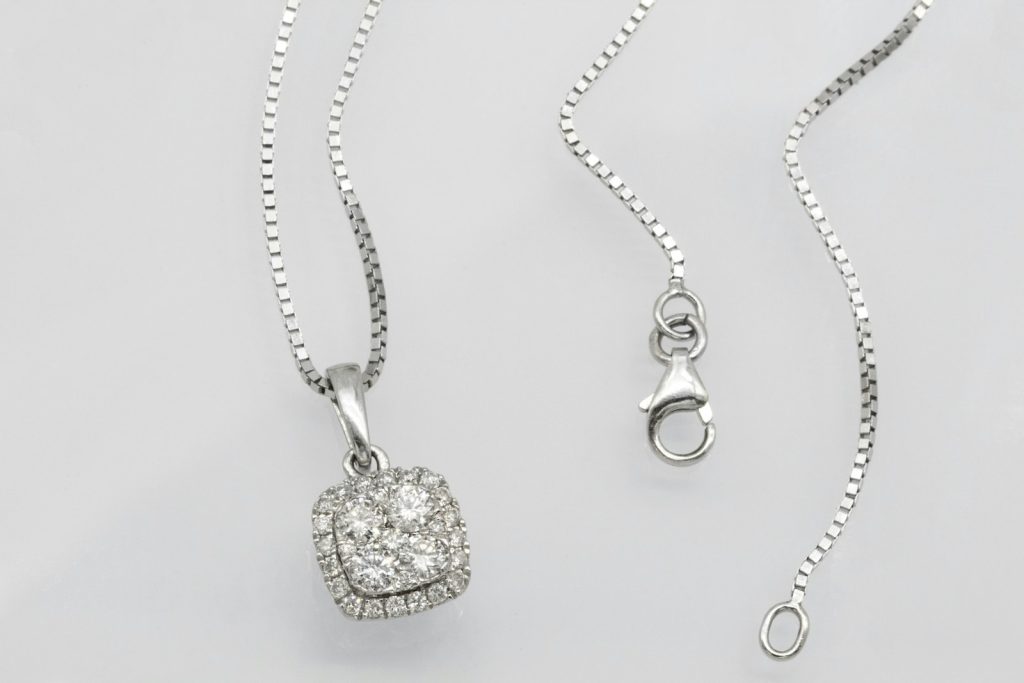
Wholesale silver pendants are bulk 925 sterling-silver pendant units — usually sold by design, gram band and plating option — for importers, brands and resellers buying ex-factory. In this guide we map the main pendant and necklace types, how 925 mechanics affect cost and QC, and what to check before locking a wholesale order from Bali.
Celuk Silver Wholesale: What We Do on Pendants & Necklaces
As a sourcing and export desk in Celuk, Gianyar (Bali’s traditional silver village), we sit between Bali workshop clusters and importers who need predictable 925 silver pendants wholesale and finished necklaces.
Core scope for this category:
– Design types: charms, classic pendants, lockets, initials, filigree motifs, chains, chokers, men’s pieces, and complete sets
– Metals: 925 sterling silver; 925 with anti-tarnish e-coating; 925 with rhodium plate; 925 with gold vermeil/micron plating coordinated via partner workshops
– Order types: open-line wholesale, OEM with minor edits, and full private-label runs including logo tags and branded packaging
– Trade focus: FOB Surabaya/Denpasar, EXW and selected CIF by forwarder; batches in gram bands matched to your target landed price
We do product development and QC in Celuk, then consolidate and export under agreed Incoterms with your nominated freight forwarder or ours.
Product Types: From Charms to Layered Sets
Below is how we segment wholesale silver pendants and necklaces for buying programs.
Pendants vs. Charms: How They Differ in Sourcing
– Pendants
– Usually larger focal pieces: 18–45 mm height including bail
– Built on solid 925 plate, cast, filigree, or wire construction
– Sold “pendant-only” or paired with chain; higher average gram weight (2–8 g+ each)
– Used as hero SKU in ecommerce catalogues and retail display
– Charms (silver charm wholesale)
– Smaller, often 8–18 mm motifs
– Jump-ring or lobster clasp for bracelets/necklaces
– Lower gram weight (0.8–2.5 g typical)
– Higher piece-count per kilo, suitable for volume gift and bead-charm programs
Commercially, the same workshop may produce both; we separate them in spec sheets because MOQ, pricing step and plating costs behave differently per gram.
Common Pendant & Necklace Styles We Source
– Initial pendants
– Block, script or outline letters; often 8–20 mm
– Popular for marketplace and personalization brands
– OEM: match to your font; add CZ or gemstone chips if required
– Lockets
– Hollow, hinged construction
– Round, heart, oval or custom silhouette
– Need tighter QC: hinge fit, clasp tension, wall thickness, interior polish
– Gemstone pendants
– Cabochon (round/oval), faceted, or rough-cut set in 925
– Typical stones from Celuk-linked suppliers: garnet, peridot, amethyst, blue topaz, citrine, moonstone, onyx, labradorite, various jaspers and quartz family
– Your responsibility: verify stone disclosure is accurate for your market (natural/synthetic/treated)
– Balinese filigree & granulation pendants
– Hand-formed wire and granule (“bonded balls”) over a 925 base
– Often oxidized to bring out pattern; black recesses are design, not defect
– Silver pendant manufacturer Bali workshops in Celuk and surrounding villages supply this craft
– Choker & collar necklaces
– 35–38 cm (14–15″) base length, sometimes solid wire or multi-strand
– Paired with central pendant, bar, or stone setting
– Chains & layering necklaces
– Bulk chain by meter or finished necklaces with clasp and tag
– Layered sets (2–3 chains) pre-assembled for retail
– Y-necklaces & lariat
– Drop section secured by soldered ring or sliding component
– Balance between main strand thickness and drop weight important to avoid twisting
– Bars, coins, discs
– Plain engravable bars and round tags (popular for engraving businesses)
– Coin motifs, hammered discs, medallions with oxidized relief
– Men’s pendants & chains
– Thicker chains (rope, curb, box) and heavier pendants (tags, crosses, tribal motifs)
– Oxidized, brushed, or mixed 925/leather elements
– Pendant-and-chain sets
– Pre-matched pieces sold on one card or box
– Consistent chain type and length across SKU family to simplify stock
925 Sterling Mechanics: What “Sterling” Really Means
Alloy Definition
“925 sterling silver” is an alloy:
– 92.5% pure silver
– 7.5% other metals, typically copper (sometimes with trace zinc or germanium)
The 925 content is what matters under most hallmarking regimes. We organize assay checks around that percentage, not marketing labels.
Hallmarking and Stamps
Standard practice from Celuk workshops:
– 925 stamp on the pendant body or bail, and on the necklace tag or clasp for finished chains
– Optional brand or maker’s mark (for private-label we can specify your logo text/symbol within local engraving limits)
Some import countries require local assay/hallmark after import; others accept origin stamps plus your supporting documents. You must confirm compliance with your own assay office or customs broker.
Anti-Tarnish E‑Coating & Rhodium
Sterling silver oxidizes in air and on skin. That is chemistry, not quality failure. We work with:
– Bright-polished bare 925 — traditional finish; will slowly patina
– Anti-tarnish e‑coating — thin clear lacquer; slows tarnish, but can wear on high-friction points
– Rhodium plating — thin rhodium layer over 925 for high-brightness, cooler tone, and improved tarnish resistance
For filigree or intentionally oxidized Balinese designs, full clear-coating or heavy rhodium can actually flatten visual depth. We typically use:
– Oxidize + partial “wipe” on raised areas
– Light anti-tarnish where compatible, or no coating on deeply oxidized recesses
Your catalog may mix finishes. We recommend that each SKU’s spec sheet explicitly states: finish type, plating micron (if applicable) and any e‑coating.
Chain Types, Gauges & Lengths
Common Chain Styles for Wholesale Programs
Most silver necklace wholesale supplier programs from Celuk offer these basics:
– Cable / trace chain
– Curb
– Rolo/belcher
– Box chain
– Snake
– Rope
– Figaro
– Singapore/twisted
Specialty chains (omega, popcorn, wheat, byzantine) are available but usually have higher gram-per-cm, affecting cost.
Typical Lengths for Export
For finished necklaces, we generally work in:
– 35–38 cm (14–15″): choker
– 40–42 cm (16–17″): short chain, common in Asian markets
– 45 cm (18″): standard women’s pendant length in many Western markets
– 50–55 cm (20–22″): medium; unisex
– 60–65 cm (24–26″): longer fashion chain; men’s pendants
– 70–80 cm (28–32″): over-sweater style
Most orders include a 5 cm (2″) extender for flexibility unless you specify fixed length.
Gauge and Gram Weight
Cost is heavily driven by gram weight. For guidance (indicative only; verify per design sample):
– Fine pendant chain: 0.6–0.8 mm diameter; ~0.08–0.12 g/cm
– Medium: 1.0–1.4 mm; ~0.15–0.23 g/cm
– Heavy: 1.6–2.5 mm; ~0.25–0.45+ g/cm
A 45 cm medium-gauge chain might weigh ~7–10 g. Paired with a 3 g pendant, ex-factory cost is driven mainly by ~10–13 g of 925 plus labor and finishing.
Pendant + Chain Pairing: Practical Guidelines
Balancing Weight and Aesthetics
– Light pendants (≤2 g)
– Pair with 0.6–1.0 mm cable, box or fine curb
– 40–45 cm lengths for mainstream women’s markets
– Good for charm-style layered looks
– Medium pendants (2–5 g)
– 1.0–1.4 mm chains; 45–50 cm usually safe
– For heavier gemstones or discs, use box or rolo for strength
– Heavy pendants (5–15 g+; men’s tags, large stones)
– 1.8–3.0 mm rope, curb or box
– 50–65 cm lengths so the piece hangs comfortably
Layering Sets and Y-Necklaces
For layered sets, we typically:
– Use 2–3 chains with 5 cm length steps (e.g., 40 + 45 + 50 cm)
– Keep upper layers minimal (tiny charm or plain chain) and weight downwards
– Offer one clasp with multiple strands or separate necklaces carded as a “set”
For Y-necklaces:
– Upright segment often 40–45 cm; drop 5–10 cm
– Total weight controlled to avoid the front sliding backward on the neck
FOB, MOQ Bands & Pricing Structure
All commercial numbers below are indicative ranges last verified June 2026 from Celuk-area production; they are not a quote. Exact offers depend on design, grams, finish and order size.
MOQ (Minimum Order Quantity) Bands
Typical bands for 925 silver pendants and necklaces:
– Open-line wholesale
– 50–100 pcs per SKU for simple pendants and charms
– 30–50 pcs for more complex or filigree pieces
– Mixed designs allowed within a collection, but each design/color must meet its own MOQ
– OEM (small modifications)
– 100–200 pcs per SKU, especially where new molds or stamps are needed
– Higher for intricate lockets or custom clasps
– Private-label new designs
– 200–500 pcs per SKU is common starting range
– Multi-SKU programs can negotiate overall order volume vs. per-SKU MOQ
FOB & Incoterms
We handle:
– EXW Celuk/Gianyar: you pick up from workshop or consolidation point
– FOB Denpasar/Surabaya: we manage local freight, export clearance, and handover at port/airport
– CIF (selected routes): via partner forwarders — freight and insurance included to named port; local charges on your side
Unit pricing is generally quoted EXW or FOB; shipping and insurance line items sit outside.
Indicative Cost Drivers (Not a Quote)
Main drivers:
– Gram weight in 925
– Complexity (handmade filigree vs. cast vs. stamped)
– Stone cost and setting type
– Plating (rhodium or gold) and e‑coating
– Order volume and packing specification
We typically see:
– Simple charm (no stone), 1–2 g: low single-digit USD per piece EXW in volume
– Medium pendant, 3–6 g: mid single-digit USD, depending on labor and finish
– Heavy or gemstone-intensive pieces: higher single-digit to low double-digit USD, again volume and gram-specific
Your landed cost will then add:
– Freight (air courier, air cargo or sea)
– Insurance (if not self-insured)
– Import duty, VAT, handling charges
You should cross-check HS codes and duty rates with your customs broker before finalizing the program.
Quality Control: What We Check, What You Should Verify
Our In-House QC Focus
We operate as a quality gate between Celuk workshops and your warehouse. Typical checks:
– Alloy & Marking
– Visual confirmation of 925 stamp placement (pendant and necklace components)
– Periodic third-party metal assay at batch level based on risk and your program size
– Dimensions & Construction
– Pendant height, width, thickness vs. approved spec
– Chain length (tolerance band per contract)
– Solder points on bails, jump rings and chain junctions
– Finish & Oxidation
– Polish consistency; no deep scratches on visible surfaces
– For Balinese oxidized styles, blackened recesses are checked as deliberate design — we differentiate between controlled oxidation and patchy surface contamination
– Plating uniformity on rhodium or gold-layered products via visual and random testing
– Functional Tests
– Clasp tension and operation
– Locket hinges open/close smoothly; closure holds under normal use
– Stone settings: prong tightness and adhesive cure where applicable
– Packing
– Matching SKU labels to physical pieces
– Count accuracy per polybag/inner/carton
– Basic transit protection to minimize tangling and abrasion
Buyer Responsibilities & Recommended Verifications
Even with QC, we strongly recommend you:
– Confirm compliance
– Check your local rules for nickel, cadmium and lead, especially for EU/UK and children’s items
– Confirm hallmarking requirements; some countries require local hallmark despite origin stamps
– Send pieces for independent testing
– At least on first orders and periodically thereafter
– Verify silver purity, plating thickness where promoted (e.g., “vermeil”), and any gemstone claims
– Check color expectations
– Oxidized Balinese filigree will arrive with deliberate black recesses
– Rhodium-plated silver is slightly whiter than bare 925
– If your brand images show bright white high-polish, ensure spec calls for rhodium or comparable finish
– Review samples under your lighting
– Store and studio lighting differ; check that chain gauge and pendant size match your visual merchandising plan
If you need structured sampling (pre-production, pre-shipment, golden samples), we’ll define that in the purchase contract.
Design & Private-Label Options from Bali Workshops
OEM Adjustments on Existing Lines
For brands that want to differentiate without full custom development, common changes include:
– Swapping chain types or lengths
– Adding/removing oxidized finish
– Replacing plain discs with engraved logo tags
– Changing bail design to fit your chains
These usually carry modest mold/tooling adjustments and slightly higher MOQ than open-line wholesale.
Full Private-Label Pendant & Necklace Programs
As a silver pendant manufacturer Bali liaison, we coordinate:
– CAD development based on your sketches or references
– Molding and sampling (wax, resin or metal samples depending on technique)
– Logo integration on back plates, tags or lockets
– Coherent collection structure: hero pendants, matching mini-charms, and coordinating chains
We recommend:
– Starting with a small but focused collection (e.g., 6–12 SKUs)
– Building in re-use of chains across designs to simplify stock and lower MOQs
Packaging and Branding
We can coordinate:
– Basic polybag and unit barcoding
– Logo-stamped hang tags or small logo plates on the chain
– Gift boxes via third-party box makers in Indonesia, subject to separate MOQ and lead time
Branded packaging specs need to be frozen before bulk production to avoid delays.
Practical Comparison: Pendant vs. Charm vs. Chain-Only Orders
| Item Type | Typical Gram Weight | MOQ Band (Indicative) | Main Use Case | Key Cost Driver |
|---|---|---|---|---|
| Charms | 0.8–2.5 g | 50–100 pcs/SKU | Bracelets, layered necklaces, volume gift items | Piece count per kilo; assembly labor for findings |
| Pendants (no chain) | 2–8 g+ | 50–100 pcs/SKU | Paired with your own chains; ecommerce hero items | Design complexity and finish (oxidized, rhodium, etc.) |
| Pendant + Chain Sets | 10–15 g total typical | 50–100 pcs/SKU | Ready-to-sell retail necklaces | Chain weight and clasp quality |
| Chain-Only | Varies by gauge/length | 50–200 pcs/length | Base for your pendants; stand-alone chains | Gram-per-cm and chosen chain type |
How We Work With You: Sampling to Shipment
1. Specification & Shortlist
You outline:
– Target retail or landed price band
– Key markets (affects length, finish and compliance)
– Mix of pendants vs. chains vs. sets
– Any plating or gemstone requirements
We then propose:
– Existing Celuk designs that match your program
– OEM options for tweaks
– Where full custom is justified
2. Sampling & Confirmation
Once a shortlist is agreed:
– Reference samples sent to you (chargeable, credited against order in many cases)
– You validate gram weight, finish, lengths and packaging under your own conditions
– Any final adjustments are made before bulk production sign-off
3. Production, QC & Export
– Production scheduled in partner workshops
– In-process and pre-shipment QC to agreed sampling levels
– Packing lists, commercial invoice, and required certificates (where available) prepared
– Hand-over under your chosen Incoterm (EXW/FOB/CIF) via your or our forwarder
To discuss a pendant or necklace program, you can request a wholesale quote to Celuk or arrange remote sourcing; we handle WhatsApp-based coordination if site visits are not possible.
Realistic Expectations & Common Issues
Surface & Oxidation Realities
Sterling silver is soft relative to many metals:
– Very fine hairlines can occur in transit; usually resolved by a simple polish cloth at destination
– Intentional oxidation in Balinese designs will show black recesses; do not over-polish or you will strip the visual contrast
If your brand promises “mirror finish always,” build in post-import polishing or specify rhodium plating and stricter surface QC standards (which may raise reject rates and cost).
Handmade Variation
Filigree and heavily hand-worked pendants are not numerically identical:
– Minor variation in granule placement or wire density is normal and commercially accepted
– If your market demands near-identical appearance (e.g., rigid marketplace photo policies), we may steer you more towards cast or semi-machine-made designs for those SKUs
Returns & Defect Definitions
Before first bulk order, we recommend aligning definitions:
– What counts as reject vs. acceptable in: oxidation tone, minor porosity marks, micro-scratches, stone centering
– How we sample for defects (AQL levels)
– How many pieces you expect as in-house “polish or repair” vs. full credit/replacement
Aligning expectations here prevents friction once goods land.
Start a Wholesale Silver Pendants & Necklaces Program
If you need a silver necklace wholesale supplier presence in Bali that speaks frankly about 925 mechanics, grams and QC instead of only catalog photos, that is our daily work.
Share your target assortment (charms, pendants, chains, men’s, layering sets) and basic parameters, and we can map realistic designs, gram bands and FOB expectations. You can request a wholesale quote to Celuk for workshop visits or run the entire process remotely; we coordinate sampling, updates and troubleshooting on WhatsApp so you aren’t blindsided by production details.
FAQs: Wholesale Silver Pendants & Necklaces from Celuk
What is the typical lead time for 925 silver pendants wholesale orders?
For repeat orders on existing designs, 4–6 weeks production after deposit is common for moderate volumes, plus transit time. New molds, filigree-heavy designs, or complex lockets can extend production to 6–10 weeks. We confirm timelines per order once grams, SKUs and quantities are fixed.
Can you guarantee all pieces are exactly 92.5% silver?
We work with workshops that use 925 sterling alloy and we organize periodic third-party assays, but no one can guarantee every individual piece is independently lab-tested. For large programs you should budget your own batch testing on arrival and share any variance so we can correct at source.
Do you supply pendants without chains so we can use our own?
Yes. Many buyers source pendants only and combine them with domestic chains to match local preferences or leverage existing stock. In that case we focus on pendant weight, bail size and finish, and skip chain-related QC and cost.
How do you distinguish intentional Balinese oxidation from defects during QC?
We check each oxidized design against an approved golden sample showing the intended contrast. Uniform blackening in recessed lines and dots with clean high-polish on raised areas is accepted as design. Random spots, fingerprints in oxidation, or blotchy patches out of pattern are treated as defects and separated.
Can you handle mixed plating in one order (bare 925, e‑coated, rhodium)?
Yes, but each finish counts as a separate SKU for MOQ and QC. For example, the same pendant in bare 925 and rhodium-plated is two SKUs. We track them separately for plating control, packing and labeling so you can manage catalog variants accurately.