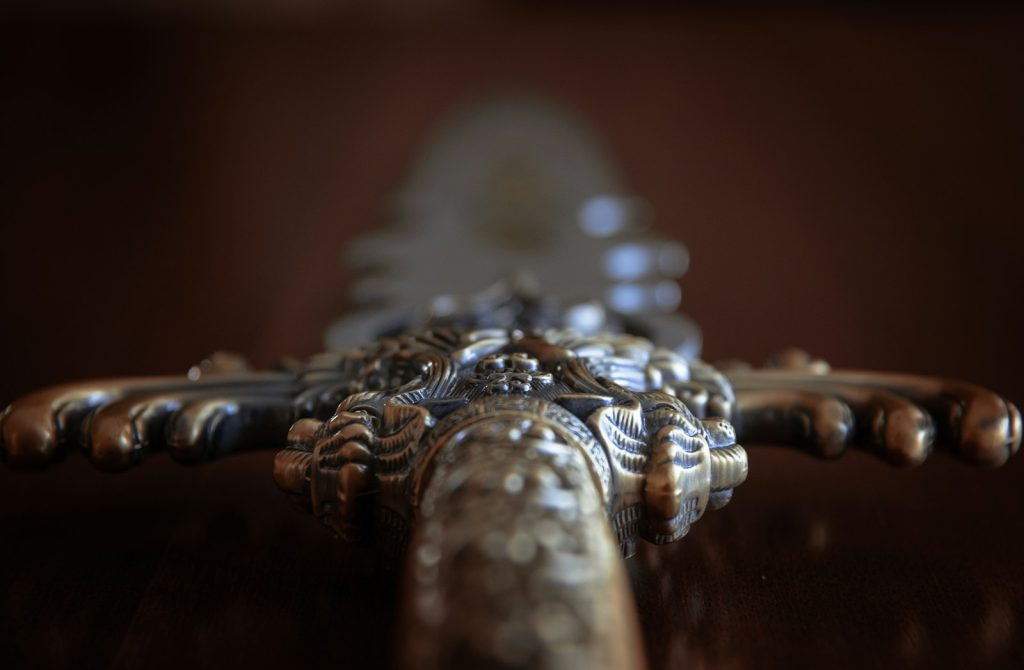
Balinese filigree silver is 925 sterling silver crafted with ultra-fine wire into woven and lace-like patterns, then joined by hand. In Celuk, Bali’s silver village, this is paired with granulation — precise rows of tiny silver beads — to create traditional Balinese silver jewelry built on heritage workshop skill, not mass-cast shortcuts.
What “Balinese Filigree & Granulation Silver” Actually Means
Balinese filigree and granulation silver is not a design trend; it is a fabrication method.
- Filigree = ultra-fine silver wires (often ~0.3–0.5 mm) twisted, coiled, woven, then soldered into a frame.
- Granulation = microscopic silver balls formed from wire or granule stock, then arranged and fused in patterns.
- Oxidized finishing = intentional darkening of recessed areas to give depth and contrast, not tarnish or dirt.
Most “ornate” 925 on global marketplaces is cast in volume. Traditional Balinese silver from Celuk still relies heavily on hand-assembled filigree and granulation, bench by bench. That labor structure drives both the look and the cost.
Why Celuk Filigree Wholesale Is Different From Mass 925
Mass 925 manufacturing globally is dominated by:
- Rubber or metal molds, centrifuge or vacuum casting
- High throughput finishing lines
- Minimal bench time per unit
By contrast, Celuk’s signature lines in filigree and granulation silver jewelry revolve around:
- Hand-drawn wire reduced through draw plates and rolled to filigree gauges
- Manual motif layout — no 3D-printed filigree textures
- Oxidized and hand-polished finishing to lift pattern depth
From a buyer’s perspective, the key differences are:
- Pattern depth: Filigree elements sit proud of the base, instead of being a shallow texture pressed or cast.
- Back-of-piece detail: Balinese artisans often finish both front and back with motif or clean high-polish, not just the visible side.
- Bench variation: Each SKU will show ±5–10% variance in line thickness or granule placement, even within the same batch.
This is the trade-off: higher bench time and skill, higher FOB brackets per gram — but a distinct product tier that does not compete directly with mass-market 925.
Core Techniques: Filigree, Granulation, Oxidation, Chasing
1. Filigree: Woven Silver Wire
Filigree in Celuk is wire-work construction, not surface engraving.
Typical process at Celuk workshop level:
- Prepare alloyed 925 sterling silver (92.5% silver, 7.5% copper/other metals).
- Draw wire down to fine gauges using a draw plate.
- Twist, coil, or braid filigree wires by hand.
- Shape coils into scrolls, rice-grain loops, waves, or floral petals.
- Place them into a thicker frame wire or plate base.
- Fuse or solder joints with silver solder under a torch.
Common motifs in Balinese filigree silver:
- Rice-grain / padi — tightly packed teardrop loops referencing rice paddies.
- Floral — layered petals and scrolls, often with a granulation center.
- Temple / candi — stepped and arched elements echoing Balinese temple doors.
- Barong — stylized mask shapes with framed eyes and teeth outlines.
- Wave / ombak — repeating S-shaped coils, especially in bangles and rings.
From a sourcing standpoint: filigree-heavy SKUs have higher labor content per gram. Per our current partner workshops (last verified June 2026), this is one of the main variables in FOB price bands at any given gram weight.
2. Granulation: Micro-Bead Ornament
Granulation is bead-work, not casting texture.
How it is done:
- Fine wire or cut grain is melted into spheres (surface tension creates tiny balls).
- Balls are sorted roughly by size (by sieve or visual grouping).
- Balls are placed individually on the surface in rows or clusters.
- Flux is applied; balls are heated until they fuse to the base.
In Balinese granulation silver jewelry, you will often see:
- Single-row granulation outlining a piece like a rope edge.
- Field granulation — large sections filled with bead patterns.
- Domed “poleng” granulation resembling traditional cloth patterns.
Consistent, even-sized granules with minimal solder overflow are QC points. Slight eccentricity is expected; perfect machine-regular beads usually indicate cast texture instead of real granulation.
3. Oxidized / Blackened Finish (Intentional, Not Defect)
Traditional Balinese silver often looks “blackened” in recesses. This is intentional.
Typical oxidized silver jewelry wholesale finishing sequence:
- Apply a liver-of-sulfur or similar oxidizing solution to clean 925.
- Rinse and dry.
- Polish only the raised surfaces with wheel or hand polishing.
Result: recesses remain dark; highlights shine. This contrast is essential to make filigree and granulation read clearly from normal viewing distance.
As a buyer, it is important to separate:
- Controlled oxidation: even dark tone in recesses, stable, part of design.
- Random tarnish or dirt: patchy, on exposed surfaces, often yellowish or brown.
Our QC protocols mark controlled oxidation on Balinese filigree silver as acceptable and intentional, while surface tarnish, uneven blotches, or fingerprints trapped under e-coat are rejects.
4. Hand-Chased Motifs: Floral, Temple, Barong, Wave
Beyond filigree and granulation, Celuk workshops use chasing: pushing patterns into metal with punches and hammers.
Common chased motifs:
- Floral & leaf veins, petals, and borders on cuffs and pendants.
- Temple geometries — steps, borders, and relief lines around stones.
- Barong & mask textures in brows, fur, and teeth details.
- Wave / water lines along bracelet edges and ring shoulders.
Chasing is a surface technique and pairs well with oxidized finishing: the recessed chased lines capture oxidization, giving graphic definition.
Technique × Visual Effect Comparison
| Technique | How It’s Made | Visual Result | Typical Use | Impact on Cost |
|---|---|---|---|---|
| Filigree | Fine wire coiled and soldered into patterns | Lace-like, openwork, visible depth | Earrings, pendants, ring galleries, beads | High labor content per gram |
| Granulation | Tiny beads fused to surface in rows/fields | Beaded texture, dotted outlines | Edges of cuffs, centers of florals, borders | Moderate–high labor, depending on density |
| Oxidized finish | Chemical darkening + selective polish | Dark recesses, bright highlights | All motif-heavy pieces; Balinese “antique” look | Low direct cost; high visual leverage |
| Chasing | Patterns hammered with punches | Engraved lines, subtle relief | Cuffs, signet tops, backs of pendants | Moderate labor, adds hand-made signature |
| Plain high-polish | Machine or hand buffing only | Mirror finish, minimal texture | Chains, basic bands, blanks for OEM | Lower labor, more weight-driven costing |
Sterling Mechanics: What “925” Means in Practice
“Sterling” is often used loosely in consumer channels. For trade, it should be specific:
- 925/1000 silver content by weight — 92.5% silver, 7.5% copper/other metals.
- Stamped “925” or “STERLING” — usually on clasps, ring inner bands, bails.
- All solder and findings compatible — avoiding base-metal cores in ear posts or pins.
In Celuk, traditional practice has long been to work in 925 for export-grade goods. For filigree and granulation, using under-fineness alloys can cause:
- Excess brittleness in fine wire.
- Inconsistent color between components.
- Faster tarnish.
At Celuk Silver Wholesale, we:
- Specify 925 alloy to partner workshops for export batches.
- Spot-test random samples via acid or XRF with independent labs where necessary.
- Flag any deviation for reject or rework at source, not post-import.
We recommend that importers still verify composition on arrival, especially for new SKUs or suppliers. No one can pay to change what we publish; if you proceed with our partner they may pay us a referral fee at no extra cost to you.
Finishing Options: Oxidized, Anti-Tarnish, Rhodium
Balinese filigree silver is visually optimized by oxidized finishing, but you still have several finish paths:
1. Classic Oxidized Balinese Finish
- Standard for traditional Balinese silver jewelry.
- High-contrast, “antique” appearance.
- Natural fit for temple, Barong, rice-grain motifs.
Trade implications:
- Customers must understand that the dark areas are meant to remain dark.
- Strong differentiation from bright, rhodium-plated commercial 925.
2. Clear Anti-Tarnish E-Coating
Some buyers prefer balancing contrast with easier retail upkeep:
- Ultra-thin clear coating applied after polishing and oxidation.
- Aims to slow environmental tarnish while preserving visual contrast.
- Must be applied evenly; build-up in filigree recesses is a QC risk.
E-coat is suitable for:
- High-turnover fashion channels needing lower maintenance.
- Markets where consumer education about silver care is limited.
3. Rhodium-Plated 925 (Less Common for Traditional Motifs)
Rhodium plating gives a bright white, high-reflective surface.
For filigree and granulation, this has pros and cons:
- Pros: higher perceived “luxury” in some markets; improved tarnish resistance.
- Cons: reduces contrast; fine wire detailing can visually merge; repairs require stripping + re-plating.
Typical uses in Celuk production:
- Hybrid lines mixing Balinese motifs with contemporary minimal frames.
- Collections targeting buyers who expect rhodium on all 925.
If your catalog is built around heritage look, oxidized or lightly protected finishes are usually more coherent than full rhodium.
Handmade Variation: What Is Normal, What Is Reject
Balinese filigree silver is handmade-heavy. Variation is structural; your QC framework must distinguish acceptable tolerance from real defects.
Expected variation (acceptable within QC bands):
- Minor differences in filigree coil tightness across a batch.
- ±0.1–0.2 mm variance in band width or motif dimension between pieces.
- Granule spacing that is not perfectly machine-even, while remaining orderly.
- Slight tone shifts in oxidation depth between batches.
Defects (should be rejected or reworked):
- Detached or obviously loose filigree elements.
- Missing granulation segments or visibly misaligned rows.
- Excess solder overflow obscuring pattern.
- Random tarnish on high points instead of only in recesses.
- Deep scratches in polished highlight surfaces.
We document tolerance bands per SKU type (ring, pendant, bangle) and align them with buyers at sampling stage so expectations are explicit before PO.
Gram Weights, Labor Content, and Pricing Bands
FOB values on filigree and granulation silver jewelry are built from:
- Metal weight (grams × silver price + margin).
- Labor time (bench minutes per unit).
- Finish complexity (oxidation, e-coat, rhodium, stone-setting if any).
While we do not publish fixed price lists, typical patterns (last verified June 2026) across partner workshops show:
- Two SKUs with equal gram weight can differ ~20–40% in FOB if one is plain cast and the other is heavy filigree.
- Granulation density can move costs noticeably: light border granulation adds modestly; full-field granulation adds more.
As you evaluate quotes, check:
- Declared average gram weight per size (especially rings and bangles).
- Filigree/solid ratio — more open filigree ≠ more weight, but often more labor.
- Finish steps included — oxidation, polishing level, coatings.
We encourage you to cost-compare per finished piece, not only per gram, for filigree/granulation lines. Otherwise, high-labor pieces will appear “expensive per gram” when they are simply more labor-dense.
MOQ Bands, Product Types, and OEM / Private Label Options
Celuk Silver Wholesale operates as an independent 925 sourcing and export desk based in Bali, coordinating with multiple Celuk workshops.
MOQ Patterns You Can Expect
Actual MOQs depend on design complexity and workshop capacity, but common bands are:
- Standard repeat designs: lower MOQs per SKU, suitable for initial market testing.
- Heavy filigree / granulation work: higher MOQs due to bench set-up and learning curve per design.
- Private-label or new OEM designs: prototype stages first, then agreed MOQ once design is frozen.
On large orders, some buyers prefer MOQs defined per-order plus per-SKU minimums; we can structure that once we know your catalog strategy and target market.
Product Categories in Balinese Filigree & Granulation
Representative categories from Celuk capacity:
- Earrings: drops, chandeliers, studs with granulation halos, hoops with wave motifs.
- Rings: filigree shoulders, temple panel tops, oxidized signets with chased patterns.
- Pendants & necklaces: Barong and floral medallions, rice-grain tear drops, framed cabochons.
- Bangels & cuffs: full-surface filigree cuffs, chased and oxidized temple bands.
- Beads/components: filigree beads, spacers, and links for in-house assembly.
We can support:
- OEM: your designs and tech packs, made in Celuk with appropriate traditional techniques.
- Private label: existing Celuk patterns, branded with your logo and packaging.
- Hybrid collections: your stone/layout ideas built on classic Balinese filigree bases.
If you are setting up a new category in your 925 assortment and want to see technique options side by side, you can request a wholesale quote or remote sourcing schedule with us; WhatsApp coordination is available for sampling review and factory-walkthrough calls.
Quality Control: From 925 Hallmark to Final Polish
Our QC lens on Balinese filigree silver focuses on both structure and finish.
1. Alloy and Marking
- Require 925 composition on all export batches.
- Ensure 925 stamp placement on appropriate surfaces for each SKU type.
- Check for mixed-metal components (e.g., base-metal pins) when not declared.
We encourage buyers to confirm hallmark regulations in their own jurisdiction (e.g., assay requirements, sponsor marks) and tell us if additional markings are needed.
2. Structural Integrity
- Stress checks on solder joints for filigree frames and granulation fields.
- Flex tests on bangles and rings to screen out weak points.
- Pull tests on ear-wires, posts, and bails.
Because filigree elements are fine, poor soldering shows faster. Early destructive testing on pre-shipment samples is advisable for new designs.
3. Surface and Oxidation Control
- Verify that oxidized areas are only where intended (recesses, chased lines).
- Check that high points are properly polished, not greyed-out.
- Inspect for contamination under coatings if e-coat is used.
We separate “traditional oxidized” from actual defects in our reporting so your own team does not reject pieces purely because they are not mirror-white.
4. Consistency Across Batches
For repeat orders, we:
- Reference approved master samples for motif detail and oxidation tone.
- Record average gram weights and dimensional tolerances per SKU.
- Monitor drift in workmanship if workshops add new bench workers to your line.
Your role as importer remains critical: on first arrival, verify that delivered goods match your approved sample in both feel and finish, and feed back any adjustments required so we can tighten instructions factory-side.
Logistics, Incoterms, and What You Should Verify
Celuk Silver Wholesale functions as an export coordination desk. We are not a courier or customs broker in your country, so we stay clear about division of responsibilities.
Incoterms and Shipment Types
Common structures requested by silver importers include:
- FOB Indonesian port (e.g., Bali via transshipment) for sea or air freight.
- FCA for shipments handed to your nominated forwarder in Indonesia.
We can assist with:
- Packing specifications (anti-tarnish bags, individual polybags, cartons).
- HS code guidance for typical 925 jewelry categories.
- Coordination with your forwarder’s schedule from our export point.
You should independently verify:
- Applicable import duties and taxes for silver jewelry into your market.
- Any hallmarking or assay obligations on arrival.
- Labelling rules for “sterling” vs “silver-plated” in your jurisdiction.
We recommend starting with smaller test shipments if you are new to importing from Indonesia, to confirm your customs process and cost structure before scaling up.
Is Balinese Filigree & Granulation Right for Your Catalog?
Balinese filigree silver is best suited to:
- Retailers or brands that can tell a craft story alongside price tags.
- Buyers who understand handmade variation and want visible bench work.
- Markets where “antique” or oxidized silver is accepted and valued.
It is less ideal if:
- Your channel demands ultra-uniform, machine-perfect repetition.
- Your customers expect bright rhodium-plated silver only.
- You want the lowest cost-per-gram 925 without craft premium.
If you’re unsure, you can begin with a limited set — for example, a capsule of oxidized earrings and rings with classic rice-grain filigree — and measure response before committing to full collections.
To review sample ranges from Celuk workshops or to map a sourcing visit to Bali, you can request a wholesale quote with us; we also handle project planning via WhatsApp for teams who prefer remote coordination.
FAQs: Balinese Filigree & Granulation Silver
Is the black color on Balinese filigree silver dirt or tarnish?
In properly finished pieces, the black or dark grey you see in recesses is intentional oxidation, applied to give contrast. It is part of the design, not dirt. Random, patchy discoloration on raised areas, especially yellow-brown tones, is tarnish and treated as a defect in QC.
Does granulation silver jewelry break easily because of all the tiny beads?
Well-made granulation, fused correctly to a solid base, is robust under normal wear. Weak points appear only when soldering is rushed or beads are placed on very thin unsupported areas. Our structural QC includes stress checks on granulation fields, but buyers should still request test wear for new, high-granulation SKUs before wide rollout.
Can I get Balinese filigree designs without the oxidized look?
Yes. Workshops can produce high-polish or lightly oxidized versions, and can add clear e-coat or rhodium plating if your market expects bright white silver. Removing oxidation reduces visual depth, especially in fine filigree and chased motifs, so we usually advise sampling both looks to decide.
How do MOQs work for OEM Balinese filigree designs?
New OEM designs typically go through sampling first: drawings or models, then 1–3 physical prototypes. After you approve a master, workshops set MOQs based on complexity and bench time. Filigree- and granulation-heavy pieces require higher MOQs than simple cast bands, because training and production setup per design are more intensive.
What should I independently verify before placing larger orders?
You should confirm your own market’s import duties, hallmarking and labeling rules for sterling silver, and any nickel or plating regulations. We also suggest you lab-test metal fineness from your first batch with a local provider, validate your landed cost structure including freight and customs, and test the product with a small segment of your customers before scaling PO volumes.