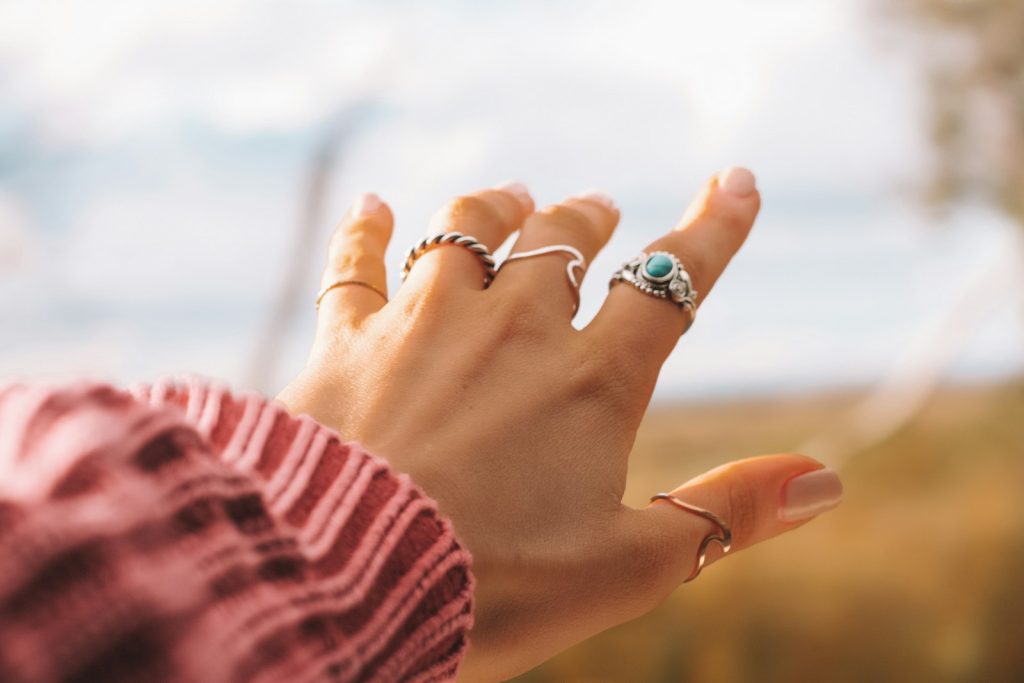
A custom silver jewelry manufacturer takes your sketch, CAD file, or sample and turns it into repeatable 925 sterling-silver production, with agreed gram weights, finishes, and export-ready packing. Celuk Silver Wholesale operates as an independent Celuk-based sourcing and export desk, coordinating custom sterling silver manufacturing across vetted Balinese workshops.
What “Custom Silver Jewelry Manufacturing” Means in Practice
In our context, custom silver jewelry manufacturing means:
- Designs owned or licensed by you (OEM/private label), not generic catalogue items.
- Made to order silver jewelry in 925 sterling silver from Celuk-based ateliers.
- Production driven by your specs: dimensions, target weight, stone layout, finish, and branding.
- End-to-end coordination: prototype, approvals, QC, packing, and export documentation from Bali.
We are a sourcing and export desk, not a single factory. Each Celuk workshop has different strengths, MOQs and lead times. Our job is to match your project to the right maker, band expectations correctly, and quote using real production data rather than a single generic number that will not hold in practice.
From Sketch or CAD to Production: Step-by-Step
Here is how a typical CAD silver jewelry production or sketch-based project runs through our desk.
1. Initial Design Brief
You can start with any of these:
- Hand sketch (scan or photo) with key dimensions.
- 3D CAD (e.g. .STL, .3DM, .OBJ) for ready-to-cast models.
- Reference photos or a physical sample to be adapted.
Along with the visuals, we need clear specs (see the table further below for detail):
- Ring size range, bangle inner diameters, chain lengths, etc.
- Target gram weight per piece (or target feel: “light/medium/solid”).
- Stone types, sizes, and setting style (e.g. bezel, pavé, prong).
- Surface finish (polished, brushed, oxidised, sandblasted, etc.).
- Branding (logo stamp, hallmark placement, carding, tags).
At this stage we band the project by workshop type (handmade artisan vs semi-industrial) based on complexity, volume, and budget.
2. Feasibility & Quotations
We then answer three things for you:
- Can this be made reliably in 925 in Celuk?
We check technical feasibility: minimum thickness for durability, stone-setting risk, casting vs fabrication trade-offs, and whether it suits Balinese handwork or needs tighter machine tolerances. - Workshop banding and MOQ range.
We give you MOQ bands rather than a single promise. Example only (not fixed, workshop-dependent):- Simple cast ring, no stones: indicative MOQ bands might be 30–50 / 100+ / 300+ per SKU.
- Complex piece with multiple stones and oxidation: higher MOQs per size or per stone mix.
Exact MOQs are confirmed after we map your design to a specific workshop.
- Indicative price range and lead time.
Pricing is quoted FOB Bali in USD based on recent material and labour for similar jobs. We show price ranges, not a one-line absolute, because silver and stone markets move. All ranges are flagged with “last verified June 2026” and rechecked before you commit.
For new collaborations or first orders in a new category, we may recommend a smaller pilot run even if the workshop would accept a higher MOQ, so that QC data is real before you scale.
3. CAD & Technical Development (If Needed)
If you already have production-ready CAD that our partners can cast directly, we move straight to mold and prototype. If not, we can coordinate CAD development in Celuk based on your sketch or photo.
Typical workflows:
- From sketch to CAD: Local CAD modeler recreates your design with production tolerances (stone seats, sprue strategy, minimum thicknesses).
- From physical sample to CAD: Sample is measured, sometimes 3D scanned, and converted to a castable model. Small adaptations may be needed for reliable casting and finishing.
CAD development fees are quoted project-by-project. For context, basic single-stone rings or simple pendants usually sit at the lower end of the fee range; multi-part hinged pieces, complex filigree, or pavé surfaces sit higher. These fees are normally charged once per design and can often be amortised if you re-use the base form for a series.
4. Mold, Master, and Prototype
Once CAD is approved, the workshop produces a master and/or mold, then a prototype:
- Master model: The “perfect” sample, usually in silver or brass, used to create rubber or silicone molds for casting. Some purely handmade lines skip this and build each piece, but for volume runs we prefer mold-based repeatability.
- Prototype sample: A finished piece in 925 sterling silver with your specified stones and finish, used for sign-off. This is what you should weigh, measure, and test on your side.
Prototyping fees typically cover:
- CAD (if required).
- Master and/or mold making.
- One finished prototype in your final finish with stones.
For some projects, the prototyping fee can be partially offset against a confirmed production order; that depends on workshop policy and order volume. We will state clearly beforehand if any rebate applies, and you should treat prototyping as a sunk development cost unless specified otherwise.
5. Revision Loops
It is normal to revise between first prototype and production-ready sample. Common change requests:
- “Increase band thickness; feels too light.”
- “More aggressive oxidation in recessed areas.”
- “Stone appears dark; change cut or size.”
- “Adjust logo size / move hallmark.”
Each iteration affects weight, stone costs, and labour; we update your target specs and unit pricing accordingly before you approve production. Minor adjustments (e.g. finish intensity) might not carry extra development fees; structural changes (e.g. thicker shank, new stone size) may require CAD and mold edits and will be itemised.
6. Production Run and QC
After you approve the final production sample in writing, we lock:
- Final specifications and tolerances.
- Final agreed unit price range for the run.
- Workshop allocation and confirmed MOQ per SKU/size.
- Target production lead time window.
Lead time depends on complexity, order size, and the specific workshop’s capacity during your order window; we do not publish a single promise like “everything in 3 weeks” because that is rarely honest for custom work. Instead, we provide a realistic band per project and update you if upstream constraints (e.g. stone supply, local holidays) push that band.
QC is handled at two points:
- At the workshop: Pulling samples through the batch to check dimensions, finish, clasp function, stone seating, solder joints, and hallmarking where applicable.
- At the export desk: Additional spot-checks for weight compliance per design, finishing consistency, packaging accuracy, and correct labelling before packing for export.
7. Export, Packing and Incoterms
We ship primarily on FOB or FCA terms from Bali, routed through Denpasar / Jakarta as appropriate. For certain clients and volumes, we can also discuss CIF or DAP using your nominated forwarder or our regular partners. All terms are defined in line with current Incoterms and documented in writing per shipment.
We coordinate:
- Commercial invoices and packing lists.
- HS codes consistent with 925 silver jewelry categories.
- Country-of-origin statements where relevant.
- Carton markings per your needs.
You remain responsible for confirming your own import duties, local hallmarking rules, and any retail labelling regulations in your destination market. We will share what similar clients have done as a reference, but it is not legal advice.
If you already have designs in mind and need to check feasibility, MOQ bands, and lead times, you can request a wholesale quote or message us via WhatsApp to review your specs in detail before you visit Bali or place a trial order.
What We Need From You (And What It Affects)
Providing clear inputs at the start saves time, cost, and frustration. The table below summarises key design inputs and what they impact.
| Input from you | What it affects | Notes |
|---|---|---|
| Design visuals (sketch / CAD / sample) | Feasibility, workshop selection, CAD needs | Clear orthographic or CAD views reduce interpretation risk. |
| Dimensions (sizes, thicknesses, lengths) | Gram weight, durability, comfort | Minimum thickness limits apply for cast and fabricated parts. |
| Target weight per piece (or band: light/medium/solid) | Material cost, pricing, feel in hand | We reconcile your target with structural integrity and design. |
| Stone type, size, quality | Material cost, sourcing time, reject rate | Exotics or tight tolerances can extend lead time and MOQ. |
| Metal spec (925 sterling, vermeil, plating thickness) | Base cost, process steps, QC criteria | We align local practice with your market’s expectations. |
| Finish (polished, brushed, oxidised, texture) | Labour time, unit cost, visual character | Heavy textures and oxidation are more labour-intensive. |
| Logo, hallmark, branding position | Tooling needs, mold edits | Changes post-mold can mean new masters or molds. |
| Packaging needs (polybag, box, card, barcode) | Packing time, material sourcing, export volume | You can supply your own packaging or we source locally. |
| Order volume per SKU / size | Workshop banding, price breaks, scheduling | Higher volumes generally open more capable workshops. |
| Required delivery window and Incoterm | Factory scheduling, routing choice | Tight deadlines may restrict workshop selection. |
Balinese Handmade Work: Natural Variations and Tolerances
Celuk has a long tradition of hand-crafted sterling-silver work. Even in semi-industrial workshops, much of the process is still hand-finished. That has implications you should factor in as you design your line and write your own QC standards.
Natural Variation
For artisan-heavy lines, you should expect subtle variations in:
- Texturing and oxidation depth from piece to piece.
- Wire filigree thickness and micro-alignment.
- Stone pattern nuance in natural stones.
We define acceptable tolerance bands up front: weight tolerance per design, acceptable size variation, finish variability. For highly standardised programs (e.g. strict weight bands for TV shopping networks), we route work to workshops with stronger process control and more jigs/fixtures, and your designs may need to adapt slightly to match what is realistic here.
Weight and Dimension Tolerances
For cast items, silver shrinkage and finishing remove a predictable amount of metal, but hand-polishing can add micro-variation. For fabricated and hand-built items, variation is a bit wider. We will propose tolerance ranges per design and workshop band, and you should test them against your market’s expectations before committing to a big order.
OEM vs Private Label vs White-Label in Silver Jewelry
We support multiple commercial models around custom and made to order silver jewelry:
- OEM (Original Equipment Manufacturer): Your design, your brand. We assist with development, and production is dedicated to you under agreed confidentiality. Suitable if design IP and differentiation are central to your brand.
- Private-label: A shared or adapted base design with your branding and minor modifications (e.g. different stones, finish, logo). Faster and often more cost-efficient.
- White-label / open line: Generic designs without exclusive rights, sometimes used for price-sensitive programs. We handle these too, but this page is focused on fully custom and bespoke silver jewelry supplier work.
Exclusivity, tooling ownership, and the right to reproduce designs elsewhere are not assumed. If you need exclusivity for a design, that must be discussed and documented explicitly.
MOQ Bands, Lead Times, and Capacity
Our rule: capability, MOQ, and lead time vary by workshop. We do not publish one “house MOQ” or “fixed lead time” because that would be inaccurate across the desk.
MOQ Bands
As a general guide:
- Very small artisan studios: lower MOQs per SKU, longer and more elastic lead times, stronger hand-made character, less suited for tight repeat schedules.
- Mid-size workshops: structured MOQs by casting tree or batch, better repeatability, suitable for brand programs and capsule drops.
- Larger semi-industrial facilities: higher MOQs, stronger process control, better for TV shopping, chain retailers, or subscription programs where re-orders are regular.
We will tell you honestly when a desired MOQ is unrealistic for a specific complexity level, and suggest either design adaptation, consolidation of SKUs, or a different workshop band.
Lead Time
Lead time is built from several components:
- Design clarification and CAD (if required).
- Mold/master making and prototyping.
- Production slot allocation and actual manufacturing.
- Final QC, packing, and export formalities.
Simple repeat orders from existing molds can move substantially faster than first-time projects requiring CAD, multiple revision loops, and new molds. Busy seasonal windows or large orders in progress at a workshop also affect your timeline. We will band your expected lead time in weeks or months per project, with buffers for known local holidays, and you should pad additional time on your side for customs clearance and internal QC.
925 Sterling Silver and Technical Considerations
All custom manufacturing we coordinate is based on 925 sterling silver as the default. Understanding the mechanics helps when specifying your designs.
Alloy and Finishing
- 925 sterling silver: 92.5% silver with 7.5% other metals, typically copper-based alloy in Celuk. This is the global standard for silver jewelry in most markets.
- Plating and vermeil: Gold or rhodium plating over 925 can be arranged. You must specify thickness targets (e.g. microns) if your market requires them; be aware that thicker plating increases cost and sometimes lead time.
- Oxidation: Darkening of recesses for contrast is usually done chemically; intensity and patterning can vary slightly piece-to-piece on handmade items.
Stones and Components
We can coordinate sourcing of common semi-precious stones and basic findings through Celuk suppliers. For branded or certified stones, or special cuts, you may prefer to ship components to Bali; we will advise on safe routing and documentation. Findings such as clasps, chains, and ear-posts are either made locally or sourced from specialist suppliers depending on your spec and volume.
Working With Celuk Silver Wholesale as Your Custom Silver Jewelry Manufacturer
As a trade-focused desk, our structure is simple:
- We map your project to suitable Celuk workshops, not just one factory.
- We quote MOQ, price, and lead-time bands per workshop and design, based on real current capacity and recently executed jobs.
- We supervise prototyping, QC snapshots, and export preparation, so you do not have to manage multiple small producers individually.
No one can pay to change what we publish; if you proceed with a partner we introduce, they may pay us a referral fee at no extra cost to you. Our alignment is with repeatable programs and long-term importer relationships, not one-off tourist retail.
How to Prepare Before Contacting Us
To make the first technical discussion efficient, prepare:
- Drawings (even rough) with at least one dimension annotated.
- Any available CAD files, even if not final.
- Weight expectations (for rings, pendants, bracelets, earrings) per piece or at least per category.
- Stone list and grades you are comfortable with for your price point.
- Clarity on branding: where, how big, and which hallmarks your market expects.
- Your target order quantity per design and size, and your realistic timeline.
Send these along with your company details and target markets so we can also flag any known regulatory issues that have affected importers into your region before. You retain responsibility for final legal compliance checks.
If you are planning a sourcing visit to Bali or ready to start a CAD silver jewelry production project remotely, you can request a wholesale quote and note your WhatsApp number; we typically handle the first design review, feasibility and banding discussion over messages and shared files.
FAQs: Custom Silver Jewelry Manufacturing With Celuk Silver Wholesale
What is the minimum order quantity (MOQ) for custom designs?
There is no single MOQ for all workshops or designs. Simpler pieces in suitable workshops may start from relatively low per-SKU quantities, while complex or stone-heavy designs may require higher MOQs. After we see your design and understand your program, we will quote realistic MOQ bands per workshop, not a generic promise.
How long does it take to go from sketch to first shipment?
It depends on complexity, how complete your initial specs are, and which workshop band is appropriate. The path includes design clarification, CAD (if needed), mold and prototype, revisions, production and export. Simple adaptations with clear CAD and flexible timelines can move relatively quickly; multi-SKU capsule collections with new CAD and complex stones need longer. We will give you a project-specific lead-time band and update it as the job progresses.
Can you sign NDAs and keep my designs exclusive?
Yes, we can work under NDAs and structure OEM and private-label programs that treat your designs as confidential and exclusive with specified workshops. Exclusivity is not assumed; it must be defined in writing, including what is considered your IP and how similar generic designs are treated in the Celuk ecosystem.
Do you handle lab testing and hallmarking for my market?
We can assist with local 925 standards and workshop-level hallmarking where available, and we can send samples for third-party tests on request. However, national hallmarking schemes and retail labelling laws vary widely; you are responsible for confirming what is legally required in your country and arranging any compulsory local assays or stamps once goods arrive.
Can you produce both handmade artisan pieces and more standardised lines?
Yes. Our network spans small artisan studios (ideal for strongly hand-made character and smaller runs) through to more structured workshops suited for standardised, repeatable lines. Part of our role is to route each SKU to the workshop type that best matches your design, volume and QC requirements, and to be transparent about the natural variation you can expect from each band.