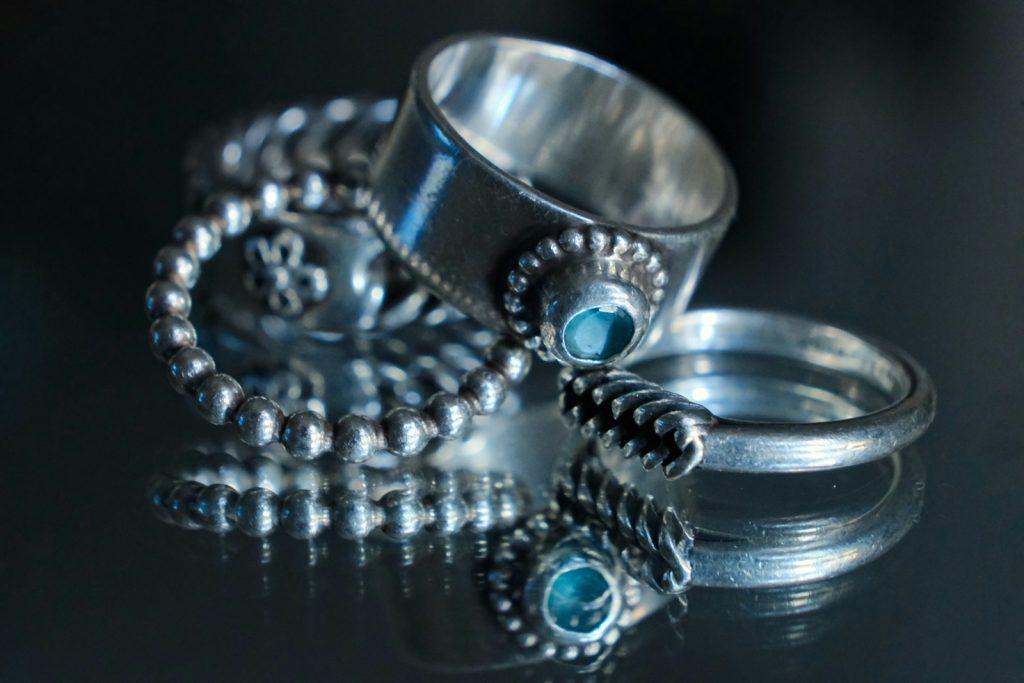
Wholesale silver earrings are bulk 925 sterling-silver earrings supplied to retailers and brands at negotiated MOQ and gram-based pricing. At Celuk Silver Wholesale, we source, consolidate and export wholesale silver earrings made in Celuk, Bali’s long-established sterling-silver craft village.
Wholesale Silver Earrings from Celuk, Bali: What We Actually Do
As an independent sourcing and export desk based beside the Celuk workshops, we coordinate:
– Workshop selection (by technique and capacity)
– 925 alloy and component verification (hallmarking, solder, posts, backs)
– OEM and private-label development
– In-process and pre-shipment QC
– Export packing and documentation ex-Bali
We work entirely in 925 (92.5% silver, 7.5% alloy metals) and related platings/coatings. No brass- or zinc-base fashion jewelry.
Key scope
- Product focus: earrings only on this page — studs, hoops, huggies, drops, dangles, chandeliers, threaders, climbers, ear cuffs, ear jackets, tassel and gemstone lines, plus men’s and minimalist designs.
- Alloy: 925 sterling silver, with options for anti-tarnish e-coating and rhodium plating.
- Finishes: high-polish, satin, oxidized “Bali” detail, brushed, hammered, sandblasted accents.
- Markets: importers, wholesalers, chains, DTC brands and marketplace sellers purchasing by the hundreds to tens of thousands of pairs.
FOB silver jewelry prices move with the global silver spot price and local wage/energy inputs. We quote project-by-project; all ranges below are indicative bands, last verified June 2026.
Why Source 925 Silver Earrings Wholesale from Celuk?
Celuk village in Gianyar, Bali has supplied 925 silver to export brands for decades. What you gain by consolidating here:
1. Established 925 Silver Ecosystem
- Workshops familiar with export specs: consistent 925 purity, weight bands, ear-post diameters, butterfly back tension and nickel restrictions for EU/US markets.
- Artisanal techniques at scale: Balinese filigree, granulation and oxidized detailing on repeatable master molds.
- Access to both cast and hand-fabricated workflows, so you can mix high-volume commercial designs and artisan capsules in a single shipment.
2. Focus on 925 Mechanics, Not Just Design
We pay close attention to the metallurgical details that importers get audited on:
– 925 hallmarking: Most export-ready earrings are stamped “925” on the post, back or main body. We verify stamp position and legibility; your own brand stamp can sit alongside, subject to local regulations in your destination.
– Solder and components: We request lead- and cadmium-safe solders and silver or surgical-steel posts/backs as required by your market rules.
– Nickel-use transparency: Classic Balinese 925 alloys are typically copper-based (nickel-free by composition). However, certain findings (springs, ear wires, clasps on earring-jacket chains) can be nickel-bearing. If you sell into EU under REACH/Nickel Directive or promote “nickel-free”, you must lab-test. We help specify nickel-safe options; we do not issue binding compliance guarantees.
3. OEM & Private-Label, Not Just Catalog Resale
You can:
– Buy from existing Celuk catalogs (with or without minor tweaks).
– Adapt proven shapes with your textures, stones or sizing.
– Develop fully custom SKUs from your CAD or sketches.
For private-label, we commonly:
– Add your brand stamp to 925-marked areas (space permitting).
– Implement branded earring cards, polybags and barcodes at packet level.
– Standardize master cartons and inner packs to your DC requirements.
Earring Types We Handle in 925 Sterling Silver
Below are the main wholesale earring types we coordinate, with typical 925 mechanics and sourcing notes.
Stud Earrings (Silver Stud Earrings Wholesale)
Classic 925 stud earrings are the backbone of many importers’ orders:
– Construction: Cast or die-struck heads with soldered posts (0.7–1.0 mm standard diameter) and friction backs.
– Design range: Balls, discs, bars, geometric shapes, minimal knots, granulated “Bali dot” studs, tiny motifs (stars, moons, hearts, leaves), and bezel-set stones.
– Weight: Light — often 0.4–1.2 g per pair in plain silver; stone-set or larger shields go higher.
Typical use: entry-price fill for wall units, upsell multipacks, and daily-wear lines.
Hoops (Bulk Silver Hoops Supplier)
We source both lightweight commercial hoops and heavier “forever” hoops:
– Tube and wire hoops: Hollow or solid tube (1.5–4 mm), wire hoops (1–2 mm), round and square profiles.
– Closure types: Endless hoop, hinged clicker, post-and-latch, wire with hook.
– Diameters: Micro 8–12 mm up to 60 mm+ statement hoops.
Thinner endless hoops are cost-effective in grams; chunky solid hoops climb quickly in silver weight.
Huggies
Huggies are small-diameter, close-fitting hoops:
– Mechanics: Precision hinge and snap-lock; hinge tolerances are a frequent QC point.
– Designs: Polished, pavé/stone-fronts, ridged, braided, small Balinese dot work, minimal engraved lines.
– Notes: Higher labor content than simple hoops; good OEM candidate for branded small-ware programs.
Drop & Dangle Earrings
“Drop” typically means a short fall from the lobe; “dangle” swings longer:
– Fixings: Post-and-butterfly, leverback, French hook/earwire, or kidney wire.
– Styles: Filigree teardrops, granulated shields, hammered discs, linear bars, gemstone beads, organic leaves/feathers.
– Balinese detail: Many Celuk patterns use oxidized recesses to highlight granulation and scrolls — dark lines and pits are intentional, not plating failure.
Chandelier Earrings
Multi-level drops with articulated sections:
– Structure: Main shield/plate with hangs of chains, beads, or small cast drops.
– Considerations: Tangle resistance, solder joint security, and weight-per-pair tolerance in your market.
Chandeliers are more labor-intensive and best ordered in tighter, validated ranges.
Threaders (Threader Earrings)
Long chain or box-chain earrings that “thread” through the piercing:
– Components: Fine chain, front motif/bar, sometimes a U-shaped wire for balance.
– QC points: Smooth chain edges, well-finished tips to avoid scratching, chain solder integrity.
These usually ship very light in grams but demand careful packing to avoid knots.
Ear Climbers / Crawlers
Earrings that appear to “climb” the ear edge:
– Mechanics: Post + long back wire, or pressure-fit wire against ear.
– Designs: Leaf vines, star trails, minimalist bars, pavé curves.
– Fit testing: We pay attention to ear thickness variation; overly tight climbers generate returns.
Ear Cuffs
Non-pierced or secondary-position cuffs:
– Types: Simple bands, twisted ropes, Balinese granulation, chain-linked double cuffs.
– Mechanics: Adjustable squeeze-fit; no posts.
– Notes: Very low grams, but prone to deformation if under-packed; we specify stiffer cartons and nestling trays.
Ear Jackets
Two-piece systems with a front stud and back “jacket” visible below the lobe:
– Construction: Standard stud plus jacket plate or chain; multiple hole positions for adjustable drop.
– QC: Hole placement, jacket balance relative to standard lobe thickness, front-back matching in finish tone.
Tassel Earrings
Tassels can be all-silver or mixed-material:
– All-silver tassels: Chains or granulated drops from a cap.
– Mixed tassels: Silver caps with textile, leather or bead strands (we can source components; you must verify your textile regulations).
– Risk points: Thread pull-out, tangle, oxidation differences between chain sizes.
Gemstone & Inlay Earrings
Many buyers combine 925 with stones:
– Options: Natural, treated and synthetic stones; cabochon, faceted, chip inlay; shell, mother-of-pearl, resin inlay.
– Settings: Bezel, prong/claw, channel; Balinese often favors bezels with oxidized halos.
– Disclosures: We pass through workshop descriptions (e.g., “dyed quartz”, “reconstructed turquoise”) and encourage you to lab-check any high-value claims before marketing.
Men’s 925 Silver Earrings
Men’s wholesale silver earrings from Celuk tend to group into:
– Small hoops and huggies (plain, braided, oxidized)
– Plain or black-stone studs (onyx, black CZ)
– Minimal bar studs and single-ear statement pieces
We can pack and barcode single earrings if your market sells individually instead of pairs.
Minimalist vs Boho/Balinese Lines
You can run:
– Minimalist 925 lines: Clean bars, discs, tiny studs, plain hoops, smooth huggies; usually high-polish or satin, little to no oxidation.
– Boho / Balinese lines: Filigree, rope, dot granulation, heavy use of oxidized recesses, often mixed with gemstones and ethnic motifs.
Both lines can live within one collection, but we recommend separating SKU codes and photography clearly so your customers understand the difference in surface look and cleaning requirements.
Indicative FOB Bands by Earring Type
All pricing below is indicative ex-Bali FOB bands based on typical grams-per-pair and labor, last verified June 2026. Final quotes depend on current silver price, complexity, finishing, plating and your total volume.
| Earring Type | Typical 925 Construction | Relative Gram Weight | Indicative FOB Band per Pair (plain 925, no stones) |
|---|---|---|---|
| Small studs (3–6 mm) | Cast or die-struck head + post | Very light | Low band, suitable for volume multipacks |
| Ball studs (3–8 mm) | Hollow or solid ball + post | Light to medium | Low–medium band depending on size/solid vs hollow |
| Plain hoops 10–25 mm | Wire or light tube hoop | Light | Low–medium band |
| Plain hoops 30–60 mm | Tube hoop | Medium | Medium band; grams drive price |
| Solid chunky hoops | Solid round/square profile | Heavy | Medium–high band; sensitive to silver spot |
| Huggies (hinged) | Cast body + hinge + lock | Medium | Medium–high band due to labor, especially micro-pavé |
| Simple drops/dangles | Single motif + hook/post | Light–medium | Low–medium band |
| Filigree/granulated drops | Hand-detailed + oxidation | Medium | Medium–high band from labor content |
| Chandeliers | Multi-part assembly | Medium–heavy | Medium–high band; requires tight QC |
| Threaders | Chain + bar/motif | Very light | Low–medium band; packing is key |
| Ear climbers | Formed wires + motifs | Light | Medium band; more fitting checks |
| Ear cuffs | Bands/formed cuffs | Light | Low–medium band; deform risk in transit |
| Ear jackets | Stud + jacket component | Light–medium | Medium band (two-part construction) |
| Tassel earrings (silver chain) | Caps + chain tassels | Medium | Medium band; labor and tangle risk |
| Gemstone studs/drops | 925 + stone setting | Light–medium | Medium–higher band; stone cost and setting labor add |
Use these bands to plan your assortment mix (e.g., 40–50% low band, 30–40% medium, 10–20% higher) before asking for quotes.
MOQ Bands & Order Structuring
We don’t operate a single blanket MOQ. Minimums depend on:
– Casting vs hand-fabrication
– Stone vs plain
– Plating/coating and finishing steps
– How many workshops a shipment involves
Indicative MOQ patterns:
Plain 925 Studs, Hoops, Simple Drops
– Per SKU: often 50–100 pairs per design/size/plating variant for existing molds.
– Per order: practical from ~500–1,000 pairs total across SKUs to make export, QC and packing efficient.
Filigree, Granulation, Oxidized Balinese Detail
– Per SKU: 50–120 pairs minimum; very small runs increase unit labor.
– Per order: recommend 300+ pairs in this sub-family so workshops can batch similar solder/oxidation work.
Gemstone, Inlay and Specialized Mechanisms (Huggies, Ear Jackets, Climbers)
– Per SKU: 80–150 pairs, especially if stones are custom cut or mechanisms require dedicated jigs.
– Per order: 300–500+ pairs in this category to justify the extra handling and component orders.
OEM / Private-Label New Molds
New master molds and sample runs introduce:
– One-time mold/tooling fees
– Higher MOQ for first production (to amortize setup)
For new designs, expect:
– 2–4 physical sample iterations before bulk.
– First production MOQ often 150–300 pairs per SKU, then potentially reducing once stable.
You should verify what your logistics and retail model can absorb — we’ll map our MOQ bands against your range plan before confirmation.
925 Quality, Oxidized Finishes & What Counts as a Defect
Distinguishing craft characteristics from real defects is essential, especially under e-commerce returns.
What 925 Sterling-Silver Means Here
In Celuk, “sterling silver” earrings are:
– Alloy: Minimum 92.5% silver by mass.
– Balance metals: Typically copper-based; nickel is not a structural requirement.
– Marking: “925” stamp on each earring or on one side per pair, depending on available area.
We are not a hallmarking authority. For markets that require official assay/hallmark (e.g., some EU countries, UK), you remain responsible for ensuring statutory marking via recognized assay offices or accepted local alternatives. We can coordinate with local labs for basic composition checks if requested.
Nickel-Free and Hypoallergenic Claims
From a 925 alloy standpoint:
– The main 925 alloy used by Celuk workshops is usually nickel-free and copper-dominant.
– Some findings (especially springs, ear wires, cores of clip mechanisms) may contain nickel.
Because we are not a certified lab:
– We do not issue binding “nickel-free” guarantees.
– If you advertise “nickel-free”, “hypoallergenic” or similar, you should:
– Commission batch testing from an accredited lab in your import region.
– Specify to us that nickel-free findings are required so we can request them at purchase.
We can support your testing program with controlled samples and explicit component declarations from workshops, but legal responsibility rests with the importer.
Intentional Balinese Oxidation vs Defects
Balinese 925 often features oxidized black or grey recesses to emphasize:
– Filigree scrolls
– Granulated dot patterns
– Rope borders
– Engraved lines
This looks like:
– Dark lines and pits in recessed areas.
– A soft transition between bright high points and darker backgrounds.
Acceptable and intentional:
– Even, deliberate darkening in recessed patterns.
– Fine surface texture consistent across the pair.
– Slight variation pair-to-pair on handmade pieces within normal artisan tolerance.
Defects we aim to reject at QC:
– Green or powdery corrosion (indicative of contamination or improper storage).
– Flaking or peeling of e-coating or plating exposing different color layers.
– Deep surface scratches on high-polish areas obvious at normal viewing distance.
– Mismatched oxidation levels within a pair (one earring much darker than the other).
Anti-Tarnish E-Coating & Rhodium Options
Beyond raw 925 and hand-oxidized finishes, workshops in Celuk commonly use:
– Clear anti-tarnish e-coating:
– Thin, transparent protective layer.
– Extends brightness period in normal retail conditions.
– Slightly alters the “feel” of bare silver; some brands prefer uncoated for that reason.
– Rhodium plating:
– Bright, cool-toned white, helpful for high-polish minimalist lines and pavé stones.
– Adds cost; may require future re-plating for long-term end-users.
Your choice affects both price and aftercare messaging. We will align finishing specs per SKU so your customers don’t receive mixed surfaces under one product detail page.
QC Approach: Pairs, Consistency and Export Readiness
We manage QC both at workshop level and at final consolidation.
Pairing and Balance
Every pair of wholesale silver earrings is checked for:
– Left-right symmetry or intended asymmetry (some modern designs are knowingly mismatched).
– Consistent oxidation pattern and shade.
– Matching gemstones by color tone and size (within agreed tolerances).
– Balanced weight for comfortable wear in the ears.
We reject or rework mis-matched pairs before packing.
Functional Checks
Functionality is where many earring returns originate. We focus on:
– Posts: Straightness, length, diameter fit to standard backs.
– Backs: Tension of butterflies; too loose and they slide, too tight and they damage posts.
– Hinges (huggies/hoops): Smooth snap closure, not overly stiff, no visible gaps when closed.
– Hooks and earwires: Smooth ends, adequate length to resist falling out, soldered joints intact.
– Chains and tassels: No open links in main structural chains under light pull.
Surface and Finish Checks
For each batch we spot-check for:
– Polishing quality on high-polish items.
– Even e-coating or rhodium plating where specified.
– Defect-level pits, porosity, or casting bubbles on visible surfaces.
– Cleaning residue, polishing compound or buffing lint left on earrings.
For intentionally oxidized Balinese lines, we accept small micro-variations typical of hand-applied oxidation but tighten limits for mass e-commerce SKUs where product photography must match.
Packing for Export and Retail Handling
We recommend and routinely implement:
– Pair-level: Polybags or small boxes, desiccant where appropriate.
– Inner packs: Grouped by SKU and size, labeled quantities for quick receiving.
– Master cartons: Export-rated boxes with weight limits to protect lightweight but delicate structures (e.g., ear cuffs, tassels).
If you supply your own earring cards, backing cards or barcoded labels, we coordinate their use at source. If not, we can supply neutral packing or help you spec private-label cards.
OEM & Private-Label Silver Earring Programs
If you are a brand or chain looking to develop a coherent 925 silver earrings range, we can structure:
Design Development
– Work from your CAD, reference samples, sketches or mood boards.
– Iterate with technical drawings, casting trees and, if needed, 3D-printed masters.
– Adjust gram weights to hit target FOB and retail price points (often a key lever on hoops and chandeliers).
Branding & Marking
– Apply your brand initials or mark alongside “925” where technically feasible.
– Standardize stamp placement across your range for consistent photography and brand language.
Always verify your jurisdiction’s hallmark and fineness-marking laws before deciding stamp content and position; we provide input but do not act as your legal counsel.
Assortment Planning
We help many buyers structure their 925 silver earrings wholesale assortment along:
– Core basics: studs and small hoops/huggies in silver, sometimes also gold vermeil.
– Feature pieces: a rotating capsule of statement drops, chandeliers or climbers.
– Add-ons: ear cuffs and threaders that cross-sell well online.
Once your framework is clear, we align MOQs, FOB bands and production calendars accordingly.
If you want to map out an OEM or private-label plan, you can request a wholesale quote to Bali to audit workshops yourself or schedule a remote call/WhatsApp product planning session with us.
Logistics, Incoterms & What You Need to Verify
Incoterms & Standard Flow
We most commonly ship:
– FOB (e.g., Denpasar or your nominated Indonesian port): We deliver export-packed cartons to the forwarder you appoint; freight and insurance from port are under your control.
– Other Incoterms (EXW, CIF, etc.) can be discussed but FOB is the starting point for most importers who already have freight partners.
We provide:
– Commercial invoices and packing lists.
– HS classification at the Indonesian side based on current practice (you should confirm HS codes with your own customs broker).
– Basic origin documentation; any special certificates needed for tariff preferences must be discussed in advance.
What You, as Importer, Must Verify
You remain responsible for:
– Customs and tax rules: Duties, VAT/GST, and any reduced-tariff schemes.
– Regulatory compliance:
– Nickel release and heavy metals limits (EU REACH, CA Prop 65, etc.).
– Any mandatory hallmarking, assay or consumer labeling requirements.
– Claims you make to consumers:
– “Nickel-free”, “hypoallergenic”, “recycled silver”, specific gemstone names or origins.
– We can share workshop declarations and process notes, but legal liability for claims sits with you.
We recommend building a small but regular testing routine with an accredited lab in your main import region. We assist by maintaining traceability per batch.
Payment, Lead Times and Risk Management
Typical patterns (to be negotiated per deal):
– Deposits at PO, balance before shipment or at document release.
– Lead times:
– Existing mold, plain 925: often within weeks for moderate volumes, subject to workshop capacity.
– New molds, stones, or heavy detail: longer development and production cycles.
Silver price volatility is a real factor:
– Many workshops quote with limited validity windows.
– We often work with gram-based base prices plus labor, adjusting to spot at order confirmation.
We will clearly state validity periods and re-quote if silver moves significantly before you commit.
How to Brief Us for 925 Silver Earrings Wholesale
To keep sampling loops short and FOB numbers realistic, your first brief should ideally include:
– Target categories: e.g., “minimalist studs and huggies”, “Balinese oxidized drops”, “men’s hoops”.
– Estimated volume: per SKU and per season or quarter.
– Target retail bands and preferred FOB ranges if you have them.
– Any non-negotiables:
– Nickel directives (specific to EU, etc.)
– Required or forbidden coatings (e.g., “no e-coating”, or “must be rhodium-plated”).
– Stone types or exclusions.
– Your packing and labeling standards.
From there, we can shortlist existing Celuk designs or scope OEM/private-label work clearly.
To start that process, you can request a wholesale quote for in-person sourcing or message us on WhatsApp for remote coordination; we work with both models.
FAQs: Wholesale 925 Silver Earrings from Celuk
Are Celuk 925 silver earrings nickel-free?
Most Celuk 925 alloys are copper-based and typically nickel-free, but certain findings (springs, some ear wires or mechanisms) can contain nickel. We can request nickel-safe alternatives, but we do not certify finished earrings as “nickel-free”. If you sell into regulated markets like the EU or plan to advertise “nickel-free” or “hypoallergenic”, you should commission lab testing on your own batches.
Can you match my existing silver earring designs for OEM or private-label?
In many cases we can develop functionally and visually comparable designs based on your samples or CAD, provided they do not infringe active IP in your market. We will not knowingly copy protected designs. For generic forms (classic hoops, basic studs, simple filigree motifs), we can often match key dimensions and gram weights closely enough to integrate with your current line.
How do you handle QC for pairs and mechanisms like huggies?
We check that each pair matches in shape, finish and oxidation level, and that gemstones are well-paired by size and color where used. For mechanisms such as huggies and hinged hoops, we test hinge movement and closure tension on sample-based QC, rejecting or reworking pieces that do not close cleanly or are excessively tight or loose. Posts, backs and hooks are also checked for fit and smoothing.
Can you provide 925 silver earrings wholesale with my own logo and barcode labels?
Yes, subject to space and technical feasibility, we can stamp your brand mark alongside “925”. For barcodes, we can apply your supplied labels on earring cards, polybags or inner boxes according to your SOP. We do not generate UPC/EAN codes ourselves; you must supply the codes and label artwork or finished labels.
What’s the best way to start if I’m new to importing silver earrings?
Begin with a focused assortment of proven types such as small studs, simple hoops and a few drop or huggie styles, in moderate MOQs, and avoid highly complex mechanisms or stone claims until you understand your market’s response and regulatory environment. Share your target retail prices, volumes and any compliance constraints; we’ll suggest structures that keep grams and complexity appropriate. You can then place a smaller first order, test sell-through and QC outcomes, refine, and scale up informed by data.