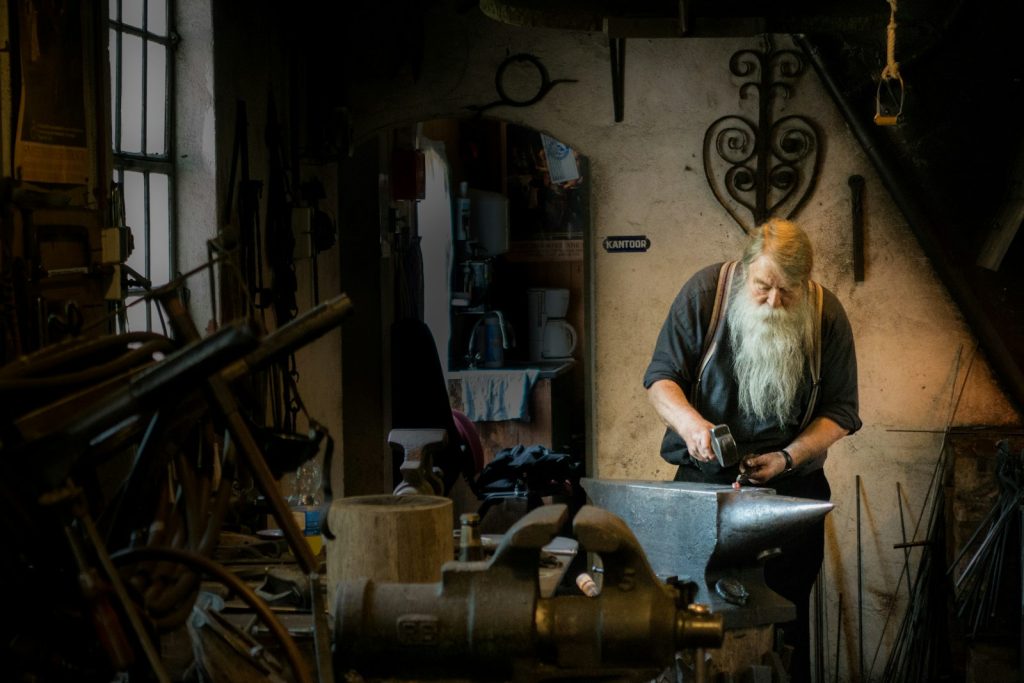
Celuk silver village is the traditional silversmith district in Sukawati, Gianyar, Bali, known for dense clusters of family-run workshops producing handmade 925 sterling silver. For brands, importers and designers, Celuk is both a heritage craft center and a practical sourcing base for OEM and private-label silver jewelry, from small-batch development to container-scale wholesale.
What Is Celuk Silver Village, Exactly?
Celuk is a village in Sukawati, Gianyar Regency, around 10–15 minutes south of Ubud, that developed as Bali’s main silverworking center over the last century. The area people talk about as “Celuk silver village” is essentially one stretch of road and its side streets, lined with:
– Family compounds where silversmithing is done in the courtyard
– Small ateliers (5–30 smiths)
– A few larger, semi-industrial workshops
– Retail galleries selling both locally-made and outsourced stock
The dominant material is 925 sterling silver (92.5% pure silver, 7.5% copper/other alloys), often combined with:
– Gold plating (vermeil and flash)
– Semi-precious stones
– Natural elements (shell, wood, bone)
– Oxidized finishes to highlight detail
For buyers, “Celuk Gianyar silver” means two things:
1. Access to a deep bench of skilled handworkers familiar with detailed work: filigree, granulation, wire, hand-setting, oxidized textures.
2. A sourcing ecosystem where you can find both small workshops willing to develop new designs, and medium-sized producers who can hit consistent MOQs and delivery schedules if managed correctly.
Our role at Celuk Silver Wholesale is to link that village-level capacity to import-ready product: vetted workshops, clarified specs, and export handled under clear Incoterms.
Short History: How Celuk Became Bali’s Silver Village
From ceremonial silver to commercial jewelry
Traditional Balinese silverworking predates tourist jewelry. Historically, Celuk smiths made:
– Ritual objects (offerings trays, ritual bowls)
– Ceremonial regalia (headdresses, belts, dance accessories)
– Household items for the nobility (ornamental cutlery, vessels)
Techniques like filigree and granulation were used long before they became “design features” for export markets. As tourism took off in Bali in the late 20th century, Celuk shifted:
– From temple and palace commissions
– To souvenir jewelry for Kuta/Ubud shops
– Then into export-focused production for overseas buyers
Over time, some families formalized their compounds into small workshops; a few scaled into factories capable of exporting under their own name. Many others stayed informal but capable, working as subcontractors.
Generational skills, modern buyers
Most Celuk silversmiths learned from parents or relatives. You’ll still see:
– Hand-drawn wire pulled through simple drawplates
– Torches fueled from small LPG canisters
– Primitive but effective polishing setups
– Strong division of labor: mold makers, solder specialists, stone setters, polishers
At the same time, export-focused workshops now integrate:
– CAD/CAM for initial master creation (especially for complex OEM work)
– Lost-wax casting for volume parts
– Consistent silver-alloy recipes (to hit true 925 and avoid porosity)
– Basic QC documentation, sometimes with simple gram-weight and dimension sheets
That mix—traditional hand skill plus selected modern tools—is why many buyers consider Celuk the “Bali silver village” of choice for 925.
Why Source Silver from Celuk? (Strengths & Limits)
Below is a practical view from the sourcing desk. Capability in Celuk is not uniform. It’s a spectrum.
Core strengths of Celuk Gianyar silver
1. Handmade detail at reasonable labor cost
– Fine filigree and granulation that many mass factories struggle to replicate by machine alone.
– Small adjustments possible at bench level: tweak prongs, adjust ring shanks, change bead caps quickly.
– Labor cost per workable hour remains competitive in Southeast Asia, especially for detailed bench work rather than pure mass casting.
2. Design flexibility and OEM mindset (at the right workshops)
– Many mid-tier ateliers are used to working from buyer drawings, 3D files, or reference samples.
– Openness to product development: they’ll prototype new SKUs, not only repeat legacy tourist lines.
– Good fit for brands with “artisan but consistent” positioning: the product looks handmade, but still matches a spec.
3. Scalable range: from artisan batches to container-level orders
– Some compounds will happily do 30–50 pieces per SKU.
– Larger workshops can handle 500–2,000 pcs/SKU with casting and part standardization.
– Aggregation (our role) allows buyers to source multiple collections from different strengths under one export.
4. Access to a variety of finishes and techniques
– Bright polish, matte, brushed, hammered textures
– Oxidized / antique finishes to bring out carved or filigree detail
– Balinese motifs, granulated beads, woven and braided wire styles
– Gold plating / vermeil options on core 925 structures
5. Strategic location and export logistics
– Close to Denpasar port and Ngurah Rai International Airport.
– Regular consolidated airfreight routes to major hubs in Asia-Pacific, Europe, and North America.
– Local ecosystem of hallmarking, lab testing, plating and packing services.
Honest caveats: Why Celuk is not a single “factory”
– Variable capability by workshop
– Some ateliers are world-class for filigree, but weak in stone-setting.
– Others are good with simple cast and polish, but struggle with consistent oxidized looks.
– A few are export-seasoned; many still think primarily in local retail terms.
– MOQs and lead times are not uniform
– There is no single “Celuk MOQ” or “standard lead time”.
– One workshop might accept 30 pcs/SKU, another will ask 150 pcs/SKU minimum to open tooling.
– Lead time for a 2,000-piece casting program is not the same as 100 mixed filigree SKUs.
– Process discipline varies
– Not all operations have documented QC or batch tracking.
– Some rely on one or two key people; if that person is sick or at ceremony, output suffers.
– Without clear specs, your designs may “drift” across runs (wire thickness, oxidization depth, stone size).
Our internal rule: we do not quote a single village-wide capacity, MOQ or lead time. We band workshops by verified capability and quote against real production data only.
What Celuk Does Especially Well (And What It Doesn’t)
Here is a simple view of Celuk’s strengths mapped to buyer benefits.
| Celuk Strength | What It Means in Practice | Buyer Benefit | Buyer Caveat |
|---|---|---|---|
| Handmade filigree & granulation | Wire patterns and tiny granules soldered by hand on 925 bases. | Distinctive, artisanal product hard to mimic via mass factories. | Pieces are more labor-intensive; unit cost & lead time higher than plain cast bands. |
| Oxidized & antique finishes | Chemical oxidation brushed back to highlight relief and detail. | Strong visual identity for “Bali” or “ethnic” collections. | Requires tight process control; different workshops oxidize slightly differently. |
| Small-batch flexibility | Many ateliers accept 30–100 pcs/SKU ranges. | Good for new brand testing and capsule drops. | Higher per-unit costs vs. 500+ pcs industrial runs. |
| Multi-technique capability | Casting, hand fabrication, stone setting and basic plating in one village. | Can build full collections (earrings, rings, bracelets, pendants) from one hub. | Need to match the right workshop to each technique; no one shop does everything perfectly. |
| Cultural motifs & pattern language | Long history of Balinese ornamental design. | Authentic “Bali silver village” storytelling for your brand. | IP clarity: custom motifs should be clearly specified; avoid generic copy of temple designs. |
| Export familiarity (select workshops) | Experience with FOB pricing, HS codes, packing, export docs. | Smoother shipments, fewer surprises at customs. | Still many smiths with no export experience; need aggregation and guidance. |
What Can You Actually Source from Celuk?
Capability varies; the following reflects what we see consistently across vetted workshops in our network (based on ongoing checks through June 2026).
Typical product categories
– Rings
– Simple bands, signet rings, stacking rings
– Filigree and granulation rings with oxidized or antique finish
– Stone-set rings (cabochons and faceted stones, mostly in small sizes)
– Earrings
– Hooks, studs, huggies, hoops
– Detailed dangles with wire work, beads, bead caps
– Multi-part drop earrings combining cast bases and hand-assembled components
– Pendants and necklaces
– Medallions, charms, amulet-style pendants
– Filigree spheres, cages and hollow beads
– Chains (typically finished with imported or locally assembled chain stock)
– Bracelets and bangles
– Cable-style bangles with decorative heads
– Braided, woven and rope-style cuffs
– Link bracelets built from repeating elements
– Beads and components
– 925 beads with ornamental granulation
– Spacers, bead caps, cones and decorative findings
– Clasps and basic findings (though many brands prefer standardized findings from larger hardware suppliers)
– Plated and mixed-metal variants
– 925 with gold vermeil (with defined micron thickness) or lighter flash plating
– Silver with brass or copper elements for color contrast
Standard technical profile
Across workshops we insist on, and you should verify:
– Alloy: 925 sterling silver (92.5% silver content). Some workshops can also supply 950 silver on request; this affects hardness and cost.
– Marking: 925 stamp or agreed hallmark location. Private-label stamps possible within legal rules of your import market.
– Gram weights: Honest gram weights are central to pricing. We track per-SKU gram weights from golden samples forward. Expect variance in truly handmade pieces (±5–10% is common) unless heavily standardized.
– Stones: Predominantly semi-precious and synthetic; some natural precious stones for higher-end programs. Stone availability, size tolerance and calibration must be checked per program.
– Finishes:
– High polish: rotary and manual polishing.
– Matte/brushed: abrasive media or hand-brushing.
– Oxidized: liver-of-sulfur or equivalent processes; needs controlled timing and neutralization.
– Plating: outsourced to specialist platers for volume; specify thickness in microns and substrate.
MOQ Bands, Lead Times and Pricing: How It Really Works
There is no honest single number for MOQ or lead time in a village like Celuk. Instead, we use “bands” based on workshop type and technique.
Typical MOQ bands by workshop type
These bands are indicative ranges we see (last reviewed June 2026). Your specific program may sit above or below them depending on complexity.
- Micro ateliers (1–5 smiths, fully handmade)
-
– MOQs: 20–50 pcs/SKU, 200–400 pcs per PO typical.
– Best for: very detailed filigree, artisan collections, development of complex prototypes.
– Trade-off: longer lead times; pricing reflects high manual labor content. - Small workshops (5–20 smiths, mix of bench + simple casting)
-
– MOQs: 50–150 pcs/SKU, 500–2,000 pcs per PO.
– Best for: commercial detail work, capsule collections, seasonal drops.
– Trade-off: can bottleneck in busy seasons (Aug–Nov); need locked production slots. - Medium ateliers (20–60 workers, integrated casting lines)
-
– MOQs: 150–300 pcs/SKU is common; total order 2,000+ pcs.
– Best for: repeatable OEM line items, wholesale orders, multi-country distribution.
– Trade-off: less interested in very low-volume SKUs; may simplify overly delicate details for efficiency.
If a buyer insists on lower MOQs across a broad SKU list, we often have to spread the order across multiple micro and small workshops. That’s manageable—but then QC and consolidation matter more.
Lead time expectations
Lead times depend on:
– Product complexity (filigree and stone-setting vs. simple cast band)
– Number of SKUs and total pieces
– Time of year (pre-high season for tourism and export is busier)
As ballpark expectations (last verified June 2026):
– Sample development: 2–5 weeks from confirmed tech pack and/or approved drawings, assuming no rare components.
– Initial production run: 5–10 weeks after sample approval for 500–3,000 total units, depending on workshop band.
– Repeat orders: 4–8 weeks, if no design changes and materials are stable.
These are working ranges, not promises for every SKU. For firm PO planning, we confirm per workshop and per line, then buffer for:
– Local ceremonies and public holidays
– Plating house capacity
– Stone procurement if using specific cuts or unusual colors
Pricing behavior (not fixed quotes)
We don’t publish a single “price per gram” for Celuk silver because it varies by:
– Gram weight per SKU
– Complexity (plain, filigree, stone-set, plated)
– Order volume
– Current silver spot price and local input costs
In practice:
– Quotes are usually a combination of gram-based costing plus labor complexity and overhead.
– Workshops may think in IDR/gram but we convert to per-piece in your currency under agreed FX assumptions.
– Price ranges we share with buyers are always tagged with “last verified” dates (e.g., last verified June 2026) and should be refreshed before you budget a collection.
Your responsibility as importer:
– Cross-check landed cost with your freight, duties, and VAT.
– Confirm if your market requires hallmarking beyond 925 stamps.
– Plug in realistic reject allowances (we typically budget 2–5% dependent on complexity, even with QC).
How Celuk Compares to Other Silver-Sourcing Regions
We frequently get asked how Celuk compares to other silver hubs. Without naming specific competitors, here’s how Celuk generally positions:
– Versus mass industrial factories (e.g., big casting operations in other countries)
– Celuk: better for artisan look, small to mid-volume, design flexibility.
– Large factories: better for huge MOQs, extreme standardization, and ultra-low per-unit cost on simple SKUs.
– Versus purely handcrafted artisan communities with minimal export structure
– Celuk: stronger export experience, better local access to plating and testing, more workshops already familiar with FOB and Incoterms basics.
– Smaller artisan villages elsewhere: sometimes even more artisanal, but you may have to build export pathways from scratch.
– Versus fully branded “design houses”
– Celuk: primarily OEM and private-label manufacturing; design input can come from you or be co-developed.
– Design houses: may insist on selling under their own brand or limiting private-label use of their designs.
For many buyers, Celuk is attractive precisely because it sits in the middle: artisan look plus enough export maturity to be workable.
Common Quality Risks – and How We Manage Them
Celuk can deliver strong quality—but it is still a village ecosystem. Risks are real and should be managed.
Known risk areas
1. Alloy consistency
– Risk: Underspec silver content or inconsistent hardness from batch to batch, especially in less disciplined shops.
– Management:
– Work only with alloy sources we’ve tested.
– Random assay testing for new workshops and new programs.
– Periodic third-party lab checks for ongoing high-volume lines.
2. Soldering and joint strength
– Risk: Weak solder joints on filigree or heavy use points (clasps, jump rings, bails).
– Management:
– Bench-level training in correct solder types and joint preparation.
– Sample destructive testing for critical SKUs.
– QC focusing on high-stress components, not just overall appearance.
3. Stone setting
– Risk: Inconsistent prong tightness, uneven bezels, stone fallout during transit.
– Management:
– Selecting workshops with dedicated setters for stone-heavy programs.
– Establishing pull-test protocols on sample basis.
– Packing specifications that reduce impact and vibration.
4. Surface finish
– Risk: Over-oxidization, patchy plating, micro-scratches visible under retail lighting.
– Management:
– Finish standards with photo references and tolerance notes.
– Clear plating specs (thickness, base layers, color tone).
– Final visual QC under appropriate lighting.
5. Spec drift between runs
– Risk: Incremental changes (slightly thicker wire, different stone size, altered oxidation) creeping in.
– Management:
– Golden samples stored both with us and the workshop; serially numbered.
– Written specs including target gram weight, dimensions, and finish notes.
– Random dimension and weight checks on repeat batches.
Our role in QC and export
As a sourcing and export desk, we:
– Vet workshops before they enter our banded network.
– Match buyer programs to workshops that have already executed similar complexity and volume.
– Set specs in writing, with drawings and sample references.
– Implement pre-shipment QC against buyer-approved samples.
– Consolidate and pack for export, with agreed carton-level packing lists and HS codes.
Your role:
– Provide clear designs (drawings, CAD files, or physical samples).
– Define non-negotiables (e.g., nickel-free requirements, minimum plating thickness, allergy considerations).
– Decide your acceptable defect rate and QC level (AQL or equivalent).
– Verify that your own country’s marking and metal requirements are met.
If you want to discuss a program in detail, you can request a wholesale quote to Celuk or request a remote consultation; we routinely handle WhatsApp-based planning and spec clarification for overseas buyers.
How We Work with Brands, Designers and Importers
1. Initial brief and feasibility
You share:
– Target markets and price points
– Estimated MOQs and range structure
– Design references, CAD, or rough sketches
– Required compliance (e.g., nickel release standards, labeling requirements)
We respond with:
– A first pass on feasibility within Celuk’s capabilities
– Expected MOQ bands per category (earrings vs. rings vs. bangles, etc.)
– Early lead-time ranges
– Notes on where Celuk is a good fit—and where it might not be optimal
2. Workshop matching and sampling
Based on your brief:
– We match each product group to one or more workshops (filigree specialists vs. casting-led vs. stone-heavy).
– We agree sampling costs and estimated per-piece target ranges (non-binding, last verified as of the current cost environment).
– Workshops develop samples based on your specs; we control alloy and process where possible.
– You receive physical samples, gram weights and dimension sheets.
Your job:
– Approve or request revisions.
– Lock specs and non-negotiables after sample sign-off.
3. Order confirmation and production
Once POs are placed:
– We confirm MOQs, unit pricing, and lead times per workshop in writing.
– Production proceeds under agreed specs; we monitor key stages (casting, assembly, finishing).
– Mid-production checks for large POs when justified by volume.
For terms, we usually structure around FOB Indonesia under Incoterms, but other terms can be discussed subject to volume and risk.
4. QC, packing, and export
Pre-shipment:
– QC performed against golden samples and agreed criteria.
– Carton packing with agreed inner-box counts and labeling (SKU, quantity, net/gross weights).
– Export documentation: commercial invoice, packing list, origin documents as required.
We then:
– Release goods FOB or under the agreed term.
– Share photos and packing details via email/WhatsApp for your records.
You:
– Arrange freight or work with a forwarder familiar with jewelry shipments and insurance.
– Handle import clearance, duties, and compliance in your home market.
Should You Visit Celuk in Person?
For serious programs, a visit to Celuk silver village is valuable but not mandatory.
Visiting helps you:
– See first-hand how workshops operate (bench setups, casting rooms, plating partners).
– Align expectations on finish and “handmade” variation vs. industrial uniformity.
– Build direct relationships with production owners, which matters in a village culture.
If you prefer to inspect personally, you can request a wholesale quote and we can coordinate workshop tours and technical discussions. We often handle the day-to-day detail via WhatsApp before and after your visit so you don’t lose time in travel.
Key Takeaways: Why Source Silver from Celuk?
Summarizing for buyers assessing “why source silver from Celuk”:
– Celuk is Bali’s primary silver village: dense, skilled, and historically focused on silverwork.
– The area can deliver:
– Artisan-level detail in 925 sterling silver.
– OEM and private-label capability for brands with clear specs.
– MOQs suited to both new and established brands, provided you accept that MOQs vary by workshop.
– It is not a monolithic factory. Capability, process discipline, and export experience vary. You must:
– Match product types to suitable workshops.
– Specify clearly and manage QC.
– Use realistic MOQs, lead times, and cost expectations.
Our role at Celuk Silver Wholesale is to act as your independent sourcing and export desk in the village: vetting, aggregating, QC, and export logistics. Nobody can pay us to change what we publish; if you proceed with our partner they may pay us a referral fee at no extra cost to you.
If you have a project in mind, you can request a wholesale quote or start the brief remotely; we’re used to working through WhatsApp for faster feedback on designs, samples and PO planning.
FAQ: Celuk Silver Village for Buyers
Is Celuk silver really 925 sterling?
Most export-oriented workshops in Celuk use genuine 925 sterling silver (92.5% silver). However, alloy discipline varies, especially among very small workshops. For serious programs, you should work with controlled alloy sources and request assay testing. We regularly verify alloy content on new workshops and critical programs and recommend buyers perform independent testing as well, particularly before large commitments.
What MOQ should I expect for private-label Celuk silver jewelry?
There is no single standard MOQ. Micro ateliers can often work from 20–50 pcs/SKU, small workshops typically 50–150 pcs/SKU, and medium workshops 150–300 pcs/SKU or higher. Total POs usually start around a few hundred pieces and can scale to several thousand. The exact MOQ depends on design complexity, finishing steps, and the workshop band we assign. We confirm realistic MOQs per SKU only after reviewing your designs and matching them to a specific workshop.
How long does production from Celuk usually take?
As a working range, sample development takes about 2–5 weeks from confirmed specs, and initial production runs take roughly 5–10 weeks after sample approval, depending on complexity and volume. Repeat orders typically run 4–8 weeks. These are indicative ranges based on current conditions; we always confirm per-line lead times with the actual workshop once we see your program.
Can I get OEM and private-label silver made in Celuk?
Yes. Many Celuk ateliers are experienced in OEM and private-label work, producing to buyer designs, stamps and packaging. The key is providing clear technical information (drawings, CAD, or samples), specifying markings and compliance requirements, and selecting workshops capable of consistent repeat runs. We manage that matching, sampling and QC, then handle export under agreed Incoterms.
Do I need to visit Celuk in person before ordering?
A visit is helpful but not strictly required. We work with many buyers entirely remotely, sharing photos, videos, and samples and coordinating details over email and WhatsApp. Visiting can speed trust-building and design alignment, especially for complex or high-value programs. If you plan to come, we can organize workshop meetings and technical discussions; if not, we structure a remote process with clear sampling and QC checkpoints.