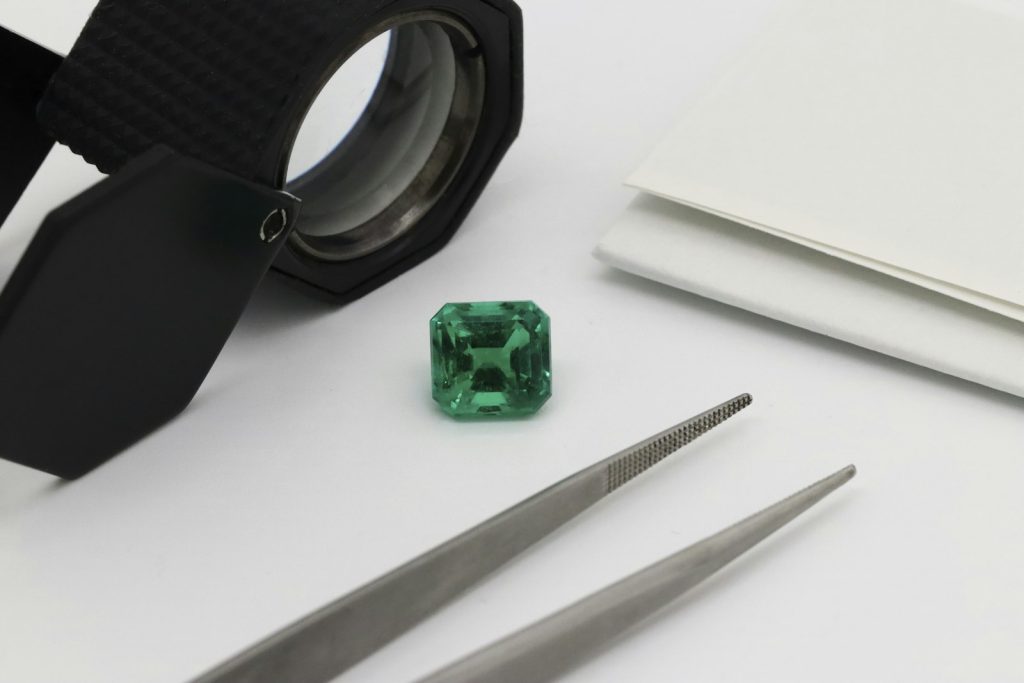
Wholesale gemstone silver jewelry is 925 sterling-silver jewelry set with stones — natural, treated or synthetic — sold in bulk under clear specs for silver weight, stone type and finish. At Celuk Silver Wholesale, we ship trade-ready 925 stone-set lines from Bali with weights, alloys, treatments and tolerances written down before you commit to an order.
What “wholesale gemstone silver jewelry” means in our catalog
In our desk, “wholesale gemstone silver jewelry” always has four defined parts:
- Metal: 925 sterling silver (92.5% silver, 7.5% copper-family alloy) hallmarked “925” per Indonesian practice.
- Stones: Natural, enhanced/treated, composite or synthetic, each disclosed as specified in the PI (product information) sheet.
- Setting style: Cabochon, faceted, pavé, bead-set or channel-set; with or without oxidation and e-coating.
- Labor bundle: Casting or fabrication, stone-setting and finishing (polish, oxidation, anti-tarnish coating where chosen).
You are buying grams + stones + work. Your landed cost is a function of silver weight, stone cost, complexity, plating/e-coating, surface finish and logistics.
- FOB basis: typically FOB Bali (Denpasar) under Incoterms 2020.
- MOQ bands: by design (often 10–30 pcs/design/size) and by batch (often 300–500 pcs mixed styles) — final MOQ is item-specific.
- Pricing: quoted ex-works or FOB in USD per piece, last verified June 2026, always subject to live silver and stone markets.
We operate as an independent silver gemstone jewelry supplier in Celuk, coordinating small workshops under a single QC and export desk, not as a single factory.
Core stone families: what we actually use
Gemstone lines in Bali are varied, but certain stones are consistent and scalable. Below is how we define the main stone families in our 925 stone set jewelry Bali catalog.
Moonstone: “moonstone silver wholesale” lines
For moonstone silver wholesale we usually split into two categories:
- Rainbow moonstone (labradorite feldspar group): Translucent white to gray body with blue/ multicolor flash (labradorescence). Typically:
- Origin: India, Madagascar or similar feldspar fields (we state “origin on request; not locally mined” — Bali is not a moonstone source).
- Cut: Cabochons 4×6 mm up to 13×18 mm ovals, pears, rounds; occasional freeform for artisan lines.
- Use: Boho rings, pendants, statement earrings, cuffs.
- White/peach moonstone: More subtle sheen, used where buyers want lower visual drama and more price stability.
Reality check:
- Consistency: Color and flash vary stone-to-stone. You do not get identical pieces within a lot; we sort to a tolerance band (for example “medium flash, white body, no obvious black inclusions”).
- Treatments: Typically not dyed; standard lapidary oiling/polishing is used. If any other treatment is present, we flag it.
Marcasite silver wholesale: vintage-look pavé
Marcasite jewelry in Bali is usually silver set with faceted pyrite, sold as “marcasite” worldwide.
- Stone: Small faceted pyrite (cut-stone “marcasite” standard), usually 0.8–1.5 mm.
- Look: Dark metallic sparkle, antique/vintage look, works well with oxidized recesses.
- Base style: Thin band rings, Victorian-style pendants, small hoops, brooches, watch heads.
Points to verify as a buyer:
- Stone security: Marcasite chips if prongs are too light. Our standard is minimum prong height and seat depth defined per stone size; you should specify your own drop-test expectations.
- Oxidation vs tarnish: Marcasite lines often use deliberate darkening to create contrast. This is intentional oxidation, not a defect; we mark it in the PI as “oxidized finish”.
Onyx, amethyst, citrine: bread-and-butter color stones
These are staple stones for scalable wholesale gemstone silver jewelry.
- Onyx: Usually black chalcedony, often dyed to deepen color.
- Types: Flat-back cabochons, domed cabs, simple faceted cuts.
- Disclosure: “Onyx (dyed chalcedony)” if dye is used — common for consistent jet-black color.
- Amethyst: Purple quartz; color can range from pale lavender to strong purple.
- Cut: Mostly faceted rounds, ovals and pears for light return in smaller stones.
- Grades: Commercial to mid-grade; we do not position as investment-grade stones.
- Citrine: Yellow to orange quartz, often heat-treated from amethyst.
- Cut: Faceted stones, 3–10 mm typical size for rings, studs and small pendants.
- Disclosure: “Citrine (heat-treated quartz)” is industry-standard; we state as such.
Turquoise-style and larimar-style: composites and lookalikes
For price and supply stability, much “turquoise” and “larimar” in volume lines globally is composite material. Bali production is similar. Our policy: do not over-state.
- Turquoise-style:
- May be stabilized turquoise, reconstituted turquoise (turquoise powder + resin) or dyed howlite/magnesite, depending on your price point.
- We label clearly: “stabilized turquoise,” “reconstituted turquoise,” or “dyed howlite” — not just “turquoise” unless supported by supplier paperwork.
- Larimar-style:
- Dominican larimar is limited and costly. Mass-market “larimar-style” cabochons are usually dyed or printed composites.
- We will describe as “larimar-style composite stone” unless you are paying for, and have specified, certified natural larimar.
Your due diligence: request material declarations in writing and, for higher-ticket programs, consider independent lab spot-checks in your own country.
Opal-style and labradorite
- Opal-style: Most scalable lines use:
- Lab-created opal (synthetic silica with opalescence).
- Opal triplets/doublets (thin opal slice laminated to backing, often under a cap).
Natural solid opal in 925 wholesale is a premium niche. If you need natural Australian or Ethiopian opal, specify that explicitly and budget accordingly.
- Labradorite: Cousin to rainbow moonstone with stronger gray body and more directionally intense flash; usually cabochons.
Pearls in 925: what we actually set
For pearl-and-silver wholesale lines from Bali:
- Type: Commercial-grade freshwater cultured pearls, usually button, potato or roundish.
- Sizes: Approx. 5–10 mm; large matched rounds cost significantly more and require higher MOQs.
- Color: White, cream, sometimes dyed black or pastel (“peacock,” “pink,” “lavender” etc.). Dyed colors are labeled as such.
Pearls are organic; expect:
- Surface: Minor pits or growth lines within an agreed tolerance.
- Matching: We match within pairs and within lots by size and tone, but no two are mathematically identical.
Cabochon vs faceted: how it affects cost and look
Stone cutting style has a direct impact on your per-piece cost and perceived value.
Cabochon settings
Cabochons are polished, non-faceted stones with flat or slightly curved backs and domed tops.
- Common shapes: Oval, round, pear, cushion, freeform.
- Stones: Moonstone, labradorite, onyx, turquoise-style, larimar-style, opal-style, many jaspers and agates, some amethyst/citrine.
- Silver work: Often bezel-set; Balinese filigree and granulation are added around the bezel for character.
Cost implications:
- Cab stones are generally more affordable per carat than fine faceted stones.
- Bezel setting is secure and comparatively efficient for experienced Celuk setters.
- Ideal for mid-price wholesale gemstone silver jewelry with consistent supply.
Faceted stone settings
Faceted stones have multiple flat surfaces to increase light return.
- Stones: Amethyst, citrine, blue topaz (when specified), peridot, garnet, some quartz colors, small marcasite-style pyrite.
- Silver work: Prong/claw, bezel with faceted seat, channel or pavé micro-setting.
Cost implications:
- Stones are more expensive per carat than equivalents in cabochon form.
- Setting labor is more critical — prong finishing, symmetry and seat height directly influence QC rejects.
- Perceived retail value is higher in many markets, especially for ring centers and solitaire pendants.
Mixed-stone and multi-style lines
You can build ranges mixing both:
- Cabochon center with small faceted accents.
- Marcasite halos around cabochon or pearl centers.
- Cabochon moonstone with faceted amethyst or garnet side stones.
We suggest defining:
- Target retail band (for example “USD 25–40 rings” in your market).
- Stone mix allowed per design (max number and type of accent stones).
so designers can stay inside your cost envelope.
How pricing is built: silver + stone + work
We do not quote fixed public price lists. Every design is its own small cost problem. But structure is consistent.
1. Silver weight
Each SKU has a target gram weight per size:
- Example ranges (not offers, just patterns, last verified June 2026):
- Simple ring with single cabochon: roughly 2.8–4.5 g depending on width and size.
- Filigree pendant with medium cab: around 4–8 g.
- Heavy cuff or statement piece: 15 g and up.
We weigh master samples, set a tolerance (for example ±0.3 g for small rings, higher for large pieces) and track manufacturing drift.
2. Stone cost
Stone cost depends on:
- Type (moonstone vs marcasite vs topaz, etc.).
- Grade (clarity, flash, color evenness).
- Size and cut (large calibrated cabs cost more; odd sizes can waste rough).
- Treatment level (natural larimar vs larimar-style composite; natural turquoise vs howlite).
We source through gemstone traders; you should treat our costings as aggregated market prices, not as geological valuations. For larger programs, we can share:
- Carat or piece cost breakdowns (stone-only) included in your quotation.
- Options for “good/better/best” stone grades at different price levels.
3. Setting and finishing labor
Labor is non-trivial in Celuk:
- Stone setting: More prongs, smaller stones and tighter pavé all increase time and reject risk.
- Filigree and granulation: Handmade wire and granule work takes measurable time; each added element affects unit labor.
- Surface treatment:
- Oxidation (liver-of-sulfur style) adds a step.
- Anti-tarnish e-coating or rhodium plating adds chemical and machine time plus QA checks.
Our quotations typically show:
- Silver + casting/fabrication lumped line.
- Stones as a bundled line (unless you request separate visibility).
- Plating/e-coating as an add-on (per piece or per batch, depending on spec).
4. Packaging and export
Standard bulk packaging (poly bags, grouped by size, labeled with SKU and size) is included. Branded boxes, cards or barcoding are added costs.
Export logistics:
- We usually quote FOB Denpasar. If you prefer CFR/CIF to a specific port, we can coordinate freight quotes with forwarders.
- You are responsible for import duties, VAT/GST and local compliance (nickel directives, lead content, labeling laws, etc.).
Mid-project, you can request a wholesale quote to review samples in Bali or via video and WhatsApp before locking PO quantities; we routinely coordinate line planning and revisions this way.
Stone consistency, tolerance bands and what to expect
There is no such thing as perfectly uniform natural-stone production. We rely on sorting rules that you approve upfront.
Color and pattern variation
Expect:
- Moonstone & labradorite: Variation in body tone, flash color and intensity.
- Turquoise-style & larimar-style composites: More consistent but still some pattern variation.
- Pearls: Slight variance in luster and overtone.
- Marcasite (pyrite) chips: Relatively consistent; minor tone differences batch-to-batch.
You can specify:
- “No heavy black inclusions in visible stone surface.”
- “No opaque white patches larger than 10% of face area” for moonstone-style lines.
- “Sort into light/medium/dark lots” for onyx substitutes or dyed stones.
Size and calibration
We use calibrated sizes where possible:
- Cabochons: 4×6 mm, 5×7 mm, 6×8 mm, 8×10 mm, etc.
- Faceted: 3, 4, 5, 6, 7 mm rounds; popular oval sizes.
Hand-cut material can vary slightly; our setters adjust bezels or prongs accordingly. Overly tight tolerances raise reject rates and costs; we advise practical bands like ±0.1–0.2 mm for small calibrated stones.
Defects vs acceptable natural features
We classify:
- Acceptable natural features: Minor inclusions that do not break the surface, slight zoning, subtle color drift, natural growth characteristics on pearl backs.
- Defects (rejects): Cracked stones, surface-reaching fractures, chipped girdles that affect durability, large pits on pearl fronts, severe mis-match in a pair beyond agreed band.
You should define your own reject threshold per line; we train QC inspectors against those written standards.
Intentional oxidation vs actual silver defects
Many Balinese designs rely on oxidized finishing to highlight filigree and granulation.
What oxidized sterling actually is
Oxidation in this context is a controlled darkening:
- Chemical process (commonly liver-of-sulfur solutions) used on recessed areas.
- High points are polished back to bright, recesses remain dark.
- Surface is then optionally sealed with e-coating or left uncoated for a more traditional patina that evolves with wear.
This is intentional and specified as “oxidized finish” in PIs. It is not dirt or tarnish.
Real defects and QC catches
Our QC looks for:
- Porosity in silver visible on polished surfaces.
- Unintended tarnish (patchy yellow/brown on “high polish no oxidation” lines).
- Plating failures – pinholes, peeling, uneven rhodium thickness where plating is used.
- Mis-set stones – skewed alignment, rattling stones.
- Solder marks visible in wrong areas, especially near bezels and granulation.
We separate “design-intent dark” from “unintended corrosion”. For buyers: request uncoated oxidized or e-coated oxidized explicitly; performance in humid markets differs.
Common stone types: look and notes overview
| Stone / Family | Typical Look in 925 Jewelry | Usual Cut | Notes / Disclosures |
|---|---|---|---|
| Rainbow moonstone | Translucent white/gray with blue or multicolor flash | Cabochon | Natural feldspar; flash and inclusions vary piece-to-piece. |
| White/peach moonstone | Soft sheen, more subtle than rainbow | Cabochon | Natural; usually not dyed; sorted by tone. |
| Marcasite (pyrite) | Metallic dark sparkle in pavé or bead patterns | Small faceted chips | Pyrite sold as “marcasite”; needs solid prong work. |
| Onyx | Jet-black, opaque | Cabochon / simple faceted | Often dyed chalcedony; we declare as dyed if so. |
| Amethyst | Purple, transparent to translucent | Faceted | Natural quartz; clarity and tone graded by band. |
| Citrine | Yellow to orange, transparent | Faceted | Heat-treated quartz; industry-standard; disclosed. |
| Turquoise-style | Blue/green with veining | Cabochon | May be stabilized, reconstituted or dyed howlite; labeled accordingly. |
| Larimar-style | Light blue with cloudy white patterns | Cabochon | Often composite; “larimar-style composite” unless certified natural. |
| Opal-style | Play-of-color, often bright and uniform | Cabochon / small faceted | Commonly lab opal or triplets; natural opal on request at higher cost. |
| Labradorite | Gray body with strong directional flash | Cabochon | Natural; orientation of flash varies, sorted by minimum flash spec. |
| Pearl (freshwater) | White/cream, soft luster | Drilled/bonded half-drill | Cultured; surface marks and size variation within agreed band. |
OEM and private-label gemstone silver lines from Bali
We support three main buyer profiles:
- Bulk wholesale importers: Mix-and-match designs from an existing catalog, tweak finishes, order against tested SKUs.
- OEM brand owners: Custom designs under your brand, usually with exclusive SKU agreements for defined time windows.
- Private-label retailers: Our base designs + your logo stamp, tags and branded packaging.
Design and sampling process
Typical flow:
- Brief: You share stone preferences (for example “moonstone + amethyst,” “no pearls”), target retail, target markets and compliance constraints.
- Concepts: We propose existing styles or collaborative sketches/CAD referencing 925 stone set jewelry Bali motifs — filigree, granulation, oxidized patterns or cleaner contemporary looks.
- Sampling: We produce master samples with:
- Measured gram weight.
- Stone type, grade, treatment in writing.
- Finish spec (oxidized/un-oxidized, coating/plating choice).
- Approval: You approve with written tolerance and QC checklist.
- Production: Batch casting/fabrication, setting, finishing and internal QC.
- Pre-shipment check: Final QC against your agreed checklist before packing.
MOQ bands
Exact MOQs depend on design complexity and stone sourcing. Typical patterns:
- Simple band rings with single cabochon or small faceted stone:
- MOQ per size/design: often 10–20 pcs/size.
- Total per design: commonly 120–240 pcs spread across sizes.
- Medium-complex pendants/earrings with filigree:
- MOQ per design: often 60–150 pcs per stone choice.
- High-complexity multi-stone or heavily granulated cuffs:
- MOQ per design: often 50–100 pcs, sometimes negotiated higher due to labor intensity.
We will state MOQs clearly in each quote; you should stress-test MOQs against your own forecasted sell-through before committing.
Branding, stamps and compliance
Standard markings:
- 925 mark: Per Indonesian and global sterling practice.
- Brand / maker’s mark: Your logo or code can be added where technically feasible.
Compliance points you should validate in your market:
- Nickel-release thresholds (especially for plated pieces in the EU).
- Lead and cadmium restrictions.
- Country-of-origin marking on packaging or tags.
We can build to your specified lab test standards, but you remain responsible for final-market legal compliance.
Quality control on 925, stones and coatings
Celuk has generations of craft knowledge; wholesale buyers still need measurable QC.
925 sterling mechanics
Our base alloy:
- Minimum 92.5% silver content by weight.
- Copper-based balance; occasionally micro-alloy adjustments for hardness or casting performance.
Checks:
- Random XRF or touchstone tests against alloy spec.
- Visual and weight comparison with master samples.
Stone QC
We train inspectors to check:
- Correct stone type as per PI and PO (for example “dyed howlite accepted” vs “genuine turquoise required”).
- Color and pattern within agreed tolerance bands.
- Setting security (push/pull tests as appropriate; no obvious wobble).
- Surface defects: chips, cracked stones, color bleeding on dyed materials.
Anti-tarnish e-coating and rhodium options
Options by line:
- Uncoated silver: Traditional; will patina over time, especially in humid or coastal markets. Suitable for oxidized Balinese designs that are meant to age.
- Clear e-coating (anti-tarnish):
- Thin transparent layer applied after polish.
- Slows tarnish; may wear on high-contact areas over time.
- Rhodium plating:
- Bright white finish; often chosen for contemporary gemstone solitaires and faceted-stone lines.
- More expensive; needs careful stone compatibility (pearls, some organics do not like aggressive prep).
Discuss with us and your retail team how your customers care for jewelry; then choose finish type accordingly.
How to evaluate us (and any silver gemstone jewelry supplier)
We encourage importers to test assumptions, not just take claims on trust.
What you should verify independently
- Alloy content: Randomly test 925 claims with a lab or trusted local jeweler in your country.
- Stone identity and treatments: For higher-value stones (turquoise, larimar, opal, topaz, etc.), send spot samples to a gem lab for confirmation.
- Plating and coating thickness: If you specify minimum microns of rhodium or gold, test cross-sections or XRF at random.
- Wear tests: Keep reference pieces and wear them in your climate to see how oxidation, tarnish and coatings behave in reality.
We will share our process and supplier declarations; your external checks provide the second line of assurance.
Communications and working style
Our desk supports:
- Technical PI sheets (weights, dimensions, stone specs, finish notes).
- Incoterm-specific quotations (EXW / FOB as standard; CFR/CIF on request).
- Batch photos and video before shipment.
- WhatsApp for real-time clarifications on samples, defects and modifications.
To discuss a line or schedule a sourcing visit to Celuk, you can request a wholesale quote and coordinate the details over WhatsApp with our export desk.
FAQs: wholesale gemstone silver jewelry from Bali
Are your gemstones natural or synthetic?
Both are available. Many stones in our standard lines are natural but treated (for example heat-treated citrine, dyed onyx), and some “look” stones are composite or synthetic (for example larimar-style composites, lab-created opal). We state the type and treatment in writing for each item, and you should request lab checks for higher-value programs.
Can I specify only natural, untreated stones for my line?
Yes, but it narrows sourcing options and raises costs. You must state “natural, no dyes, no heat-treatment” in your brief, accept higher per-piece prices and longer lead times, and we recommend independent lab verification on arrival.
What is your typical lead time for stone-set 925 orders?
For repeat orders on existing designs, lead times are often in the 4–8 week range after deposit and final approval, depending on volume and stone availability. New OEM designs that need molds and sampling will take longer. Actual timing is quoted order-by-order and can change with season and material supply.
Do you offer rhodium plating on all gemstone lines?
We can rhodium-plate many but not all designs. Pieces with sensitive organic materials (certain pearls, shells) or heavy oxidation details may not be suitable for standard rhodium lines. We evaluate feasibility per SKU and include the plating option and cost in your quotation where appropriate.
Can you match an existing design or sample I already sell?
In many cases we can produce a functionally and visually comparable piece, provided it does not infringe protected designs or trademarks. We will need physical samples or detailed technical drawings, plus clarity about stones, finishes and target weights. We then create our own technical files and samples for your approval before any production.