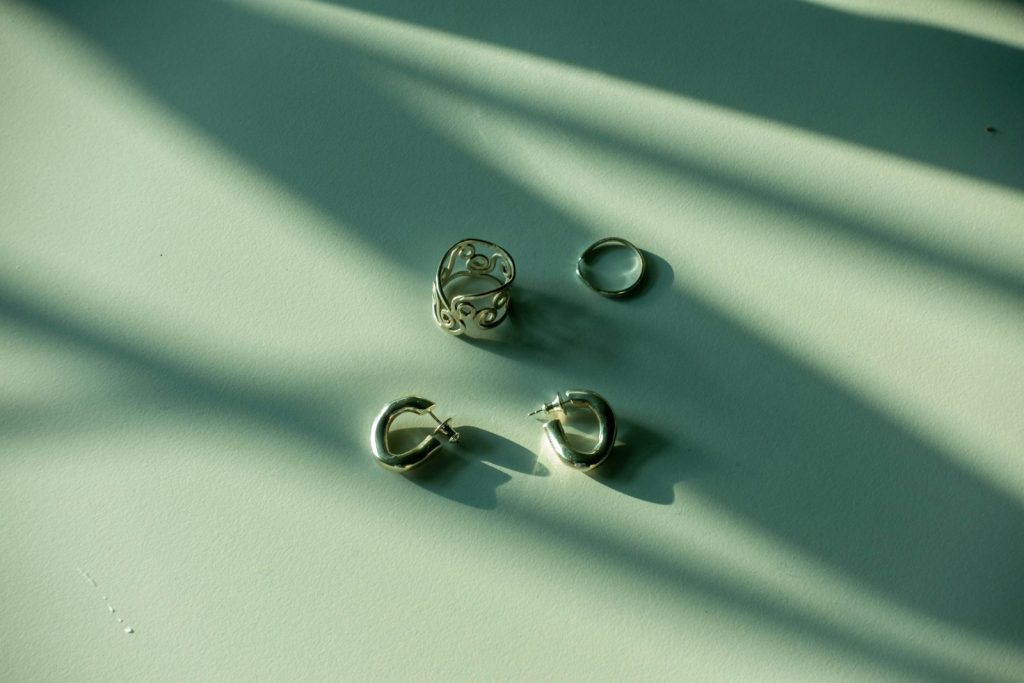
The 925 silver jewelry wholesale price is the landed cost per piece (or per gram) an importer pays for finished sterling-silver items at a given Incoterm, date, and quantity. It is built from live silver spot, net silver weight, labor, finishing, stones, packaging, export costs, and margin, not from a single fixed catalog number.
What “925 Silver Jewelry Wholesale Price” Really Means
For trade buyers, “925” is not just a marketing word. It means:
- Alloy: 92.5% pure silver + 7.5% copper or similar metals (sterling standard).
- HS classification: Most finished 925 items fall under HS 7113 (articles of jewelry and parts thereof, of precious metal or of metal clad with precious metal). Your customs broker should confirm the exact 6–10 digit HS code for your market.
- Unit basis: Factory pricing is usually quoted per piece, but internally it is calculated from a per-gram sterling silver base plus value-add.
At Celuk Silver Wholesale, our role as an independent export desk in Celuk (Gianyar, Bali) is to unpack that pricing logic so importers can compare quotes properly and negotiate on the right levers: grams, process, finishing, MOQ bands, and Incoterms.
Silver Jewelry Pricing Explained: Core Formula
For typical wholesale orders, this is the working structure your quote is built on:
Finished price per piece ≈
(Silver spot × 0.925 × net grams × wastage factor)
+ Labor (wax, casting, soldering, assembly)
+ Model & mold amortization (if custom/OEM)
+ Stones & settings
+ Finishing (polish, rhodium, e-coat, oxidation, texture)
+ Findings & components
+ Packaging (unit + export packing)
+ Quality control & export handling
+ Overhead & margin
Every factory in Celuk has its own internal cost breakdown, but the logic above is broadly how silver jewelry is priced across the trade. The lines that move the most for you as a buyer are:
- Net grams per piece (weight and design efficiency).
- Silver spot price jewelry link (how your supplier pegs to the market and for how long).
- Labor complexity (handmade vs cast, high-polish vs texture, stone count).
- MOQ bands and total order value (breakpoints for better rates).
- Incoterms (FOB vs CIF vs DAP changes what “price” includes).
All numbers on this page are indicative ranges, last verified June 2026 from Celuk workshop benchmarks and public silver-market data. They are not a standing offer. Always confirm a live quote.
Step 1: Silver Spot and Net Sterling Weight
1.1 Understanding the Silver Spot Component
The backbone of any sterling silver wholesale cost is the global silver spot price. This is the live price of pure silver per troy ounce traded on international exchanges (COMEX, LBMA). Key points:
- Unit: Spot is quoted per troy ounce (31.1035 g), not per metric gram.
- Purity adjustment: 925 sterling uses 92.5% silver content, so the base metal cost is spot × 0.925 before conversion to grams.
- Market source: Factories typically follow a published benchmark (for example LBMA or a bullion dealer quote) plus or minus a handling premium. Your contract should state which reference they use.
Producers and export desks in Celuk normally convert this into a per-gram sterling silver cost for internal calculations:
- Take spot in USD/oz. (e.g. USD 30/oz as a hypothetical, illustrative figure).
- Adjust for sterling: 30 × 0.925 = USD 27.75 per troy ounce of 925-content metal.
- Convert to grams: 27.75 ÷ 31.1035 ≈ USD 0.89 per gram of 925 (illustrative).
Suppliers may then add a small internal premium per gram to cover alloying, scrap management, and hedging. That premium is usually baked into the piece price, not broken out line by line.
1.2 Net Grams and Wastage
Your silver cost per piece depends on:
- Net finished weight (grams per piece, excluding stones and packaging).
- Wastage factor (sprues, filing, polishing loss, casting yields).
Typical wastage factors for small-to-medium Celuk workshops are in the 5–15% range (last verified June 2026) depending on process and item type. For rough planning, we see:
- Simple cast rings / charms: ~5–8% wastage.
- Intricate cast pieces, filigree: ~8–15% wastage.
- Heavy chains: lower relative wastage once process is dialed in.
An honest quote will usually show at least the finished net grams per piece. Some producers are willing to state the wastage assumption if you ask; others bake it into the per-gram rate.
Step 2: Labor, Craft Method, and Complexity
2.1 Handmade vs Cast vs Hybrid
Labor is where how silver jewelry is priced diverges between items that weigh the same. Three broad types in Celuk:
- Handmade / hand-fabricated: Sheet, wire, and solder work, often with Balinese granulation or filigree. Higher labor hours per gram.
- Lost-wax cast: CAD or hand-carved model → rubber/silicone mold → wax tree → cast. Efficient for repetition and higher MOQs.
- Hybrid: Cast base (e.g. ring shank) plus handmade detailing or stone-setting.
Labor is driven by:
- Process steps (casting only vs casting + assembly + stone setting).
- Skill level required (basic soldering vs precision micro-prong setting).
- Pieces per hour a team can finish consistently.
Most Celuk workshops quote finished prices; they do not expose an hourly labor rate. As an export desk, we often work backward for buyers who ask for cost-engineering support (for example comparing two designs with the same grams but different stone counts).
2.2 Volume, Repetition, and MOQ Bands
Wholesale labor cost is sensitive to repetition:
- First time a design goes through: slower, more checking, higher reject rate.
- After 3–5 runs: processes stabilize, jigs and fixtures are in place, polish and assembly are faster.
This is why factories give MOQ bands instead of one MOQ number that applies to all buyers. Example pattern we see from Celuk workshops (indicative only):
- Prototype / sampling: 1–10 pcs, high per-piece cost.
- Initial production: 50–100 pcs per SKU, moderate cost.
- Strong volume: 300–500+ pcs per SKU, best rates.
There is no universal MOQ for “Celuk silver.” Each producer has constraints on casting-tree size, polishing capacity, and stone-setting. You should confirm MOQs and price breaks per design in your quote.
Step 3: Models, Molds, and Development
3.1 CAD, Master Model, and Mold
For OEM and private-label, model & mold charges are another component of sterling silver wholesale cost. Typical elements:
- CAD design & revisions: If you do not provide ready-to-print CAD, local designers will charge a fee per model.
- Master model: 3D-printed or hand-carved master made in silver, brass, or resin.
- Rubber/silicone mold: For repeated wax injection and casting.
These are usually:
- One-time charges per design, amortized over units.
- Higher for complex designs, articulated parts, or tight stone layouts.
For some simple catalog items, a Celuk factory may already have molds and treat them as sunk cost, so you only see the per-piece price. For exclusive private-label items, expect separate development line items in the quote.
3.2 How Development Costs Affect Per-Piece Price
You can think of development costs as a mini “setup fee.” Example mechanism:
- Setup for a ring design: USD X in CAD/model/mold (illustrative).
- Order 50 pcs → add X ÷ 50 onto each ring.
- Order 500 pcs → add X ÷ 500 onto each ring (a much lower impact).
This is why suppliers often ask your intended volume before quoting: they need to know over how many pieces to spread development cost. For serious programs, they may waive or reduce mold charges at higher volume bands, but this is always case-by-case and must be negotiated explicitly.
Step 4: Stones, Settings, and Other Components
4.1 Stone Types and Cost Structures
Stones change the price structure significantly compared to plain 925 pieces. Common scenarios from Celuk exporters:
- Cubic zirconia (CZ) and synthetic stones: Typically priced per stone or per batch, relatively low raw cost but added setting labor.
- Natural semi-precious stones: Garnet, amethyst, citrine, topaz, peridot, etc. Cost per carat and cut quality vary by supplier and trend.
- Premium stones: Higher-grade gemstones or lab-grown diamonds, usually arranged through specialized stone partners.
Stone cost is driven by:
- Carat weight and size.
- Cut and grade.
- Quantity per piece (single stone vs pavé fields).
- Source and traceability requirements (certified vs non-certified).
4.2 Stone Setting Labor
Each additional stone not only adds raw cost but also precision labor:
- Prong / claw setting.
- Bezel setting.
- Pavé or micro-pavé.
- Channel settings.
In practice, many Celuk workshops will simplify the quote to a per-piece price including stones and setting, but behind the scenes they track how many stones, which sizes, and how many setters they need. As a buyer:
- Request the quote to state “with stones” vs “stone-free” explicitly.
- For OEM, clarify if the price assumes a certain grade and origin.
Step 5: Finishing — Rhodium, E-Coat, Oxidation, Texture
Finishing has both material and labor components and can change the end price meaningfully.
5.1 Polishing Levels
- Standard polish: Adequate for many fashion pieces and online sales.
- High-polish / mirror finish: More polishing time, tighter QC; affects unit cost and capacity.
- Matte / satin / brushed: Different wheel media and masking; can add steps.
5.2 Rhodium Plating
Rhodium is a platinum-group metal often used to plate silver for brightness and tarnish resistance. Pricing questions to ask:
- What microns thickness are quoted? (Common retail bands are around 0.1–0.3 μm for fashion, higher for premium segments.)
- Is plating full-body or partial (e.g. front face only)?
- How does this impact repolish or replate for returns?
Rhodium itself is a volatile commodity. Many factories in Celuk account for it with a per-gram or per-piece surcharge that may be reviewed when rhodium markets move sharply. Your quote validity period should cover this.
5.3 E-Coating and Oxidation
- E-coat (electrophoretic coating): Adds a transparent protective layer; impacts color slightly and reduces tarnish. Charged per piece or per batch.
- Oxidation (antique finish): Intentional darkening of recesses to highlight design. Uses chemicals and extra rinsing; low material cost but adds processing steps.
Finishing specifications must be clearly written in your RFQ and confirmed in your PI (proforma invoice); otherwise you may find the 925 silver jewelry wholesale price you expected does not match the finish you receive.
Step 6: Packaging and Export Handling
6.1 Unit Packaging
Unit packaging can range from simple polybags to branded boxes. Each level affects price and volumetric weight:
- Basic OPP bag + desiccant + barcode sticker.
- Generic jewelry box or card + OPP bag.
- Custom-printed cards, pouches, or boxes.
In Celuk, small workshops may outsource custom packaging to specialized suppliers in Bali or Java. Lead-time and MOQ for packaging can sometimes exceed jewelry MOQs, so plan this early in your program.
6.2 Export Packing and Documentation
Regardless of unit packaging, export packing must protect against:
- Moisture and tarnish during transit.
- Compression and shock.
- Theft or tampering (discreet outer cartons, neutral descriptions).
Export handling also includes:
- Packing list by SKU and HS 7113 subheading (or local equivalent).
- Commercial invoice with Incoterms (e.g. FOB Denpasar, CIF port, etc.).
- Country-of-origin declaration (Indonesia).
- For certain markets, fumigation or treatment certificates for wooden packaging, if used.
As an export desk, we coordinate with Celuk producers and Indonesian forwarders on HS descriptions, packing, and export documentation so that your customs broker has clean paperwork to work with at destination.
Step 7: Incoterms, Shipping, and “Export” Cost
7.1 Why Incoterms Change the “Price” You See
Two quotes can have the same ex-factory cost but very different perceived 925 silver jewelry wholesale price depending on Incoterms. Common structures for jewelry exports out of Indonesia:
- EXW (Ex Works) workshop in Celuk: You handle local transport, export clearance, and freight. Price only reflects product.
- FOB Denpasar or Surabaya: Supplier/export desk handles local logistics to port/airport and export clearance; price includes those export costs.
- CIF port of discharge: Price includes freight and insurance up to your port; you handle import clearance and local charges.
- DAP door: Supplier/export desk plus forwarder handle freight and delivery to your door; you handle import duties/taxes.
Confirmed with Indonesian forwarders as of June 2026, air cargo is the dominant mode for high-value, low-weight shipments like silver jewelry; sea freight enters the discussion for very large volumes or where buyers consolidate multiple product categories.
7.2 Shipping Options and Unit Impact
Shipping cost per piece depends on:
- Mode: courier (express), air freight, sea freight.
- Chargeable weight: actual vs volumetric.
- Consolidation: single shipment or combined with other orders.
Because silver is dense, jewelry often ships on actual weight, not volume, which favors air freight. But each case is different; your forwarder or our partnered forwarders can quote both options for comparison. We always recommend you:
- Verify all-in landed cost with your customs broker, not just supplier price.
- Model at least two shipping scenarios for your first shipment.
request a wholesale quote or message us on WhatsApp if you want us to structure a test shipment scenario (FOB vs CIF vs DAP) for your own broker to compare.
Step 8: Margin, Overhead, and Why Quotes Are Time-Limited
8.1 Overhead and Margin
Even with perfect visibility on metal and labor, factories and export desks must cover:
- Workshop rent and utilities.
- Tooling, maintenance, and consumables.
- Admin, design, and sampling support.
- Quality control and rework.
- FX risk between IDR and USD or your settlement currency.
That overhead plus a reasonable margin turns a cost structure into a wholesale price. Margins vary by buyer relationship, consistency of orders, payment terms, and product complexity.
8.2 Why Quotes Typically Expire in 7–14 Days
Reputable Celuk suppliers rarely leave quotes open-ended. Reasons:
- Silver spot moves daily.
- Rhodium and other inputs are volatile.
- FX rates shift.
- Freight rates fluctuate.
We typically see quotes marked as valid for 7–14 days (last verified June 2026). After that window, they must be refreshed, even if design and grams stay the same. For long-term programs, some buyers agree on a metal clause — the silver component floats with spot within a band, while labor and overhead remain more stable over a defined period.
Illustrative Example: How a Price Is Built (Not an Offer)
The following example is purely illustrative, using hypothetical numbers to show how a silver spot price jewelry calculation flows into a per-piece quote. This is not a standing offer and does not reflect current day prices.
Example Item
- 925 sterling silver ring.
- Net finished weight: 4.0 g.
- Simple shank + one bezel-set 5 mm CZ stone.
- High-polish + light rhodium plating.
- Order quantity: 300 pcs (production, not sampling).
- Incoterm: FOB Denpasar.
Illustrative Build-Up
- Silver metal cost
Assume illustrative spot = USD 30/oz.
30 × 0.925 = 27.75 USD/oz of 925
27.75 ÷ 31.1035 ≈ 0.89 USD/g of 925
Wastage factor: 10% → 4.0 g × 1.10 = 4.4 g silver required
Metal cost ≈ 4.4 g × 0.89 ≈ USD 3.92 - Labor (casting, assembly, basic polish)
Assume internal costing yields ≈ USD 1.10 per ring at this volume (illustrative). - Stone and setting
CZ cabochon or faceted 5 mm stone + setting labor, aggregated ≈ USD 0.40 per ring (illustrative). - Finishing (high polish + rhodium)
Incremental labor + rhodium bath: ≈ USD 0.35 per ring (illustrative). - Packaging (OPP bag, anti-tarnish strip, bulk export carton)
Allocated per ring: ≈ USD 0.15 (illustrative). - Export handling (FOB)
Local transport + export clearance allocated across the shipment, ≈ USD 0.20 per ring (illustrative). - Overhead & margin
Factory/export desk adds overhead recovery and profit; suppose this adds ≈ USD 1.00 per ring (illustrative).
Illustrative total: 3.92 + 1.10 + 0.40 + 0.35 + 0.15 + 0.20 + 1.00 ≈ USD 7.12 per ring FOB Denpasar.
Again: these numbers are examples only to explain the structure of a quote. They are not current market prices and not an offer from any Celuk producer. Your actual quote will change with:
- Live silver and rhodium prices on the quote date.
- Your final design and exact grams.
- Stones, finish, and packaging spec.
- Quantity and repeat-order potential.
- Chosen Incoterm and shipping scenario.
What a Professional 925 Silver Jewelry Wholesale Quote Should Show
To compare suppliers properly, insist on a quote or PI that clearly states at least:
- Product identifiers (your SKU + factory code if different).
- Metal: 925 sterling silver, plus any plating.
- Net finished weight per piece (grams).
- Stones: type, size, quantity per piece, grade if applicable.
- Finishing: polish level, rhodium (yes/no, approximate microns), e-coat/oxidation if any.
- Packaging: unit and export.
- MOQ and price bands per design.
- Incoterm and named place (e.g. FOB Denpasar airport).
- Currency and payment terms (e.g. 30% deposit, 70% before shipment).
- Quote validity period (e.g. 10 days from issue).
- HS code suggestion (for example 7113.x; you must verify the final code with your customs broker).
Where possible, ask the supplier to also note the silver reference they used (e.g. LBMA fix on a given date) and the assumed net grams. That gives you a clear benchmark to recost later if spot moves.
Table: Main Cost Components and Key Drivers
| Cost Component | What It Covers | Main Drivers | What You Can Influence |
|---|---|---|---|
| Silver metal | 925 alloy used in each piece (incl. wastage) | Silver spot, net grams, wastage %, FX | Optimize weight, simplify design, adjust size range |
| Labor | Wax, casting, assembly, soldering, pre-polish | Design complexity, method (hand vs cast), volume | Standardize designs, higher MOQs, design for manufacturability |
| Model & mold | CAD, master model, rubber/silicone molds | Number of designs, design complexity, exclusivity | Fewer SKUs, share components, commit to volume |
| Stones & settings | Stone cost and setting labor | Stone type, size, count, cut grade | Rationalize stone sizes, use CZ or semi-precious where appropriate |
| Finishing | Polish, plating, oxidation, texture | Polish level, plating microns, special finishes | Choose appropriate finish spec for target retail tier |
| Packaging | Unit and export packaging materials | Type of box/card, branding, protective materials | Optimize packaging design, balance presentation vs freight |
| Export & logistics | Local delivery, export clearance, documentation | Incoterm, shipment size, mode (air/sea/courier) | Consolidate shipments, choose suitable Incoterms, coordinate with forwarder |
| Overhead & margin | Factory/admin costs and profit | Supplier’s structure, risk profile, payment terms | Build relationship, stabilize reorders, negotiate on realistic volumes |
What You Must Verify Locally: HS Codes, Duties, and Taxes
Two importers could pay the same FOB price and land at very different total cost because of:
- Different tariff classification within HS 7113 and local subheadings.
- Differing MFN or FTA rates for Indonesia in their country.
- VAT/GST or sales tax treatment on imports.
- Any anti-dumping, countervailing, or safeguard measures in force.
Celuk Silver Wholesale can share how exporters in Indonesia commonly classify certain items, but we cannot publish or guarantee duty rates for your market. You should:
- Send your final HS code proposal to your customs broker.
- Ask for a written ruling or binding tariff information where your jurisdiction allows.
- Model total landed cost including all duties, taxes, and clearance charges.
Your customs broker is the final authority for your imports. Treat all supplier HS suggestions as starting points, not legal classification.
Working With an Independent Celuk Export Desk
Celuk has hundreds of small and mid-size workshops, many of them excellent at craft but less structured on documentation and price transparency. As an independent sourcing and export desk, we:
- Translate design briefs into factory-ready specs (grams, stones, finish) and RFQs.
- Benchmark quotes from multiple Celuk producers on a like-for-like basis.
- Align on HS 7113 subheadings with Indonesian forwarders and your broker’s guidance.
- Co-manage QC, packing, and export documentation from Bali to your nominated port or door.
We do not publish fixed 925 silver jewelry wholesale price lists because those would mislead you as silver spot, FX, and freight change. Instead, we show you the mechanics so you can challenge a quote line-by-line.
If you’re planning a sourcing trip to Bali or remote development from abroad, you can request a wholesale quote with us and continue the discussion over WhatsApp for design files, photos, and quote iterations.
FAQs on 925 Silver Jewelry Wholesale Pricing
How do I compare quotes from different 925 silver suppliers fairly?
Normalize three things: net grams per piece, spec (stones, finish, packaging), and Incoterms. Ask each supplier to confirm net weight, exact finishing (e.g. rhodium yes/no), and HS suggestion, then recalculate the silver component using the same reference spot price and FX. That lets you see who is charging more for metal, labor, or margin instead of being misled by different packaging of numbers.
Can I lock in a fixed silver price for long-term orders?
In practice, most Celuk suppliers avoid long-term fixed metal pricing unless you use hedging or frequent price reviews. Common approaches are: metal clauses where the silver portion floats with spot (with a cap/floor), or short validity windows (7–14 days) on each PO. If you need long-term pricing stability, discuss hedging or index-linked formulas with your supplier and clear this with your finance team and broker.
Why is my sample price higher than the bulk price?
Samples carry full development and setup cost over just a few pieces, plus extra QC and communication time. Factories also lack repetition efficiency at the sampling stage. Once you move to production MOQs, those fixed development costs are amortized, and the workshop can optimize casting trees and workflow, so the per-piece price drops.
Does rhodium plating always increase my wholesale price?
Yes, rhodium adds both material and processing cost versus naked 925. The impact depends on thickness, coverage, and item complexity. For some product ranges it is commercially necessary to meet customer expectations and reduce returns; for others, a well-polished and correctly stored plain 925 finish is acceptable. Decide finish level based on your target retail positioning and maintenance expectations, then cost it explicitly with your supplier.
Who should decide the HS code and duty rate for my imports?
Your local customs broker or trade compliance team must make the final HS classification and duty assessment. Suppliers and export desks in Celuk can share typical HS 7113 practices and include suggested codes on invoices, but they are not authorities in your jurisdiction. Always verify classification, duty rate, and any preferential treatment (if applicable) with your broker before you place volume orders.