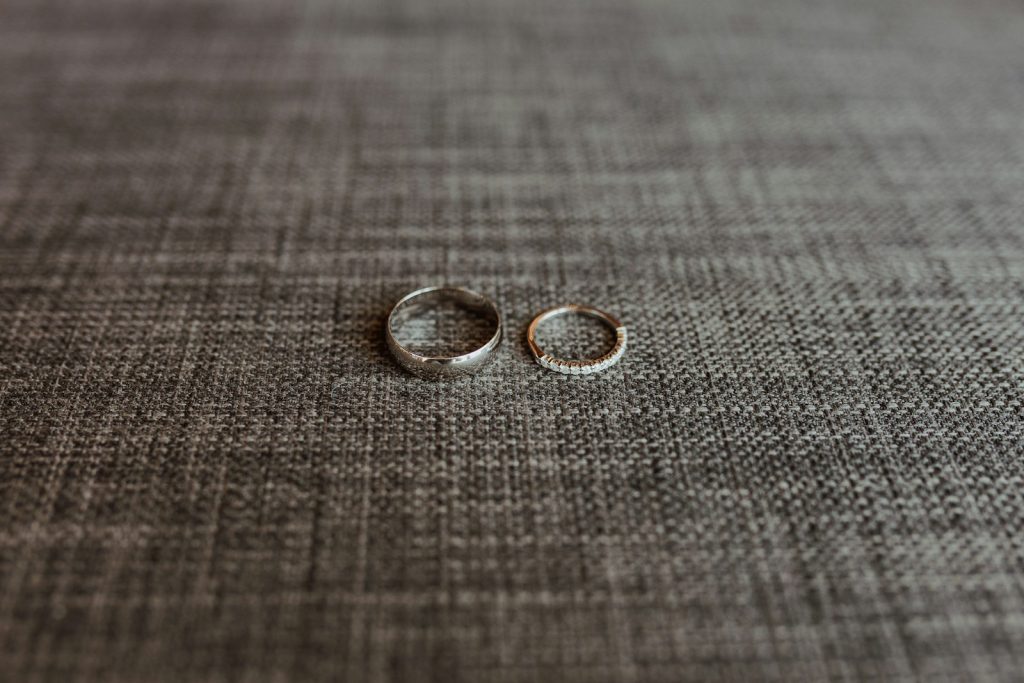
Silver jewelry for boutiques wholesale means curated 925 sterling-silver collections supplied in trade quantities, with pricing, MOQs and lead times tailored to independent stores. For Celuk Silver Wholesale, that means small-batch silver wholesale programs built on real workshop capacity, not catalog promises we can’t deliver in production.
What “silver jewelry for boutiques wholesale” really means
Boutique needs are different from big-box retail or marketplace resellers. Most independent buyers are looking for:
- Small, curated drops (dozens or low hundreds of pieces, not tens of thousands).
- Mixed-SKU orders to test what sells in your local market.
- Repeatable designs that can be reordered at the same quality.
- Clear 925 sterling mechanics (alloy, weights, and finishing) with no surprises at customs.
As an independent Celuk-based sourcing & export desk, my job is to translate those needs into factory language: gram weights, casting vs. hand-fabrication, stone-setting, plating specs, and realistic MOQs based on each workshop’s actual line and team size.
Celuk (Gianyar, Bali) has hundreds of small and mid-sized silver ateliers. They are strong on design and craftsmanship, but not all are set up for structured wholesale or export. Celuk Silver Wholesale sits in the middle: we vet workshops, band them by capability, and manage QC and export so your order arrives as booked.
How independent boutiques actually source 925: line sheets, test orders, reorders
1. Start with a focused silver jewelry line sheet
A silver jewelry line sheet is your working tool: a clear, buyer-facing document showing each design with trade details. For our wholesale, OEM and private-label clients, a standard line sheet will include:
- SKU code (our internal code; we can mirror yours if needed).
- Front and angled photos on white background (and lifestyle on request).
- Metal spec: 925 sterling silver; options for 18K/14K gold vermeil or rhodium plate over 925.
- Approximate gram weight per piece (unplated) and any stones/components listed.
- Size ranges (ring US sizes; bracelet/necklace lengths in cm/inches).
- Production method: cast, cast + hand-finished, or fully hand-fabricated.
- MOQ band per SKU (more on bands below).
- FOB price range per piece (last verified June 2026; final price confirmed per PO).
- Standard lead-time band (in production days, not calendar including shipping).
For small-batch silver wholesale, you do not need a 400-SKU catalog. Most boutiques start with 30–80 SKUs across:
- Core repeat styles (stacking rings, hoops, chains, studs).
- Seasonal/statement pieces (cuff rings, gemstone pendants, ear climbers).
- Price-point drivers (lighter-weight items that hit your target retail without margin pressure).
If you need a starting point, ask us for a focused “silver jewelry line sheet” tailored to:
- Your retail price band (for example, main case US$40–120 retail).
- Metal finish mix (all 925 bright, or 50/50 silver & gold vermeil, etc.).
- Market profile (beach-town boutique, contemporary minimalist, boho, fine-jewelry crossover).
Mid-content CTA: if you want us to draft a test assortment, you can request a wholesale quote to our sourcing desk virtually or in person; we coordinate fast via WhatsApp for sampling and questions.
2. Test order structure: mixed-SKU, small-batch by design
Independent boutiques usually launch with a “first drop” that is big enough to merchandise a case, but small enough to be a real test.
Typical first orders we see for silver jewelry for boutiques wholesale:
- Total pieces: 120–600 units across 30–80 SKUs.
- Depth per SKU: 3–20 pieces per variation (size/finish).
- Finish split: for example, 60% plain 925 silver, 40% 18K/14K gold vermeil.
- Assortment focus: usually rings + earrings as the volume drivers; necklaces/bracelets for visual storytelling.
Mixed-SKU MOQ is possible because we group SKUs by workshop and process. A casting workshop making your hoops and signet rings can run a combined casting tree for 10 SKUs in one go. Hand-fabricated filigree from a micro-atelier will have different constraints.
You don’t have to calculate this yourself; our job is to tell you, per SKU and per PO, what is realistic and show you where consolidating designs will help you hit lower MOQs or better unit cost.
MOQ bands: honest ranges for boutique-friendly production
Every Celuk workshop has its own reality. Some are five-person family units; others are 40–80 person factories with casting, polishing and plating in-house. Instead of quoting one magical MOQ, we band MOQs by type and capacity.
Below is a simplified guide (all MOQs are typical ranges we see; final numbers are confirmed against the specific atelier and time slot).
| Product / Workshop Type | Typical MOQ per SKU | Can MOQs be mixed across SKUs? | Notes |
|---|---|---|---|
| Simple cast rings (plain / signets) from mid-sized casting workshop | 30–60 pcs per size/finish | Yes, within same alloy & finish run | Best starting point for small-batch core items. |
| Hoops & studs (cast + post solder) | 40–80 pcs per design/finish | Yes, within workshop batch | Very reorderable; stable MOQs over time. |
| Chain bracelets/necklaces from chain specialist | 20–40 pcs per length/finish | Limited mixing; depends on chain model | Chains often sold by gram weight; price tied to silver market. |
| Handmade filigree or complex hand-fabrication | 10–30 pcs per design | Not usually; artisan time is limiting factor | Lower MOQ but higher unit cost and longer lead times. |
| Gemstone-set rings/pendants (semi-precious) | 30–60 pcs per stone/color | Sometimes; depends on stone sourcing | MOQs sometimes driven by stone parcel sizes, not silver. |
| Custom logo charms/tags for private-label | 150–500 pcs per design | Occasionally, if shared across SKUs | Higher MOQ because we want enough to last across reorders. |
We also look at overall PO size. A workshop might accept 20 pcs per SKU instead of 60, if your total order across that workshop is 300+ units and fits well into their schedule.
For boutiques, the most efficient path is usually:
- Anchor your drop with 10–20 designs from one or two core workshops (shared MOQs).
- Add smaller artisan or filigree pieces as accents (lower MOQ but also lower capacity).
- Grow with reorders and seasonal extensions once you know your bestsellers.
Lead times: sampling, first production, and reorders
Lead time is another area where “one number” is misleading. The reality depends on:
- Design complexity and number of components.
- Need for new molds, masters or CAD.
- Stone sourcing, plating, and pre-shipment QC slots.
Typical sampling lead times for boutique programs:
- Existing workshop designs (from our library): around 10–21 working days for a curated sample set.
- New OEM designs from your sketches/CAD: around 15–30 working days for first master + sample, depending on detail and workshop.
Typical production lead times once samples are approved and deposit is in:
- Small to medium orders (100–800 pcs total): around 25–45 working days.
- Larger boutique chains / multi-store orders: can reach 45–70 working days, especially pre-peak (Oct–Nov) or before major holidays.
Reorders on proven SKUs are usually faster, especially if molds and jigs are already in place and the workshop is not at full capacity.
We always give you:
- A lead-time band at quote stage, based on the actual workshop calendar.
- Updated ETD (estimated time of departure) when we firm the PO and book export logistics.
We do not guarantee exact ship dates at quotation stage because capacity and metal markets move. We can, however, block production windows for serious buyers that confirm POs within an agreed timeframe.
925 sterling mechanics: what boutiques should check
Trade buyers should be precise about what “925” means in practice:
Alloy and marking
- Alloy: 925 sterling silver = 92.5% silver + 7.5% other metals (commonly copper). This is standard for our workshops.
- Stamps: Most pieces are stamped “925” in a discreet area. For private-label, we can combine your brand mark + 925, subject to local marking practices.
- Nickel content: Our standard alloys aim to comply with major-market nickel-release regulations. If your country has specific requirements, confirm in writing so we can align workshop and plating specs.
Finish and plating options
We work across:
- High-polish bright 925.
- Matte/brushed or oxidized accents.
- Gold vermeil over 925 (thickness and karat to be specified, e.g., 18K, 2.5 micron target).
- Rhodium plating over 925 for anti-tarnish and color stability.
As a buyer, you should:
- Specify desired plating thickness range (microns) per product group.
- Align that with your retail price and warranty/return policy.
- Ask us to note plating specs in the line sheet and PO for future reference.
Gram weights and pricing logic
Silver is a traded metal; FOB pricing in 925 will move with silver markets and local costs.
For a boutique program, we usually target:
- Lighter everyday rings/earrings: 0.8–3.0g per piece (unplated), depending on style.
- Chunkier rings/bracelets: 4–12g per piece.
- Heavy cuffs / bold statement pieces: higher, quoted individually.
Our price quotes are built on:
- Design complexity and labor time (hand-work heavy designs get more weight on labor).
- Total silver usage (gram weight × silver cost benchmark at the time we quote).
- Plating and stones (if any).
- Order volume by SKU and by workshop.
FOB price ranges are always flagged as “last verified June 2026” and confirmed on each formal quotation. For long-running programs, we recommend a regular price review (for example every 3–6 months) to reflect metal markets fairly for both sides.
FOB, Incoterms and export: what we actually handle
Celuk Silver Wholesale operates as a sourcing and export desk, not as a courier service. That means we manage the full export process from the workshops to the agreed handover point.
Typical structures:
- FOB Indonesian port (e.g., Bali or Surabaya, depending on consolidation): we handle consolidation from workshops, export packing, customs clearance in Indonesia, and handover to your nominated carrier at port.
- CIF/CFR on request: for some destinations, we can quote cost + insurance + freight, but many regular importers prefer to use their own forwarder or courier account.
- Courier shipments (small orders): for early sampling or small boutique top-ups, we can arrange export clearance and DHL/UPS/FedEx handover; shipping charges typically prepaid by you or via your account.
Your responsibilities as importer normally include:
- Import duties, VAT/GST and local broker charges in your country.
- Compliance with local hallmarking, labeling and packaging requirements.
- Ensuring you or your broker file any special declarations needed for jewelry or precious metals in your jurisdiction.
We provide, as standard:
- Commercial invoice and packing list matching the PO and QC output.
- Material declarations (925 sterling silver; plating type; stone descriptions as per PO).
- Photo/weight records for each exported carton for traceability.
If you’re new to importing, we strongly recommend discussing landed-cost assumptions with your freight forwarder or customs broker before you place a large PO. We can join a joint WhatsApp or email thread with you and your logistics partner to align expectations.
Quality control: what we inspect and what you should still verify
We run QC at two levels: workshop-level checks and export-level checks.
Workshop-level QC
At the workshop we monitor:
- Dimension tolerances on sample vs. production (ring sizes, chain lengths).
- Weight variances on a sample batch (to catch porosity or casting issues early).
- Visual inspection of solder joints, settings, and finishing.
- Random checking of stamp presence and position (925 and, if applicable, brand marks).
Workshops that consistently miss QC thresholds are either re-trained or removed from our active roster. Capability and reliability are more important to us than a workshop saying “yes” to everything.
Export-level QC
Before export, our team consolidates and re-checks:
- Piece counts by SKU and variation against the PO and packing list.
- Random sample of each SKU for finish consistency and plating defects.
- Stone presence and obvious defects on stone-set items.
- Basic functional checks (clasps, ear wires, closures).
For private-label and OEM programs, we can also:
- Scan barcodes or QR codes you supply, if pre-printed labels are used.
- Check brand packaging assembly for a defined sample size per batch.
What we recommend you still verify
Importers should not outsource responsibility entirely. You should:
- Spot-check weights, markings, and finishing on arrival.
- Confirm compliance with any specific local regulations (e.g., EU REACH, specific hallmarking rules in your country).
- Stress-test a sample of pieces (e.g., open/close clasps, lightly flex bracelets) to understand how they behave in your customers’ hands.
If you identify an issue, we expect clear documentation (photos, counts, and description). We work with the workshop on corrective actions and discuss fair remedies based on the nature and scale of the problem, within the terms agreed in the PO.
Seasonal drops and reorders that actually repeat
The most profitable boutique programs we see share a pattern:
- First drop: 30–60 SKUs, 120–600 pcs, curated around 2–3 core design stories.
- Review: After 4–12 weeks of sell-through, the buyer identifies A/B/C performers.
- Reorders: Double down on A-performers; trim or revise C-performers; test a few new SKUs each season.
- Private-label overlay: Once the mix is proven, add subtle brand-specific details (logo tags, custom motifs).
Our job is to keep your line sheet stable enough that reorders are actually repeatable:
- We note molds and masters per SKU and workshop in our internal registry.
- We map which SKUs depend on which external inputs (e.g., a specific stone cut, chain model).
- We flag any imminent changes early (for example, a workshop phasing out a certain component).
For boutiques, that means you can build long-term clients around “your” silver hoops or ring stacks, instead of constantly reintroducing unknown product.
OEM & private-label for boutiques: what’s realistic at small scale
Boutiques often want their own brand without enterprise-level MOQ. It is possible, but there are trade-offs.
Realistic expectations for OEM/private-label at boutique scale:
- Logo tags and stamps: usually feasible from low hundreds of pieces per tag design, used across your whole line.
- Custom silhouettes: we can develop original designs from your sketches or mood boards; expect higher sampling cost and slightly higher MOQs per SKU.
- Packaging: you can supply branded boxes/pouches to our Bali hub, or we can work with local unbranded options; branded printing locally usually requires higher MOQs.
- Exclusivity: true exclusivity (design only for you) is negotiable per SKU/workshop and usually linked to minimum annual volume or development fees.
On our side, we are transparent about:
- Which elements are truly custom vs. sourced from standard components.
- How long we expect molds and components to stay available.
- What MOQ and price breaks make sense if you scale up over 6–12 months.
How to brief us as your boutique jewelry supplier
The clearer your brief, the more accurately we can quote MOQ, pricing and lead time bands.
Here’s a simple structure that works well:
- Target markets & stores
- Country, city types, and a short description of your boutique(s) or online audience.
- Retail price targets
- Example: “Core rings US$40–70, earrings US$45–90, statement pieces up to US$150.”
- Metal & finish mix
- Example: “All 925 + option for 18K vermeil on key styles, satin or bright polish.”
- Design direction
- Mood boards, references, or your current bestsellers if you already sell jewelry.
- Approximate first-order volume
- Rough total pieces and budget range, even if just a band (for example, 200–400 pcs).
- Branding level
- Unbranded at start vs. logo stamps/tags from the first drop.
- Logistics setup
- Port of discharge, whether you have a freight forwarder, and any specific import constraints.
Send this to us and we can propose:
- A curated initial line sheet with MOQ bands and FOB price ranges.
- A sampling plan (which SKUs to sample, which to go straight to production on if they are proven standards).
- A tentative production and shipping calendar.
You can request a wholesale quote with us via email and WhatsApp to refine the brief, confirm which workshops fit your needs, and schedule sampling and production in a realistic way.
FAQs: silver jewelry for boutiques wholesale
What is the minimum order quantity for a new boutique buyer?
We do not run a single global MOQ, but most boutique-first orders land around 120–600 pieces total across 30–80 SKUs. Individual SKU MOQs vary by workshop and product type, typically in the 20–80 pieces per SKU band for core cast items, with some handmade pieces possible from 10–30 pieces. We confirm MOQs per SKU and per PO once we know your assortment and which ateliers will produce it.
Can I mix many different SKUs in one small-batch order?
Yes, mixed-SKU orders are normal for boutiques. The constraint is not how many SKUs you choose overall, but how production groups them at each workshop. We can often mix MOQs across several SKUs made in the same alloy and finish at one atelier, while very complex handmade items may require firmer per-SKU MOQs. We will map this clearly in your line sheet and quotation.
How are prices for 925 silver boutique jewelry set and updated?
FOB prices are based on design complexity, labor time, silver gram weight, plating and stones, plus order volume. We quote price ranges that reflect recent silver-market conditions, flagged with “last verified June 2026,” and then confirm exact prices in your formal quotation. For ongoing programs, we recommend periodic reviews to keep pricing fair on both sides as metal and local cost conditions change.
Can you handle private-label branding for my boutique?
Yes, within realistic MOQ and cost constraints. We can add brand stamps, custom logo tags, and develop OEM designs based on your brief. Logo tags usually require a few hundred pieces per design to be efficient, spread across your line, while fully custom designs will have higher sampling and per-SKU MOQ requirements. We outline these in detail before any development so you can decide what fits your scale.
What should I prepare before placing my first wholesale silver order?
Have clarity on your target retail price bands, desired metal/finish mix, approximate first-order volume and budget, and any non-negotiable requirements (such as specific plating specs or compliance rules in your country). Share reference images or a mood board and indicate which designs are “must-have” vs. experimental. With that, we can propose a targeted line sheet, MOQ bands, pricing ranges, and a production and export timeline that match your boutique’s realities.