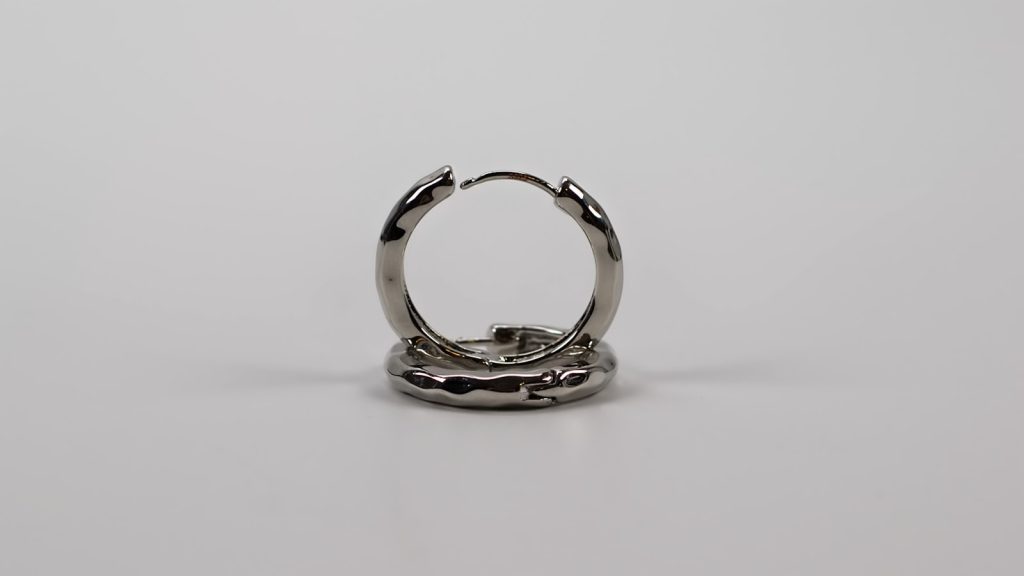
Silver jewelry samples are physical prototype pieces you order before committing to bulk production of a design. For importers, silver jewelry samples are your only reliable way to verify design, weight, finish and 925 purity before you send a large payment to a factory.
As Head of Sourcing & Export at Celuk Silver Wholesale, I spend a lot of time pushing new buyers to slow down and sample first. It’s not because we like small orders. It’s because a disciplined sampling process protects both sides: you get what you expect, and our workshops get clear, approved specifications to follow.
This page explains how to use a jewelry sample order properly: how fees usually work, what exactly to inspect on a pre production sample silver piece, and how to turn that one approved sample into a measurable quality-control baseline for the full run.
—
Why silver jewelry samples matter before bulk orders
Silver manufacturing has many variables: alloy composition, casting technique, hand-finishing skill, stone-setting, plating, and even local workshop habits in Celuk village. A photo or CAD file cannot capture all of that.
A structured sampling step solves several risks:
1. Turn abstract specs into a real object
You may start with:
– A sketch or inspiration photo
– Ring size range or chain lengths
– Target gram weights
– Plating color (bright silver, oxidized, gold vermeil, etc.)
– Stone type and size
Until you hold a physical sample, these are assumptions. Silver jewelry samples convert those assumptions into something measurable:
– Actual finished weight on a scale
– True perceived size on hand/neck
– How the clasp feels
– How the oxidation or polishing reads in real light
That physical piece often leads to design adjustments that save you from 500 units of “almost right.”
2. Align expectations between buyer and workshop
Most issues I see on first-time orders are not “bad factories”; they are communication gaps:
– You meant “high-polish, mirror finish”; the artisan defaulted to slightly matte.
– You expected a heavier, premium feel; the workshop chased a lower weight to keep your target price.
– You assumed 18K gold vermeil thickness; they applied a thin flash because no one specified microns.
With silver jewelry samples you can mark the piece, send labelled photos, and annotate:
– “Edge here should be sharper/softer”
– “Oxidation too heavy – reduce by 50%”
– “Ring shank must be at least 1.6 mm at the thinnest point”
That feedback loop produces a second, refined sample if needed and removes ambiguity.
3. Verify real 925 silver, not just a stamp
In Celuk, traditional workshops almost all use genuine 925 sterling silver alloy — it’s the village’s reputation. Still, as an importer you should verify:
– Presence and clarity of the 925 or “Sterling” stamp
– Location of the stamp (inside shank, on tag, near clasp, etc.)
– That the stamp is legible but not visibly disruptive to design
If your volume justifies it, you can also test silver content via XRF or an assay lab in your own country. Do that on samples before you commit to a large transfer.
4. Test fit, comfort and function in your market
Fit standards vary:
– US vs EU ring sizes
– Chain length preferences in your core demographic
– Earring post thickness for sensitive ears
A sample lets you and your team wear-test:
– Any sharp edges catching on clothing
– Ear weight over a full day
– Clasp ease of use
Sometimes you discover you need a lighter version for ecommerce (to reduce returns) or a thicker version for premium retail.
5. Protect your downstream brand and retailer relationships
If you sell under your own brand or private label for retailers, a failed bulk run is expensive:
– Rework costs
– Discounts to clear sub-standard stock
– Strain on retailer relationships when specs aren’t met
Using a pre production sample silver piece as an approved “golden sample” gives you a defensible standard to insist on if there is a deviation.
—
How jewelry sample orders usually work in practice
Each workshop we manage in Celuk has its own policies, but the basic jewelry sample order flow is similar worldwide.
1. Scope the sample: new design vs from existing line
Expect two very different experiences:
– From existing line / catalog
– Faster and cheaper.
– Workshop already has mold, jigs and process.
– Sample often identical to bulk (unless you change finish or stones).
– New OEM or private-label design
– Requires CAD, wax, mold and trial casting.
– More back-and-forth and usually at least one iteration.
– Higher sample fee, longer development lead time.
We band workshops by capability: some are excellent at repeat production of simple bands; others are better for intricate stone pieces or heavy men’s lines. During sourcing, we match your design to the right atelier to avoid sampling with the wrong producer.
2. Typical sample MOQs and lead times
For silver jewelry samples, MOQs and lead times are not one-size-fits-all. They depend on:
– Complexity (plain band vs filigree statement piece)
– Casting vs hand-fabrication
– Use of stones or custom components
– Current workshop load
Based on our actual workshop data (last consolidated June 2026), realistic bands look like this:
| Item type | Sample MOQ (per design) | Typical sample lead time |
|---|---|---|
| Simple rings / bands (no stones) | 1–3 pcs | 7–14 days |
| Stone-set rings / pendants | 1–3 pcs | 10–21 days |
| Chains / bracelets with standard findings | 1–5 pcs (assorted lengths if needed) | 10–21 days |
| Complex OEM designs (new molds) | 1–3 pcs | 21–35 days including CAD/mold |
These are ranges, not promises. For any specific item, we quote against live capacity and past performance of the workshop that will actually produce your order.
3. Sample fee policy in jewelry manufacturing
A typical sample fee policy jewelry buyers will see in the market:
– Existing model sample
– Per-piece sample price often higher than bulk unit cost.
– Why: workshop must stop a line, reset tools, and handle admin for a tiny batch.
– New OEM design sample
– One-time development component (CAD, mold, jigs).
– Per-piece cost may be closer to retail than your eventual FOB price.
– Development fee is sometimes partially or fully creditable against bulk, sometimes not.
At Celuk Silver Wholesale, we don’t publish fixed sample prices because they vary by atelier and complexity. Instead, we:
– Get the workshop’s real development and unit cost for your design band.
– Quote you a sample fee range and state clearly which portion is:
– non-recurring engineering (NRE) / mold cost, and
– recoverable vs non-recoverable.
For credible suppliers, a common approach (last reviewed June 2026) is:
– Credit 50–100% of mold/NRE cost against the first confirmed bulk order, once you meet a specified MOQ band.
– Charge sample units at or slightly above target bulk FOB with no later credit, as this covers low-quantity inefficiency.
You should always ask suppliers to state in writing:
– Exact sample fee breakdown
– Under what bulk MOQ they will credit which part
– How long that credit is valid (e.g., 6–12 months)
—
What to inspect on silver jewelry samples
Receiving your samples is not the finish line. It’s the start of quality control. Treat sample inspection like a mini-audit.
1. Verify dimensions, size scales and fit
Use tools, not just eyes:
– Calipers to measure ring shank thickness, pendant dimensions, stone diameter.
– Ring mandrel to check sizes (US/EU as relevant).
– Ruler / tape for chain and bracelet lengths.
Confirm that:
– Dimensions match your spec sheet or drawing.
– Ring grading across sizes (if multiple samples) looks proportional.
– Chains measure correctly including clasp.
Document any adjustments you want — 1–2 mm can change perceived scale significantly.
2. Check gram weight and how it ties to your price
Sterling silver cost tracks global metal prices, which move daily. Your workshop prices jewelry largely on:
– Silver gram weight
– Labor hours
– Stone and component costs
– Plating and finishing steps
We recommend you:
– Use a jewelry scale (0.01 g resolution) to weigh each sample.
– Compare to target weight range the supplier quoted.
– Note any large deviations and clarify why.
A lighter piece than expected may feel cheap; a heavier one increases your cost and retail price.
At Celuk Silver Wholesale, we maintain internal weight logs per SKU from workshops and cross-check against samples we receive. For serious private-label programs, we share weight bands so your finance team can model landed cost more precisely.
3. Inspect 925 stamp, maker marks and branding
Key checks:
– Presence of 925 / Sterling mark on each sample.
– Location: non-visible or minimally visible when worn.
– Consistency: same place and style on each piece of a design.
If you need:
– Your own brand logo
– A retailer’s private label mark
– Country of origin marking (e.g., “Made in Indonesia” where required)
Ask for a sample showing exactly how these marks will appear. This is easier to adjust now than after 2,000 units are cast.
4. Surface finish and polishing standard
Look under strong, neutral light:
– Micro-scratches or polishing lines
– Excessive rounding of design details
– Uneven matting or brushing
– Oxidation or antique finish consistency
Run fingers along all edges and inner surfaces for:
– Sharp edges that might scratch the wearer
– Rough interior in rings or bangles
– Residual polishing compound in crevices
If your brand has defined finish categories (e.g., “Mirror,” “Soft Satin,” “Vintage Oxidized”), align the sample with those definitions and take notes for the QC spec sheet.
5. Stone setting, alignment and quality
For stone-set pieces:
– Check each stone for:
– Chips or scratches
– Visible inclusions (if clarity is part of your spec)
– Color consistency in sets (earrings, ring & pendant sets)
– Examine settings with a loupe for:
– Equal prong tightness and shape
– No excess solder around bezels
– No visible glue on stones that should be mechanically set
Gently tap the jewelry next to your ear: any rattle suggests a loose stone.
For pavé or micro-pavé, some traditional Celuk workshops can handle it well, others cannot. If pavé is important to your brand, we only use ateliers with proven track records and encourage you to be especially critical at sample stage.
6. Plating / vermeil consistency
If your silver jewelry samples include plating:
– Confirm color tone matches your brand standard (e.g., yellow gold vs champagne).
– Inspect for pinholes where base metal may show.
– Ask for plating spec:
– Micron thickness (e.g., 2.5 µm for vermeil)
– Type of gold (14K, 18K tone)
– Any protective top coat (e.g., e-coat)
Remember: plating life in real-world wear depends heavily on customer habits. But at minimum, your sample should show even coverage and alignment with the promised spec.
7. Functional checks: clasps, hinges, ear posts
Test every moving component:
– Open/close clasps at least 20–30 times.
– Bend ear wires slightly to see if they hold shape.
– Test hinged bangles for secure closure.
Note any points that feel weak or overly stiff. For large programs, we sometimes suggest upgrading to higher-spec findings at sample stage rather than after a bulk order is in transit.
—
Using approved samples as your QC baseline
Once you give the green light on a sample, treat it as your “golden sample.” This is not just a nice prototype; it’s a contract reference.
1. Lock the specification in writing
Alongside the physical piece:
– Create a spec sheet covering:
– Confirmed dimensions and tolerances
– Final gram weight band (e.g., 3.8–4.1 g for size 7)
– Alloy: 925 sterling silver
– Plating spec and color
– Stone type, size, grade
– Markings and stamps
– Packaging, if relevant
– Attach photos of the approved sample from multiple angles.
– Reference this spec in your purchase order and emails.
At Celuk Silver Wholesale, we maintain an internal “spec pack” per SKU that pairs your approved sample with our QC checklist used at pre-shipment inspection.
2. Define acceptable tolerances
Silver is hand-worked in many Celuk workshops. Expect minor variations. The key is to define what is acceptable:
– Dimension tolerance (e.g., ±0.2 mm)
– Weight tolerance (often a small percentage band, not a single figure)
– Color variation for natural stones
We’ll advise what is realistic for a given atelier. Overly tight tolerances on fully handmade lines increase scrap and cost; overly loose tolerances create customer complaints.
3. Pre-production vs production samples
Two different sample types you may see:
– Pre production sample silver (PPS)
– Made after bulk order confirmation but before full run.
– From production tools, materials and plating batch.
– Used to validate that transition from development to production is accurate.
– Top-of-production (TOP) sample
– Pulled from the first finished batch.
– Confirms that mass production matches PPS and golden sample.
For larger orders, we recommend both. It adds a few days but reduces the risk of discovering a systemic issue only after the factory finishes everything.
4. How QC uses the golden sample
On export-side inspection, we (or your appointed third-party inspector) will:
– Bring the golden sample and spec sheet to the workshop.
– Randomly sample pieces from cartons.
– Compare:
– Weight vs tolerance band
– Visible finish vs golden sample
– Stone setting quality and alignment
– Presence and location of stamps/marks
This process is only as strong as the original sample and documentation you approved. Investing time at sample stage saves days of argument and rework later.
—
Cost, risk and time: sampling vs skipping
Some buyers are tempted to skip silver jewelry samples to “save time and money.” A simple comparison:
- Sampling cost
- Higher unit price on a few pieces, plus courier freight and some weeks of lead time. Often partially credited against bulk.
- Skipping samples
- Faster PO placement, but risk of full shipment misaligned on design, weight or finish. Correction costs can exceed sample costs by 10–50x.
- Sampling benefit
- Clarified specs, less dispute, better landed cost predictability, and stronger position with your own customers.
For most serious importers, a structured sampling process becomes a standard operating procedure, not a one-off.
If you want help structuring a jewelry sample order across multiple Celuk workshops, you can request a wholesale quote to our sourcing desk or coordinate everything over email and WhatsApp; many of our clients run their entire development cycle remotely.
—
How Celuk Silver Wholesale handles sampling and export
Celuk Silver Wholesale is an independent sourcing and export desk based around the Celuk silver village in Bali. We are not a single factory; instead, we:
– Vet and band multiple Celuk ateliers by:
– Design & technical capability
– MOQ bands and typical lead times
– Consistency track record
– Match each design to the workshop that can realistically deliver it.
– Coordinate your silver jewelry samples, feedback rounds and approvals.
– Consolidate QC and export under one desk.
Key ways we structure the process for importers:
1. Workshop matching and capability honesty
If a small handcraft workshop with a 50-piece per design comfort zone receives a 3,000-piece request with pavé setting, there are two bad options:
– They accept and struggle, or
– They subcontract without telling you.
Our rule: capability, MOQ and lead time vary by workshop, and we refuse to quote a single heroic number for everyone. Instead:
– We show you real bands based on past production data.
– We clearly separate “sample capacity” from long-run capacity.
– We re-assign designs to different workshops if scale or technical features change.
2. Transparent sample fee structure
We:
– Relay the workshop’s fee policy transparently.
– Negotiate crediting where volume justifies it.
– Avoid surprise charges at bulk confirmation stage.
You still pay development work – molds, CAD, special tooling – but you understand upfront which portion becomes an asset for future repeats and which is a sunk cost.
3. Integrated QC baseline and export documentation
For approved silver jewelry samples, we:
– Store reference pieces and digital specs.
– Use them for our export-side inspections.
– Align the paperwork: invoices, packing lists and, where needed, assay certificates or material declarations.
On the logistics side, we work with standard Incoterms, most commonly:
– FOB Denpasar (Bali) for sea or air consolidation.
– FCA for courier shipments of small consignments.
If you want us to coordinate freight to your port or airport, we quote that separately and help you compare options. All pricing is given as ranges and re-quoted closer to shipment because freight markets move.
To map a sampling and bulk-production roadmap for your brand, you can request a wholesale quote with us or set up a WhatsApp call; most initial scoping can be handled in one detailed conversation.
—
FAQ: silver jewelry samples and sampling policy
How many silver jewelry samples should I order per design?
For simple pieces, one sample is often enough to validate design and finish. For rings, we suggest at least two key sizes to check grading and weight differences. For new OEM designs or complex stone-set items, many importers order 2–3 iterations as they refine details; total sample count depends on how quickly you reach an approved golden sample.
Are jewelry sample fees refundable or credited against bulk?
It depends on the workshop and the type of cost. Non-recurring work like CAD and mold-making is sometimes partially credited once you place a bulk order that meets an agreed MOQ band. Per-piece sample charges are usually not refunded, as they cover low-quantity inefficiencies. Always get the sample fee policy in writing before you start, including how long any credit remains valid.
Can I skip pre production sample silver once I approve the first prototype?
You can, but it increases risk. The first prototype may come from a small, development-focused batch. A pre production sample silver piece made from actual production tools and materials confirms that scaling up hasn’t changed weight, finish or plating. For larger or higher-value orders, we strongly recommend at least one pre-production or top-of-production sample check before the full shipment is packed.
Who pays courier costs for sending silver jewelry samples?
In most trade-standard arrangements, the buyer pays courier costs for samples, either via recharge on the invoice or using their own courier account. This keeps the sample price itself more transparent. We can quote sample freight options and also work with your DHL, FedEx or other account if you prefer.
Can I use the same golden sample across multiple Celuk workshops?
Physically, you could show the same design to multiple ateliers, but each workshop has its own tools, hand skills and tolerances. A golden sample from Workshop A is not automatically realistic for Workshop B. If you plan to dual-source a design, we recommend creating a formal spec pack and, where necessary, approving separate golden samples from each workshop matched to their actual capabilities.