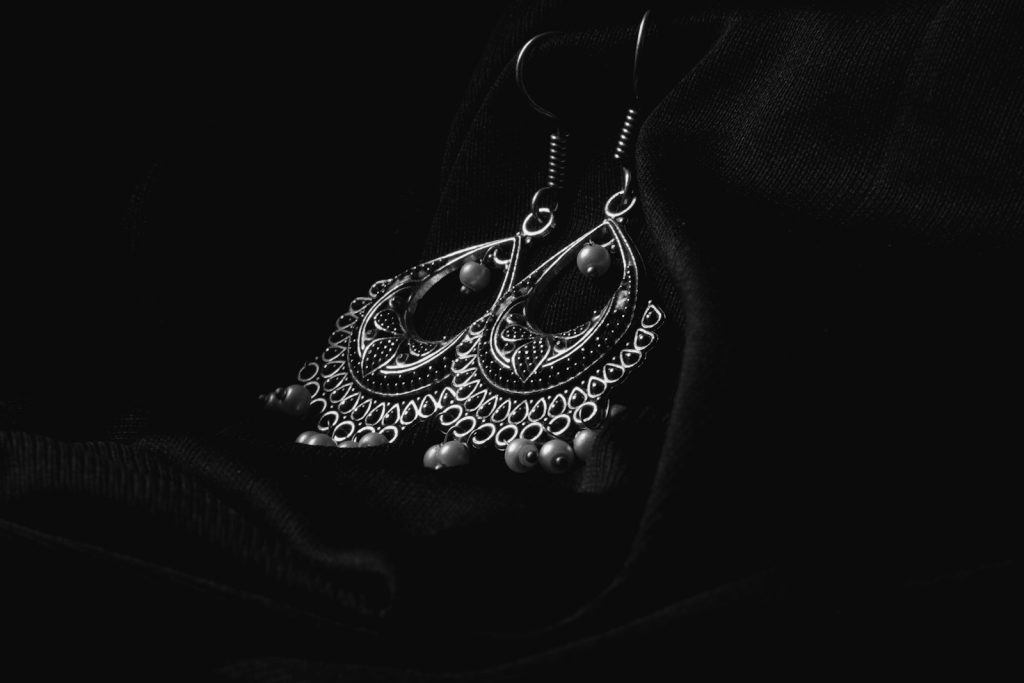
Nickel free silver jewelry, in EU trade language, means jewelry that does not release nickel above the legal limits set by EU REACH — not that the alloy is literally 0.000% nickel. For EU importers, “nickel-free” is about nickel release test results and traceable material declarations, not just catalog wording.
What “Nickel Free Silver Jewelry” Means Under EU REACH
EU REACH (Registration, Evaluation, Authorisation and Restriction of Chemicals) restricts nickel release, not the simple presence of nickel as an element. For jewelry, the key numbers are:
– ≤ 0.5 µg/cm²/week: maximum nickel release for parts in direct and prolonged skin contact
– ≤ 0.2 µg/cm²/week: stricter limit for piercing posts and other items inserted into pierced parts of the body
Those limits come from REACH Annex XVII (nickel restriction). Labs test to standards such as EN 1811 and EN 12472.
So, from an EU enforcement perspective, a piece can contain a small amount of nickel in some component and still be legally sold *if* nickel release stays under these limits. Market practice in B2B, however, is to reserve “nickel-free” claims for:
– Alloys and findings specified as “nickel-free” by the upstream metal supplier, and
– Products where you can show either:
– Nickel release test reports, or
– Solid documentation that no nickel-containing components are used in skin-contact areas
925 Sterling Silver Itself vs Nickel Content
925 sterling silver is a composition standard:
– 92.5% silver
– 7.5% other metals (commonly copper, sometimes small amounts of zinc, germanium, or others)
The 925 standard does not say anything about nickel. Many reputable 925 alloys are effectively nickel-free in practice, but you cannot assume that from “925” alone. A few important points:
– Traditional 925 silver is usually silver + copper, with no intentional nickel addition
– Some white gold and base-metal findings historically used nickel to improve hardness or color — this is where problems mostly arise
– EU-focused mills often produce “nickel free 925” alloys explicitly for REACH-conscious brands
If you want to claim hypoallergenic silver wholesale or “nickel free silver jewelry” into the EU, you must treat alloy choice as an intentional decision, supported by supplier documents.
EU REACH Jewelry Compliance: What Importers Are Actually Responsible For
Under REACH, the EU importer of record is the party customs and market surveillance will come after — not the Balinese workshop, not the freight forwarder. As an importer, you are responsible for:
1. Making sure your jewelry meets nickel release limits
2. Being able to show documentation if a product is inspected or a consumer complains
3. Not using misleading claims in your catalog, packaging, or online listings
From the trade desk side (Celuk Silver Wholesale), that usually translates into three layers:
1. Material Declarations from Each Upstream Supplier
You should request, organize and keep on file:
– Alloy composition sheets for:
– Main 925 silver alloy
– Solder alloys (hard/medium/easy)
– Any brass/bronze or steel parts
– Plating system declarations, if used:
– Copper strike?
– Nickel barrier layer?
– Rhodium, gold, or silver top coat?
– Findings specifications:
– Earring posts and backs
– Hooks, ear wires
– Clasps, jump rings, chains
– Pin stems, brooch backs
For REACH-sensitive markets, many EU buyers specify nickel free findings 925 for all skin-contact parts. That usually means:
– 925 posts and ear wires
– 925 chains
– 925 or “nickel-free brass” clasps, with documentation
2. Nickel Release Test Reports (When Needed)
You can rely only on paper declarations for low-risk, simple constructions and long-run supplier relationships. But test reports are extremely valuable for:
– Piercing jewelry (ear studs, nose studs)
– High-exposure products (rings, bracelets, watches)
– New alloy/plating systems
– New factories or subcontractors
Typical lab practice:
– Test per EN 1811 for nickel release in sweat simulant
– For plated products, sometimes pre-treatment per EN 12472 (wear and corrosion simulation)
For EU compliance files, importers usually:
– Test representative samples from each main product family
– Repeat testing on a risk-based schedule (e.g., yearly, or when process changes)
No blog should tell you “one test per SKU is always enough” — you need to agree a testing plan with your own compliance team and lab.
3. Internal Product & Supplier Risk Assessment
Map risk against product type and construction:
– Higher risk:
– Piercing posts
– Heavy plating over base metals
– Jewelry using stainless steel, unknown brass, or unknown spring steels
– Medium risk:
– Rings, bracelets, watch cases
– Clasps and chains with non-925 components
– Lower risk:
– Plain, unplated 925 silver from a long-trusted mill, fully documented
Your EU REACH jewelry compliance file should reflect that risk thinking: more test evidence for high-risk constructions, stronger supplier vetting, and precise wording in your sales material.
The 4 Parts of a “Nickel-Free” Claim You Must Control
To truthfully advertise “nickel free silver jewelry” and sleep at night, you have to control all nickel-relevant parts of the product:
1. Main silver alloy
2. Solder
3. Plating system (if any)
4. Findings and mechanical parts
Let’s walk each in trade detail.
1. Main Alloy: Nickel-Free 925 Specifications
Your core questions to the metal supplier or factory:
– “Is your 925 alloy formulated as nickel-free?”
– “Can you provide a composition certificate from the caster or mill?”
– “Is this the same alloy used for your EU customers?”
Typical documentation:
– Mill certificate showing:
– Ag: 92.5%
– Cu and other elements summing to 7.5%
– Nickel listed as not intentionally added or “< X ppm”
You cannot credibly market hypoallergenic silver wholesale in the EU off “925” stamping alone. The metal paperwork must connect to batch numbers used in your POs and invoices.
2. Solder: The Quiet Nickel Risk in 925
Silver jewelry often uses:
– Hard solder (higher melting)
– Medium solder
– Easy solder (lower melting)
Some older formulations or low-cost solders may contain nickel to adjust flow or hardness. Problems:
– The solder seam is often in direct skin contact on rings, chains, bails
– Even if the main body is nickel-free, a nickel-bearing solder can break your REACH compliance
Your instructions to your supplier should be unambiguous:
– “Use nickel-free silver solders only for all joints in EU-destined orders.”
– “Record solder lot numbers on the production traveler / batch card.”
Ask for:
– Solder composition datasheets
– A simple “nickel-free solder” statement tied to your PO numbers
3. Plating System: Is There a Nickel Barrier Layer?
REACH allows nickel under a plating that stops nickel release — but that reliability depends on plating quality and wear.
Typical real-world constructions:
– 925 base + nickel underlayer + rhodium top
– 925 base + palladium underlayer + rhodium top
– 925 base + direct rhodium, no nickel
For EU marketing, many brands prefer to avoid any nickel stage in the plating stack for simplicity and lower enforcement risk. Questions to ask:
– “Do your rhodium or gold plating systems use a nickel underlayer?”
– “If yes, can you provide nickel release tests on those finished products?”
– “Can you offer a system with no nickel stage?”
If your supplier does use nickel barrier layers, you *must* handle claims carefully:
– “Nickel-safe per EU REACH” — only if supported by nickel release tests
– Avoid simplistic “nickel-free” language, or you risk misleading claims if wear-through happens in the field
4. Findings & Mechanicals: Posts, Clasps, Chains
Nickel issues often come not from the cast or fabricated silver body, but from the small parts:
– Earring posts and backs
– Ear wires / hooks
– Clasps (lobster, spring ring, trigger)
– Chains
– Pin backs, watch clasps, extension chains
You want explicit language in your sourcing documents:
– “All findings in skin-contact locations for EU orders must be:
– 925 silver, or
– Documented nickel-free brass / steel, meeting EU nickel release limits.”
Add this to your spec sheets and POs. Generic “silver color” or “steel clasp” descriptions are red flags from a compliance perspective.
What You Can Truthfully Claim in B2B Sales & Catalogs
Assuming you sort the metals, plating, and findings properly and keep the papers, what can you honestly write?
Safe Phrasing vs Over-Claiming
Below is a practical comparison:
| Claim Type | Example Phrasing | When It’s Reasonable | Risk Level |
|---|---|---|---|
| Conservative, factual | “Made with nickel-free 925 sterling silver alloy. Nickel-free findings available on request. Designed to meet EU REACH nickel release limits.” | You have alloy/finding declarations + at least some nickel release test reports for similar constructions. | Low |
| Moderately assertive | “All components in direct skin contact are specified as nickel-free and produced for EU REACH-compliant markets.” | Every skin-contact component is documented nickel-free; factories segregate EU vs non-EU lines. | Medium |
| High risk / over-claim | “100% nickel-free jewelry. No nickel content anywhere.” | Almost never safe unless you control every alloy and lab-test every SKU and batch. | High |
| Potentially misleading | “Hypoallergenic, safe for all skin types.” | Even with strong controls, you cannot guarantee *all* skin types; allergic reactions vary. | High (consumer protection risk) |
Key idea: link your marketing claim strength to the strength of your documentation and testing.
How “Hypoallergenic Silver Wholesale” Fits In
“Hypoallergenic” is marketing language, not a defined EU legal category. Use with care. For B2B buyers:
– It can be acceptable shorthand for:
– Nickel-free alloys
– Nickel-free findings
– No cobalt or other common problematic additives, where documented
– It should not be presented as a medical or dermatological guarantee
You can express it in a trade-responsible way:
– “Hypoallergenic construction: nickel-free 925 alloy with nickel-free findings, specified and tested for EU REACH nickel release compliance.”
CE Mark & REACH: Don’t Confuse the Two
Most silver jewelry does not carry CE marking (unless it also qualifies as a toy, electrical product, etc.). REACH nickel restrictions are a separate horizontal obligation.
Avoid wording like:
– “CE-certified nickel-free jewelry” — this confuses regimes and may attract unwelcome enforcement attention
Think of REACH as chemical safety background law, not a labeling logo.
What Documents a Serious EU Importer Should Keep
For each program or private-label line, an experienced EU importer will assemble:
1. Technical File (Digital Folder)
Typically includes:
– Supplier list and factory codes
– Alloy and solder data sheets
– Plating system descriptions
– Findings BOMs (bill of materials) with material specs
– Photos or CAD drawings identifying skin-contact areas
2. Test Evidence
For representative SKUs in the range:
– Nickel release reports (EN 1811 / EN 12472 as relevant)
– Any additional heavy-metal checks (e.g., REACH Annex XVII for cadmium, lead if relevant to your range)
3. Commercial & Batch Traceability
– PO numbers and invoices tied to:
– Production batches / casting batches
– Solder lot numbers
– Plating line IDs
– Ability to show that what you tested is the same construction and process as what you sold
If you are setting up or rationalizing your file structure for a Bali/Celuk supply line, you can request a wholesale quote and include compliance review in your WhatsApp planning call — we often walk buyers through practical file structures while we discuss product.
How Celuk Silver Wholesale Handles “Nickel-Free” Requests
Celuk Silver Wholesale is an independent Celuk 925 sourcing and export desk. We do not operate a single factory; instead we:
– Match you with appropriate Celuk workshops and casters
– Coordinate quality control and export paperwork
– Communicate your alloy and compliance requirements down the chain
For EU buyers, our typical “nickel-free / REACH-conscious” workflow looks like this:
Step 1: Define Your Compliance Floor
You tell us:
– Destination market(s): EU-27? UK? CH? Mixed?
– Target positioning:
– “General fashion jewelry with REACH compliance” or
– “Stricter dermatology-driven line”
– Which claims you want to be able to make:
– “Nickel-free alloy” only?
– “Nickel-free components in skin contact”?
– “Tested per EN 1811 for nickel release”?
We do not dictate your compliance policy — we translate it into factory language and feasibility.
Step 2: Match Factories & Findings to Your Policy
We then:
– Identify Celuk partners that:
– Already serve EU clients with REACH-conscious lines, or
– Are prepared to adjust alloys/findings for your orders
– Confirm:
– Sourcing routes for nickel-free 925 alloys
– Availability of nickel-free findings in your preferred designs and gram weights
– Plating system options (with or without nickel barriers)
We will flag:
– Lead times for special findings
– MOQ bands if a specific nickel-free clasp or post must be tooled or imported
Step 3: Build the Documentation Chain
We help organize:
– Material declarations from alloy suppliers and findings vendors
– Solder specifications
– Plating shop declarations
Depending on your internal policy, either:
– You send samples to your nominated EU lab; or
– We help coordinate testing through a lab you specify in Asia, with reports made out to your company
We do not provide legal advice; you remain responsible for deciding how much evidence is enough for your REACH defense file.
Step 4: Lock In Wording & Labels
Once the technical side is clear, we help you use consistent wording in:
– Purchase orders
– Private-label packaging text
– B2B catalog descriptions
So your sales and compliance teams aren’t contradicting each other.
Practical Tips for Buyers Specifying Nickel-Free 925 from Bali
1. Put Compliance Requirements in the PO, Not Just Email
Use clear PO lines such as:
– “All metal components in direct skin contact to be nickel-free alloys suitable for EU REACH nickel-release compliance. Documentation to be provided before shipment.”
That text gives you something concrete if you ever need to challenge a shipment.
2. Separate EU and Non-EU Programs
If you also sell into non-EU markets with looser specs:
– Use different SKU codes
– Consider different stamping or label text
– Keep the REACH-focused line clearly segregated in production
Mixing lines in the same batch is how control problems appear.
3. Talk About Processes, Not Just End Claims
With your supplier or our desk, ask:
– What 925 alloy brand or caster do you use?
– Which solder types for rings vs. pendants?
– Where do you source earring posts and clasps, and can I see their specs?
– Can we mark on QC checklists: “nickel-free findings confirmed”?
Suppliers respond better to process questions than to “promise me it’s nickel-free” statements.
4. Budget for Testing as a Line Item
Nickel-release testing has a cost per sample. Treat it as:
– A predictable line item in your costing
– Something that scales with:
– Number of product families
– Market exposure
– Legal-risk profile of your brand
You can negotiate who pays which share, but do not assume “free testing” from the factory.
Using Incoterms, Pricing & QC to Support Compliance
Briefly connecting this compliance topic with trade mechanics we handle daily:
Incoterms: FOB vs Ex-Works for Tested Lines
Many EU buyers for REACH-conscious lines choose:
– FOB Bali/Denpasar port (FOB DPS):
– Supplier is responsible up to onboard vessel
– Easier to tie final pre-shipment inspection and document check to cargo handoff
Ex-Works (EXW) gives you more logistics control but shifts more risk and coordination onto your side for lab sampling and document chasing.
Pricing: Nickel-Free Inputs Affect Cost Ranges
Nickel-free alloys, findings, and more careful plating usually:
– Increase gram cost vs lowest-cost options
– Add indirect costs via testing and documentation
We price programs as ranges (last verified June 2026) based on:
– Total silver gram weight per piece
– Complexity of findings (simple hooks vs multi-component clasps)
– Alloy and plating choices
– QC and testing scope agreed
You should plan a small percentage uplift for a properly documented nickel-free / REACH-focused line vs a generic global fashion line without such controls.
QC: Add Compliance Checks to the Checklist
Pre-shipment QC for such programs should include:
– Verification of stampings (925, brand mark as required)
– Confirmation that actual findings match the approved “nickel-free” samples
– Spot review of material certificates against batch codes
This is standard work for our export QC teams in Celuk when you specify it in the PO.
If you want help mapping this into a sourcing trip or remote program, you can request a wholesale quote and detail your REACH expectations over WhatsApp so we set factory visits and discussions up correctly from day one.
FAQs: Nickel-Free 925 & EU REACH
Does 925 sterling silver automatically mean nickel free?
No. 925 only defines that 92.5% of the alloy is silver. The remaining 7.5% can be copper and other elements, and in theory could include nickel. Many reputable 925 alloys are formulated without nickel, but you must verify this with composition certificates from the metal supplier.
Can I legally sell jewelry with some nickel in the EU?
Yes, as long as nickel release stays within REACH limits (≤ 0.5 µg/cm²/week for normal skin contact; ≤ 0.2 µg/cm²/week for piercing posts). However, if any component relies on a nickel layer or alloy, you should avoid over-claiming “nickel-free” unless testing and documentation clearly support your wording.
Is lab testing mandatory for every SKU to claim nickel free?
EU law requires you to meet the nickel release limits, but does not prescribe a fixed test plan per SKU. In practice, importers use representative testing by product family and robust material documentation. The stricter your marketing claims, the stronger your evidence should be. Define your test plan with your own compliance team and lab.
Can I use “hypoallergenic” on my jewelry packaging in the EU?
You can, but it is a marketing term without a precise legal definition, and it must not mislead consumers. If you use “hypoallergenic,” you should at least ensure nickel-free alloys and findings with documentation, plus nickel-release testing for high-risk products. Avoid implying a medical guarantee that no one will ever react.
How can Celuk Silver Wholesale support my EU REACH jewelry compliance?
We coordinate nickel-free alloy and findings sourcing with Celuk workshops, build the material declaration chain, align PO wording with your compliance policies, and help organize sample flows for lab testing. We do not replace your legal counsel or customs broker, but we translate your REACH expectations into concrete production and export practices.