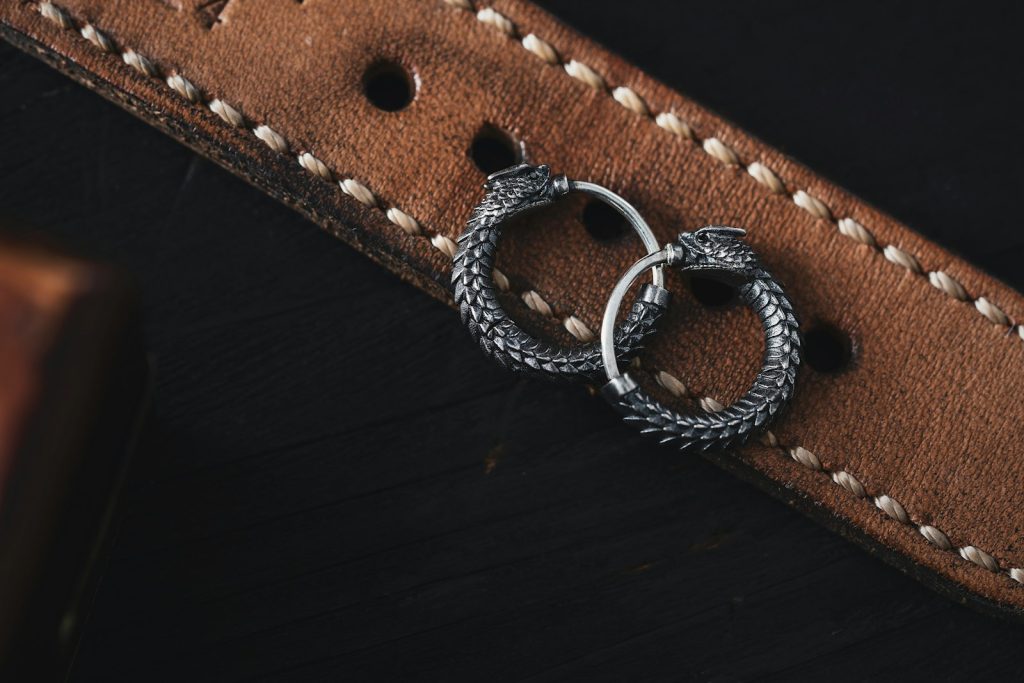
Wholesale silver hoop earrings are bulk orders of 925 sterling-silver hoops supplied business-to-business, with agreed MOQs, gram weights, and export terms. At Celuk Silver Wholesale, wholesale silver hoop earrings cover everything from micro huggies to oversized statement hoops, produced in Bali’s Celuk village and shipped under FOB, Ex-Works or other standard Incoterms.
What Counts as a 925 Silver Hoop Earring in Trade Terms?
In B2B language, a 925 hoop is a circular or semi-circular earring made in sterling silver — an alloy that is 92.5% pure silver and 7.5% other metals (usually copper) by weight. “Sterling” is an alloy standard, not a finish or a brand name.
For 925 hoops wholesale, you should be asking for:
– Alloy: 92.5% silver, nickel-safe alloy system
– Marking: “925” or “STERLING” stamped on the body or post where technically feasible
– Finish: bright-polished, oxidized, brushed/matte, or e-coated/rhodium-plated
– Closure: huggie hinge, endless hoop, wire/latch, lever-back, or latch-back
From a sourcing perspective, hoops are a predictable, repeatable SKU family: they scale well for OEM/private-label, and they ship efficiently on a gram-weight basis.
Range Overview: From Huggies to Statement Hoops
Our wholesale 925 hoop range covers:
– Everyday huggie hoops (8–14 mm)
– Classic mid-size hoops (20–40 mm)
– Large statement hoops (45–70+ mm)
– Textured and Balinese-ornamented hoops (filigree, granulation, oxidized detail)
Below is a simplified matrix of common segments you can build into a line sheet.
| Segment | Typical Inner Diameter | Approx. Wire/Tube Thickness | Typical Per-Piece Silver Weight* | Common Closures | Use Case |
|---|---|---|---|---|---|
| Micro Huggies | 8–10 mm | 1.2–1.5 mm | 0.6–1.2 g | Hinged huggie, snap | Second/third lobe piercings, minimalist sets |
| Standard Huggies | 11–14 mm | 1.5–2.0 mm | 0.9–1.8 g | Hinged huggie | Everyday hoops, unisex |
| Classic Hoops | 20–30 mm | 1.5–2.5 mm | 1.5–3.0 g | Endless, wire latch | Core catalog basics |
| Medium Statement | 30–45 mm | 2.0–3.0 mm | 3.0–6.0 g | Wire latch, latch-back | Fashion-led, featured listings |
| Large Statement | 45–70+ mm | 2.0–3.5 mm | 5.0–10.0 g+ | Latch-back, reinforced post | High-impact seasonal styles |
| Balinese Ornamental | 15–45 mm | Varies (built-up filigree) | 2.5–8.0 g+ | Hinged huggie, wire | Artisanal, premium price-points |
*Weights are indicative, based on Celuk-style construction. Always confirm final gram weights from your approved sample and spec sheet.
Huggies vs Classic Hoops: Functional Differences
Huggie Hoops: Compact, Mechanically Sensitive
A huggie hoop sits close to the earlobe and usually uses a hinge-and-snap mechanism. From a production and QC standpoint:
– Moving parts: micro hinge + groove; tight tolerances required
– Higher reject risk: misalignment, weak closure, over-tight snap
– Higher labor component: assembly and hand-adjustment
If you are seeking a silver huggie hoops supplier, clarify:
– Minimum hinge cycle expectations (e.g., must open/close smoothly 20–30 times in QC test)
– Snap strength range (secure, but not painful on insertion)
– Post thickness (commonly 0.8–0.9 mm; confirm versus your end-market norm)
For sensitive markets, also document “nickel-safe” or “nickel-free” alloy for all parts in direct contact with skin, including huggie posts.
Classic and Statement Hoops: Simpler Mechanics
Classic hoops often use an “endless” tube system or a simple wire that latches into a tube. Pros:
– Fewer moving parts: lower mechanical-failure risk
– Easier QC: alignment and tension checks are straightforward
– Better scalability: suitable for large bulk silver hoops Bali orders
With statement hoops, weight becomes a factor:
– Over 8–9 g per pair can be heavy for some end customers
– You may opt for hollow tubing to reduce weight; trade-off: more dent risk in transit
Your spec sheet should explicitly state target per-piece gram weight and acceptable tolerance (commonly ±0.1–0.2 g for small hoops, ±3–5% for larger pieces).
Closure Systems in Wholesale Silver Hoop Earrings
Hinged Huggie
– Appearance: compact, seamless front view
– Construction: cast or fabricated body with integrated hinge, notched post, and catch
– Key QC points:
– Hinge must not wobble excessively
– Snap must be audible and tactile
– Post must be smooth with no burrs
Hinged huggies suit mid to high price points and private-label collections where perceived engineering quality matters.
Endless (Tube) Hoops
– Appearance: minimal metal at the closure, continuous ring
– Construction: tubular hoop with thin wire that threads through the ear and into the tube
– Key QC points:
– Wire must be straight, no kinks
– Tube opening deburred, no sharp edges
– Closure alignment within tight tolerance so ends meet cleanly
Endless hoops are cost-effective core SKUs for 925 hoops wholesale because they balance material efficiency with simple manufacturing.
Wire + Latch / Latch-Back
– Appearance: visible latch behind the lobe
– Construction: hoop body with integrated hinge and catch or with a welded latch-back
– Key QC points:
– Consistent closing pressure
– No overhang or misalignment that can scratch the ear
– Solder joints clean and fully penetrated
Latch-back systems are recommended for larger diameters, where extra support stabilizes heavier hoops.
Nickel-Free and Skin Contact: What to Specify
Most reputable Celuk workshops use a classic sterling composition: 92.5% silver, balance copper or another non-nickel metal. However, nickel can appear:
– In lower-quality base metals (not standard in proper 925)
– In some plating systems if not controlled
If your market requires nickel-free or “nickel-safe” products (e.g., EU REACH / nickel-release standards):
– State in your RFQ and PO: “Sterling silver alloy and any plating system must be nickel-free with nickel release compliant to EU standards.”
– Ask for alloy composition documentation from the caster or wire supplier
– For large programs, consider third-party lab testing on a pre-shipment sample set
At Celuk Silver Wholesale, posts and bodies in direct skin contact are manufactured in 925 sterling silver using nickel-free alloy inputs as standard, and rhodium or e-coatings used are specified to be nickel-free. Importers should still verify via their own compliance testing in destination markets.
Balinese Craft in Silver Hoops: Filigree, Granulation, Oxidation
Balinese silverwork is visible on more than just rings and pendants. In hoops, you’ll see:
Filigree Hoops
– Construction: fine silver wires shaped into scrolls and applied to a stronger 925 frame
– Impact on weight: higher gram weight compared with plain tubing of the same diameter
– Sourcing consideration: each piece involves handwork; lead times and MOQs may be higher than for plain hoops
Granulated Hoops
– Construction: tiny silver granules soldered in patterns along the hoop
– Finish pairing: often combined with light oxidation to highlight beads
– QC key: check for loose or under-soldered granules; they are failure points during wear or shipping
Intentional Oxidized Finishing vs Defects
Celuk artisans often use oxidation to create contrast. Trade buyers should distinguish:
– Intentional oxidation:
– Uniformly darkened recesses
– High points polished bright
– Clearly symmetrical patterning
– Defects:
– Random dark spots on otherwise bright-polished surfaces
– Patchy, streaky areas not linked to pattern details
– Greenish/odd-color tarnish (possible contamination)
On your spec sheet, describe finish clearly: e.g., “Bright polish with controlled dark oxidation in recessed patterns only.” During QC, the question is not “Is it dark?” but “Is the darkness exactly where the design calls for it?”
Anti-Tarnish Protection: E-Coating and Rhodium on Hoops
Clear E-Coating
Some wholesale silver hoop earrings use a clear e-coating (electrophoretic lacquer) to slow tarnish, particularly for export into humid or coastal markets.
Pros:
– Reduced short-term tarnish during shipping and retail display
– Lower maintenance for end customer
Cons:
– Very heavy coating can slightly mute the “feel” of raw silver
– Repairs or resizing later require stripping the coating
For hoops, the trade-off is usually acceptable on simple designs and high-turnover fashion pieces.
Rhodium Plating
Rhodium-plated sterling hoops offer:
– Bright, “white-gold-like” surface
– Strong resistance to tarnish and scratching
– Slightly higher cost versus plain silver or clear e-coat
Important:
– Rhodium layer is thin; aggressive polishing will wear it off
– If you offer both rhodium-plated and non-plated SKUs, code them distinctly in your catalog to avoid pick errors
Across both anti-tarnish options: specify in your POs if you want raw sterling, e-coated, or rhodium-plated, and confirm that coatings are nickel-free.
Specifying Diameters, Thickness, and Tolerances
Importers often underestimate how much detail is needed in a hoop spec. To reduce disputes and returns, specify:
Diameter Definitions
– Outer diameter (OD): total size; used in visual merchandising
– Inner diameter (ID): wearability; critical for huggies
– Tolerance: usually ±0.5 mm for small hoops; ±1 mm for large hoops, unless tighter is required
Make clear in your tech pack which dimension you reference. For huggies, inner diameter is more relevant; for statement hoops, outer diameter drives size description.
Wire/Tubing Thickness
Thickness (gauge) affects:
– Comfort in piercing: posts generally around 0.8–0.9 mm
– Visual weight of the hoop
– Silver consumption per piece
Document:
– Post thickness (in mm)
– Hoop body thickness (wire or tubing in mm)
– Whether hollow or solid
Weight Tolerances
Silver is bought and sold by gram weight. For each SKU, you should track:
– Target gram weight per piece (and per pair if that’s how you quote)
– Acceptable tolerance (e.g., ±3–5% for cast/ornamental; tighter for plain fabricated hoops)
– Whether plating weight is included in the declared weight (usually negligible, but clarify)
Your landed cost model should accommodate some variation. Ask the supplier to indicate average actual weight per production batch if you price by scrap + labor in an OEM arrangement.
MOQ Bands and FOB Expectations for 925 Hoops Wholesale
MOQ (Minimum Order Quantity) and FOB (Free On Board) terms vary by design complexity and whether you order open-cat or OEM/private-label.
Indicative MOQ Bands
These are broad bands commonly seen with Celuk-based workshops:
– Plain small hoops (fabricated, non-ornamental):
– MOQs can start as low as ~30–50 pairs per SKU for repeatable designs
– Filigree/granulated ornamental hoops:
– Expect higher MOQs, often 50–100+ pairs per SKU due to setup time
– OEM/private-label hoops with custom stamps or exclusive designs:
– Tooling and design fees may apply
– MOQs can sit in the 100–300 pairs per SKU range depending on complexity
Discuss whether MOQs apply per size, per finish, or per total style family.
FOB Price Bands (Last Verified June 2026)
Silver hoop prices move with global silver markets and labor inputs. As a directional guide only (not an offer to sell), typical FOB Celuk/Bali unit price bands (per pair) last verified June 2026 for 925 hoops might fall into:
– Micro huggies and small plain hoops:
– Low to mid single-digit USD per pair, depending on weight, closure, and finish
– Medium classic hoops:
– Mid single-digit to low double-digit USD per pair for heavier or rhodium-plated versions
– Ornamental Balinese hoops (filigree/granulation):
– Often higher single-digit into mid double-digit USD per pair, depending on handwork and gram weight
– Large statement hoops:
– Similar or above ornamental hoops in price if gram weights are high or if using complex closure systems
Always request a live quote tied to:
– Silver market reference (e.g., a specific date’s spot or an agreed band)
– Exact gram weight and finish
– Confirmed Incoterm (e.g., FOB Denpasar port or Ex-Works Celuk workshop)
Importers should build a buffer for metal-price volatility between sample approval and bulk production.
Incoterms and Logistics for Bulk Silver Hoops from Bali
For bulk silver hoops Bali exports, the most common arrangements are:
Ex-Works (EXW) Celuk / Gianyar
– You (the buyer) pick up goods at the workshop or consolidation point
– You handle export clearance, freight, insurance, and destination charges
– Suitable if you already have an Indonesian consolidator/logistics partner
FOB (Free On Board) Indonesian Port
– Supplier handles transport to port and export clearance
– Risk passes to you once goods are loaded on the vessel/aircraft
– You select and pay the main freight and insurance
FOB is usually the most practical trade desk arrangement for new buyers that want the export-handling burden off the workshop’s plate but still control main freight.
CIF / DAP in Special Cases
Some buyers request CIF (Cost, Insurance, Freight) or DAP (Delivered At Place) for first shipments. These increase supplier involvement in logistics and may carry additional service costs. If offered, compare total landed cost vs arranging freight yourself.
At Celuk Silver Wholesale, we operate as an independent sourcing and export desk: consolidating from selected Celuk workshops, applying QC, and shipping under agreed Incoterms. If you’d like to map a first shipment (air vs sea, carton vs pallet, mixed jewelry SKUs), you can request a wholesale quote with us and align details over email or WhatsApp before committing volume.
QC for Wholesale Silver Hoop Earrings
Hoops fail in predictable ways. A disciplined QC protocol should, at minimum, cover:
Mechanical Checks
– Hinge operation:
– Open/close multiple cycles per piece during spot checks
– Reject for wobble, uneven motion, or loose pins
– Closure security:
– Hoops must remain closed under light pull
– Posts must not slip out of tubes or latch points easily
– Post straightness:
– Visually align posts; minor bends reduce wearable life and cause insertion pain
Dimensional and Weight Checks
– Verify diameter against the spec (use calipers)
– Weigh samples from each batch:
– Confirm they fall within agreed tolerance
– Investigate systematic deviations (thinner walls, design changes, under-polishing)
Surface and Finish Checks
– Polish:
– No deep scratches on visible faces
– No polishing compound residue in crevices
– Oxidation:
– Only where intended; consistent from piece to piece
– Plating/coating:
– Even coverage; no bare patches or obvious color variations between pairs
Marking and Branding
For OEM/private-label:
– Check “925” and brand stamps:
– Correct positioning and orientation
– Legible but not so deep as to weaken thin sections
– Ensure left/right orientation is respected where designs are asymmetrical
Independent third-party inspections (pre-shipment) are a valid option for high-value consignments or new supplier relationships. You remain responsible for verifying that QC standards meet your market’s regulatory and brand expectations.
OEM and Private-Label Options for 925 Hoops
If you want more than open-catalog 925 hoops wholesale, Bali can support:
Custom Profiles and Shapes
– Non-round shapes: oval, square, twisted, marquise
– Textures: hammering, faceting, rope-effect, knife-edge
– Mixed materials: 925 with select semi-precious stones or shell inlays
Expect:
– Development timeline for CAD, prototyping, and tooling
– One-time tooling or mold cost amortized over MOQ
Branding and Packaging
– Custom back-stamps with your logo (space permitting)
– Coordinated carding for retail (your logo, barcode zones)
– “Nickel-free” / “925 Sterling Silver” copy printed to your compliance standards; you should provide exact wording to meet your market’s legal requirements.
Finish Variants Per Design
From one base design, you can split into several SKUs:
– Bright polish
– Oxidized detail
– Brushed/matte
– Rhodium-plated
This allows a broad visual range without retooling the underlying form. Plan your buy so total volume across variants meets the workshop’s MOQ.
If you’re planning a new private-label hoop program and want to benchmark what is feasible out of Celuk — from huggies to oversized statement hoops — you can request a wholesale quote with us and hash out specifications and WhatsApp photo reviews before sampling.
What Importers Should Verify Themselves
No matter how robust your supplier is, you still need internal verification:
– Legal standards:
– Confirm that “925 sterling silver” labeling complies with your country’s hallmarking or karat marking laws.
– Allergens:
– Run nickel-release or other allergen tests where required by law or your brand policy.
– Use testing:
– Test hinge wear over time and corrosion behavior under sweat/cosmetics exposure for representative samples.
– Packaging and barcoding:
– Confirm that retail packaging elements match your POS system and that country-of-origin marks are correct and visible.
The goal is to match real-world product behavior to your claims and warranties. Supplier documents support this, but they do not replace your own due diligence.
FAQs
What is the minimum order quantity for wholesale silver hoop earrings from Bali?
For plain 925 hoops, MOQs often start around 30–50 pairs per SKU, while ornamental or custom OEM hoops typically sit higher, around 50–300 pairs per SKU depending on complexity. Exact MOQs are confirmed per design and finish.
Are your 925 hoops nickel-free?
The sterling silver alloys and standard coatings used are specified to be nickel-free for direct skin-contact parts. However, regulatory definitions of “nickel-free” and testing methods vary by country, so importers should run their own compliance and nickel-release tests in their destination markets.
Can I get rhodium-plated and non-plated versions of the same hoop design?
Yes. Most hoop designs can be offered as raw sterling, clear e-coated, or rhodium-plated variants. Each finish is treated as a separate SKU for MOQ and inventory control, so plan total volume across variants accordingly.
How are wholesale silver hoop earrings priced?
Pricing reflects silver market levels, gram weight per piece, labor complexity (e.g., hinges, filigree), finish (raw, e-coated, rhodium-plated), and your chosen Incoterm. Quotes are usually given per pair on an FOB or Ex-Works basis and should be refreshed against current metal prices.
Can you stamp my brand logo on the hoops?
Yes, provided there is enough metal surface to accommodate a readable mark without weakening the piece. Brand stamping is typically part of an OEM/private-label setup and may involve a one-time tooling fee and higher MOQs per SKU.