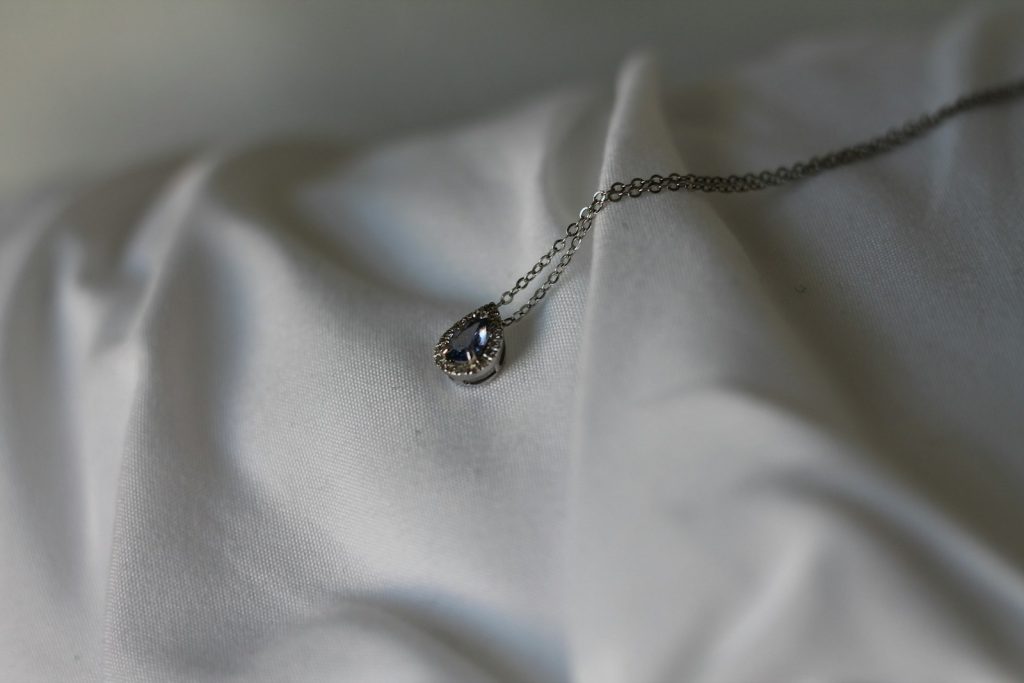
Wholesale silver chains are bulk 925 sterling-silver chains supplied by gram weight or as finished necklaces, typically sold to brands, retailers and OEM clients under agreed MOQ and FOB terms. In this guide we walk through gauges, chain styles, finishes and what to check with any 925 chain wholesale supplier, using Bali/Celuk production as the reference point.
What counts as a wholesale silver chain order?
At trade level, “wholesale silver chains” usually means one of three formats:
1. Chain by the meter (bulk footage)
Uncut chain supplied on reels or coils, priced per gram or per meter. You (or your assembler) cut, attach clasps and tag/box in your own country.
- Use case: In-house assembly, custom lengths on demand, lower landed cost if labor is cheap on your side.
- FOB quotation unit: Typically per gram, with an indicative gram-per-meter chart by style and gauge.
- Typical MOQ band: Often ± 20–50 m per style/gauge as a workable starting point for small brands; higher for heavier industrial chains.
2. Semi-finished chains (pre-cut, no clasp)
Pre-cut lengths (e.g. 40 / 45 / 50 cm) with end-rings but no clasp, so you can add your own branded closures.
- Use case: Private-label brands wanting their logo on the clasp or using their own findings.
- FOB quotation unit: Per piece (length-specific) but still calculated from gram weight.
- MOQ band: Commonly 100–300 pcs per length per style for small-to-mid buyers, depending on pattern complexity.
3. Finished necklaces (ready to retail)
Complete necklaces with clasp, end tags, often oxidized or polished to spec, packaged to your OEM/private-label requirements.
- Use case: E-commerce, chain bars, jewelry retail chains, subscription boxes.
- FOB quotation unit: Per finished piece, by length and gauge, generally indexed to silver plus labor and finishing.
- MOQ band: Frequently 50–200 pcs per SKU for curated collections; higher for custom-branded findings or special plating.
A serious silver chain supplier in Bali should be comfortable quoting all three formats. Before you ask for prices, decide:
- Do you want to hold chain stock (by meter) or SKU stock (finished lengths)?
- Who will attach clasps and QC final lengths?
- Which Incoterm you prefer. Most small-to-mid chain orders ship FOB Denpasar or CIF nearest port/airport.
Core 925 chain styles for wholesale
Most 925 chain wholesale catalogs start with a predictable family of “workhorse” chains. Below is an overview of what you actually get, mechanically, as a buyer.
Cable chain
Simple round or oval links in a uniform pattern. This is the default chain for pendants and layering chains wholesale.
- Pros: Low labor content, strong for its weight, easy to size and repair.
- Common gauges: Approx. 0.7–1.5 mm for women’s; 1.2–2.0 mm for unisex/men’s.
- Finish options: Bright polish, light oxidation between links, or e-coat/rhodium for anti-tarnish.
Curb chain
Interlocking links twisted and flattened so the chain lies flat. Includes classic curb and gourmette styles.
- Pros: Good drape, visually dense; popular in men’s and gender-neutral collections.
- Common gauges: 1.5–4.0 mm in 925 for everyday weights; heavier for statement lines.
- Notes from QC: Twist alignment and solder quality at each link are points to inspect.
Rope chain
Multiple strands of links twisted to resemble a rope. Can be machine-made or hand-finished.
- Pros: Perceived “rich” look, good as a standalone chain with no pendant.
- Common gauges: Around 1.5–4.0 mm; beyond that, necklace weight climbs quickly.
- QC tip: Check that the twist is consistent and the chain is not stiff or kink-prone.
Snake chain
Tightly joined plates or bands forming a smooth, tubular chain with minimal visible links.
- Pros: Clean, modern look; good base for pendants with large bails.
- Cons: Less forgiving of sharp bends; can kink if mishandled.
- Gauges: Typically 0.9–2.0 mm in sterling for neckwear.
Box chain
Square links that form a compact, four-sided chain. Popular for minimalist pendants and layering.
- Pros: High tensile strength vs. weight, geometric look.
- Gauges: 0.7–1.5 mm are common for pendant and layering chains wholesale runs.
- QC tip: Inspect corners for sharpness and check that the box links slide smoothly.
Figaro chain
Repeating pattern of longer and shorter links (e.g., 3 small, 1 elongated).
- Pros: Recognizable for men’s and unisex collections, good visual rhythm.
- Gauges: 2.0–4.0 mm are common for 925; lighter for women’s fashion, heavier for men’s.
Typical gauges and gram weights
For importers, the key questions on any chain line are:
- What is the wire/thickness gauge in mm?
- What is the grams per meter at that gauge and style?
You should always insist that your silver chain supplier in Bali (or elsewhere) specifies gram weight, not just visual thickness. Below is an indicative comparison table for common 45 cm lengths, based on standard sterling formulations and typical machine-made constructions. These are examples, not binding specs; always confirm your supplier’s actual gram charts.
| Chain style | Approx. gauge (mm) | Typical length for women’s (cm) | Indicative weight range per piece (g) | Use case |
|---|---|---|---|---|
| Cable | 1.0 | 45 | 1.5–2.5 | Pendant base, light layering |
| Box | 0.9 | 45 | 1.8–2.8 | Pendant base, minimalist necklaces |
| Snake | 1.2 | 45 | 3.0–4.5 | Standalone chain or pendant |
| Rope | 2.0 | 45 | 6.0–9.0 | Hero chain, no pendant |
| Curb | 3.0 | 50 | 10.0–16.0 | Unisex / men’s main chain |
| Figaro | 3.0 | 50 | 9.0–15.0 | Unisex / men’s chain with pattern |
Those gram bands are what you use to sanity-check quotations vs. the live silver price and understand your FOB bracket. Any reputable factory should be willing to share their gram-per-meter tables and sample weights before you commit to an order.
925 mechanics: what “sterling” actually means
Sterling content and hallmarking
Sterling silver is legally defined in many markets as 92.5% pure silver and 7.5% other metals, usually copper. That’s where the 925 mark comes from. For wholesale:
- Each chain should carry a 925 stamp (often on the clasp tag or end ring) unless your market’s rules require different hallmarking.
- Bali and Indonesia allow 925 marks on qualifying items, but import-side rules differ. The UK, EU, US and others have their own hallmarking regimes; verify locally.
- Random assay testing (XRF or fire assay) on imported batches is standard for larger buyers and is worth the small cost.
Oxidized vs. defective silver
Balinese silverwork often uses intentional oxidized finishing to emphasize details. On chains, that usually means:
- Darkened recesses between links.
- Slight tonal variation to give depth, especially on rope and curb chains.
That is designed patina, not a defect. By contrast, actual quality issues look like:
- Uneven blotches of discoloration that do not follow link geometry.
- Rainbow-ish films or residue: often polishing compound or contamination.
- Flaking on plated/flash-coated pieces, which points to prep or plating issues.
This is why we document finish type clearly on POs: “natural oxidation,” “bright polish,” “light antique,” “rhodium plated,” etc. You should insist on the same clarity from any 925 chain wholesale partner.
Anti-tarnish e-coating and rhodium
Silver tarnishes; that is chemistry, not bad QC. For chain programs, you can specify:
- Anti-tarnish e-coating: A clear nano-thin lacquer that slows tarnish. It slightly changes the “feel” of the metal but is invisible if properly applied.
- Rhodium plating: A bright white, hard surface that resists tarnish more strongly, often requested for minimal-maintenance chains.
Both options add labor and chemical cost, so they push FOB up. You should get separate price lines for:
- Raw/polished 925 only.
- 925 with e-coat.
- 925 with rhodium.
Also note: e-coat and rhodium are surfaces. Heavy abrasion or mechanical polishing on your side will reduce their life.
Clasp types and findings for wholesale chains
Your clasp choice affects usability, price, and perceived value. Standard options on 925 chains include:
Spring ring clasp
- Pros: Lowest cost, compact; common on light chains.
- Cons: Some end users find them fiddly; smaller rings are harder for older customers.
- Use: Lightweight cable, box, and satellite chains up to about 1.2–1.5 mm.
Lobster clasp
- Pros: Robust, user-friendly; higher perceived value.
- Cons: Heavier and more expensive than spring rings.
- Use: Most midweight to heavy chains; standard in OEM/private-label programs above entry price points.
Toggle, S-hook, and specialty closures
- Pros: Design-forward; can be integral to the necklace aesthetic.
- Cons: Higher labor content; may need extra QA to ensure they don’t self-open.
- Use: Statement chains, Balinese artisanal lines, and fashion-led capsule runs.
For private-label work you can supply your own branded clasps and tags, or have them tooled in Bali. Just build tooling lead time and MOQ into your launch calendar.
By-meter vs finished necklaces: cost and control
Choosing between bulk chain and finished necklaces is mostly about where you want to keep:
- Labor (clasping, length cutting, tagging)
- Quality risk (length tolerance, clasp attachment)
- Flexibility (changing lengths or assortments quickly)
- By-meter chain
- Lower FOB per gram; you control final assembly and can flex lengths, but must handle QA, labor, and scrap management in-house.
- Finished necklaces
- Higher FOB per gram; better use of Balinese labor and artisan skill, with QC and exact lengths controlled at origin.
Many mid-size brands phase in: first shipments as finished necklaces to establish QC and demand, then later add by-meter reels as they invest in local assembly.
If you are scoping a mixed program from Bali and want to map out which SKUs should be finished vs by-meter, you can request a wholesale quote buying calendar with us over WhatsApp or email; we can walk your team through scenarios based on your labor costs and channels.
FOB bands, silver price and quotes
Any 925 chain quotation has three major moving parts:
- Raw silver cost (linked to international silver prices).
- Conversion and labor (drawing wire, machine or hand-making chain, assembly, polishing, finishing).
- Overhead and margin (factory + export desk + handling).
Because the underlying metal price moves daily, most Bali suppliers quote 925 chains using:
- A base silver price reference (e.g., a specific day’s average).
- A per-gram conversion fee by style and gauge.
You should expect:
- Heavier gauges, more complex patterns (rope, figaro), and artisan finishes to sit in higher FOB bands than simple cable or box chains of the same gauge.
- Finished necklaces with e-coat or rhodium to price at a meaningful premium over raw chain per gram.
- Discount steps as you cross certain quantity or total-weight thresholds; negotiate clearly by gram, not just by piece count.
We do not publish fixed FOB prices here because they would be inaccurate within days in a moving silver market. Any ranges we share in direct communication will be flagged with the month/year of last verification (for example, “range verified June 2026”) so you can decide how much buffer to add.
Quality control checkpoints specific to chains
For chain imports, your QC checklist should be specific. Typical chain QC points include:
Metal and markings
- Random XRF or lab testing to confirm 925 content.
- Correct 925 hallmark placement per your market’s norms.
- No base-metal findings unless explicitly specified (e.g., some clients choose base-metal spring rings to hit price points).
Mechanical integrity
- Link closure and solder: no visible gaps; pull tests on random samples.
- Clasp function: opens/closes smoothly, not overly loose, not binding.
- Chain flexibility: hangs smoothly without kinks or stiffness.
Dimensions and weight
- Length tolerance: agree acceptable deviation (e.g., ±3 mm on 45 cm) on PO.
- Gauge tolerance: check against calipers in receiving inspection.
- Weight consistency: sample-weigh pieces from each carton; variance should match the supplier’s own tolerance bands.
Surface and finishing
- Scratches and dents: especially on snake and box chains where marks are obvious.
- Polish uniformity: ends and near-clasp areas often reveal shortcuts.
- Oxidation consistency: pre-agreed level of darkening, no patchy areas.
- E-coat/rhodium continuity: no bare patches, drips, or color shifts.
A reliable silver chain supplier in Bali should be willing to work against a written QC protocol (yours or jointly drafted), including sampling plans and acceptance criteria. This is standard practice for larger-volume importers and is increasingly expected even at mid-size MOQs.
Layering chains wholesale: building a commercial range
If your business sells “neck mess” or curated layering looks, plan your chain assortment systematically rather than picking individual styles at random. A balanced layering program typically includes:
- Base chains: Light cable/box in 40–45 cm, 1.0–1.2 mm, for pendants and small charms.
- Mid-layer chains: 45–50 cm box, curb or snake around 1.2–1.5 mm.
- Statement chains: 50–60 cm rope, figaro or heavy curb, 2.0–3.0 mm and up.
- Texture chains: Bead/satellite, twisted cable, or mixed-link designs for variety.
Design the range around:
- Consistent silver tone: all bright, all slightly oxidized, or a controlled mix.
- Compatible clasps and tags: branded tags across all chains make your private-label program feel coherent.
- Clear price ladders: build good/better/best tiers aligned with gram weight and finishing.
We often see better sell-through where the retailer offers:
- Two or three go-to base chains in depth.
- Seasonal or trend-led textures on shorter test MOQs.
- One heavier unisex chain that can be cross-merchandised in both men’s and women’s categories.
Working with a Bali 925 chain supplier
To keep your imports clean and predictable, lock a few things down from the outset:
Technical specification sheet per SKU
- Chain style and code (e.g., “1.2 mm square box, machine-made”).
- Gauge, target gram weight per length, and tolerance ranges.
- Length(s) to be supplied and their intended markets (cm vs inches).
- Clasp type, tag design, and hallmarking location.
- Finishing instructions: polish, oxidation, and any plating/e-coat.
Order and logistics terms
- MOQ per style/gauge/length combination.
- Lead times from deposit to shipment for first and repeat orders.
- Preferred Incoterms (commonly FOB Denpasar or CIF).
- Packing: polybag or carded, per-piece labeling, inner/outer carton specs.
Communication and samples
- Approval samples for each new style and finish.
- Written confirmation before any material change in wire source, plating chemistry or tooling.
- Clear escalation path for defects: photo evidence, return/rework or credit protocols.
If you want to map out a structured chain sourcing program from Celuk with factory visits or remote QC, you can request a wholesale quote and sampling schedule via WhatsApp with our desk. We are set up to speak in gram weights, FOB bands and Incoterms, not just catalog codes.
FAQs on wholesale silver chains
What is a reasonable MOQ for wholesale silver chains?
For small-to-mid programs, many factories will start around 20–50 meters per chain style/gauge for by-meter orders, or 50–200 finished pieces per length per style. Exact MOQs depend on pattern complexity, clasp type, and finishing. Always confirm per SKU in writing.
How do I check that chains are really 925 sterling silver?
First, look for 925 stamps on tags or clasps, aligned with your market’s hallmarking rules. For verification, use random XRF testing or send samples to a recognized assay lab. Larger buyers routinely include assay checks in their receiving QA, especially on first orders from a new supplier.
Are oxidized silver chains lower quality than bright-polished ones?
No. Oxidation is a controlled surface treatment used intentionally in Balinese and other silverwork to add depth. Quality depends on the underlying 925 alloy and workmanship, not on whether the finish is darkened or bright. The only issue is whether the finish matches what you specified on the PO.
Should I choose e-coat or rhodium plating for my chain line?
If you want to slow tarnish with minimal price impact, clear e-coat is usually the first step. If your brand promises very low-maintenance silver with a bright white look, rhodium plating is stronger but costs more. Many importers run both: e-coated chains for mid-price ranges and rhodium for premium capsules.
Can I order custom-branded clasps and tags on 925 chains from Bali?
Yes, but you should expect tooling lead time, higher MOQs, and a small per-piece cost increase. Standard practice is to prototype tags and clasps, approve samples, then roll them into your ongoing chain orders as part of an OEM or private-label program.