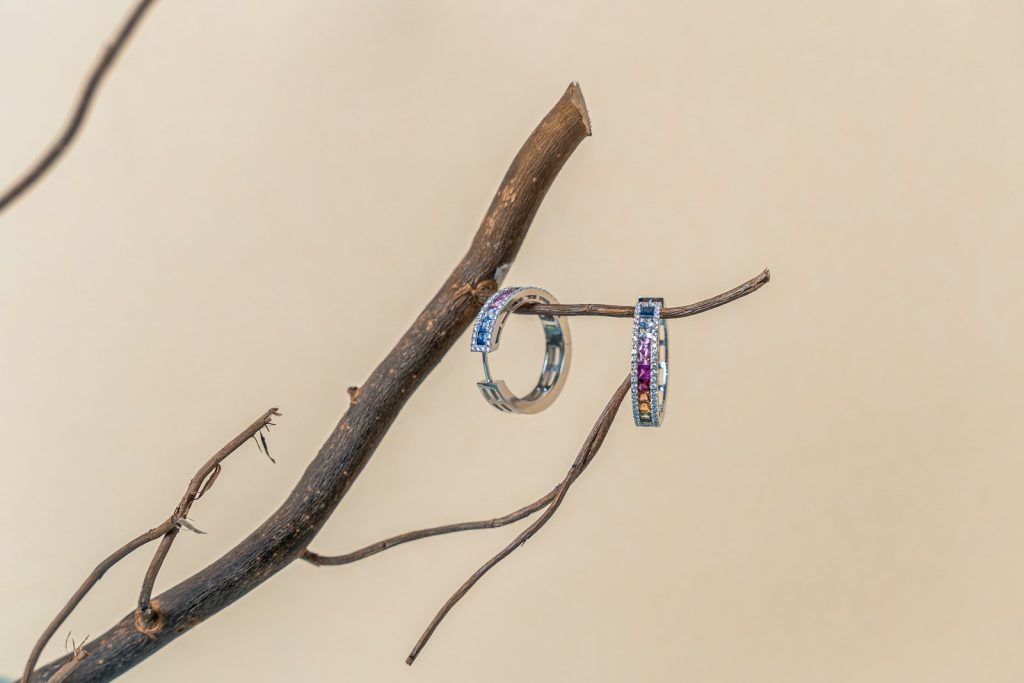
To start a silver jewelry brand you need two things in place early: a clear product concept and a reliable 925 sterling-silver manufacturing and export pipeline. This guide walks you through how we structure that pipeline from Celuk, Bali’s main silver village, so you can go from idea to first commercial shipment with realistic MOQs, costs and lead times.
What “starting a silver jewelry brand” really means
Stripped of the romance, starting a silver jewelry brand is a B2B and logistics exercise:
- Defining a focused offer (categories, price points, target buyer).
- Finding a silver jewelry brand manufacturer (or several) that can consistently hit your design, quality and cost requirements.
- Locking in OEM / private-label terms: MOQs, lead time, sampling process, branding and stamping rules.
- Setting up export, import, and fulfilment: HS codes, plating specs, packaging, and Incoterms.
As Celuk Silver Wholesale, my job is the sourcing desk between serious importers and vetted Celuk workshops. We do not own a single workshop; instead we band them by capability, MOQ and lead time, then match you to the right mix based on your business model.
Step 1: Sharpen your brand concept and product range
Before you ask for quotes, you need a narrow brief. “Start a silver jewelry brand” is too wide for a production desk; it leads to vague pricing and mismatched expectations.
Decide your main product categories
Typical Celuk 925 categories include:
- Rings (casting, wire-based, hand-carved, gemstone-set).
- Earrings (studs, hoops, drops, chandelier, ear cuffs).
- Necklaces and pendants (chains, pendants, lockets, nameplates).
- Bracelets and bangles (chain, cuff, torque, charm).
- Anklets and toe rings (niche but strong in some markets).
A focused private label jewelry startup usually starts with one or two categories and expands after the first 2–3 reorder cycles, once real sell-through data comes in.
Decide your price positioning and silver spec
Your retail price band drives your manufacturing approach:
- Lower-mid retail (e.g. USD 25–60 for rings) – simpler designs, lighter gram weights, partially machine-assisted production, limited handwork.
- Mid retail (e.g. USD 60–150 for rings) – more detail, thicker shanks, heavier chains, more hand-finishing, potentially semi-precious stones.
- Upper retail and atelier-level – high handwork, complex construction, custom stones, often lower MOQs but higher unit costs.
We work primarily with 925 sterling silver. Some Celuk workshops also offer:
- 950 silver for certain markets that prefer higher purity (softer metal, special design consideration).
- Gold vermeil / micron plating on 925 (different warranty expectations; you must state micron thickness in your specs).
Document your design intent at trade-desk level
For a sourcing desk used to launch jewelry brand sourcing projects, a useful brief includes:
- Sketches or reference photos (front, side, back where possible).
- Target ring sizes, chain lengths, and main dimensions (e.g. pendant height x width).
- Target metal color: bright white, antique/oxidized, or plated (gold/rose/black rhodium).
- Any stones: type, cut, approximate dimensions, setting style (bezel, prong, pave).
- Intended retail price bands for each SKU in your main markets.
This is what lets us estimate gram weights and propose a workshop band that makes sense for your margins.
Step 2: Choose your sourcing model (OEM vs private label)
Next, decide how “from scratch” you really want to go.
Option A: OEM from your own designs
OEM (Original Equipment Manufacturing) means you supply designs and control IP. Typical scenario:
- You provide 2D/3D files or detailed sketches.
- Workshop or external CAD team creates production files.
- Master model and molds (if casting) are made specifically for you.
Pros: Strong brand differentiation, better IP control, designs tuned to your audience. Cons: Higher upfront development cost and longer lead time to first shipment.
Option B: Private-label adaptation of existing lines
Private label jewelry startup brands often move faster by adapting existing Celuk lines:
- Select base models from a workshop’s catalog.
- Tweak finishes, stones, and dimensions.
- Apply your logo stamping and packaging.
Pros: Faster to market, lower sampling complexity, proven manufacturability. Cons: Less uniqueness; similar designs may appear in other markets.
Hybrid approach for first-timers
Many importers do a hybrid for the first season:
- 60–80% private-label adaptations to guarantee manufacturability and timelines.
- 20–40% OEM “hero pieces” that define the brand language.
Step 3: Understand Celuk workshop capability bands
Celuk is not a single factory. It is a village-scale manufacturing ecosystem ranging from small family ateliers to semi-industrial workshops. Capability, MOQ and lead time vary by workshop.
At Celuk Silver Wholesale, we group workshops into bands instead of pretending there is one universal MOQ or lead time.
| Band | Typical Profile | Strengths | Trade-Offs |
|---|---|---|---|
| Band A: Micro-atelier | 3–10 artisans, high handwork, limited casting in-house. | Complex handwork, filigree, low MOQs on SKUs, flexibility. | Longer lead times, limited throughput, higher unit cost on simpler pieces. |
| Band B: Mid-scale workshop | 10–40 artisans, in-house casting, polishing, basic stone setting. | Balanced cost/quality, stable capacity, good for brand cores. | Moderate design complexity; micro-adjustments require planning. |
| Band C: Higher-volume producer | 40+ workers, strong casting, multiple finishing lines. | Best for large repeat orders, basic to mid-complexity designs. | Higher initial MOQs, less flexible on micro-runs or frequent design changes. |
Which band we propose depends on your design complexity, target volume, and how fast you expect to scale.
Step 4: Sampling process and development timelines
No serious importer should skip sampling. Your sample process will define your production quality and identify misunderstandings early.
What a realistic sampling process looks like
- Technical briefing – We align on 3–15 SKUs for first sampling, with sketches/specs.
- CAD / model stage – Either your CAD or local CAD. For non-CAD sketches, expect iteration.
- Master sample production – Masters in 925 (or brass for some prototyping stages if agreed).
- Measured review – You review physical samples, measure dimensions, test comfort, compare to spec.
- Revision round (if needed) – Adjust thickness, stone size, ring band, etc.
Timing ranges (last verified June 2026)
- CAD + master model: roughly 10–21 working days after clear final brief.
- Sample refinement round: add 7–14 working days for changes that need new masters.
- Courier of samples: typically 3–10 days, depending on service and destination.
These are ranges, not commitments. Exact timing depends on workshop load, complexity and how quickly you respond to approvals.
Sampling costs and what they cover
Typical cost elements:
- CAD fees (per SKU or per hour, depending on design complexity).
- Master-making (metal, labor, finishing).
- Plating test runs if you want plated samples.
- Casting/molding if required for volume production later.
- Courier costs from Bali to your address.
Sampling is usually a sunk investment. Some workshops credit a portion back on first mass order, some do not. You should ask this explicitly.
Step 5: MOQ, assortment planning and pricing logic
This is the point where most private label jewelry startup founders discover if their plan is realistic on capital.
MOQ layers: per design, per variant, per order
Celuk workshop MOQs usually have several layers:
- Per SKU (design) – Minimal units to justify setup.
- Per variant – For example, ring sizes or stone colors.
- Per total order – Minimal cart to schedule a production run.
- Per-SKU MOQ range (last verified June 2026)
-
Micro-atelier: can sometimes start around low double-digit units per SKU for complex pieces; mid-scale and higher-volume workshops typically require higher,
especially for simple cast pieces. - Total order MOQ range
- Varies strongly by workshop band and mix of SKUs. Expect a starting point in the hundreds of units across styles for most export-oriented producers.
We do not publish a single MOQ number because it is inaccurate. Instead, once we have your SKU list (with approximate quantities per size/variant) we map it to real workshop data and state clearly what each workshop will or will not accept.
How pricing is actually formed
FOB Bali unit price for a 925 piece is driven by:
- Gram weight of silver and its current market price.
- Complexity of construction and finishing.
- Stone type and setting difficulty.
- Plating thickness and color, if any.
- Order quantity per SKU and per total order.
We quote in FOB (Free On Board) Bali terms or other Incoterms on request. You still need to factor freight, insurance, import duties and taxes into your landed cost.
Assortment planning for first-time importers
A common starting pattern for a new importer:
- 8–20 SKUs total in the first order.
- Core “evergreen” designs taking 60–70% of units.
- Seasonal or experimental designs taking 30–40% of units.
- Limited plating or stone variants until you see sell-through data.
We can help you rough-plan an assortment in a WhatsApp or video call if you share target retail prices and channel (online, boutique, marketplace, etc.). You can request a wholesale quote to Bali or a remote planning session; both can be arranged on WhatsApp for speed.
Step 6: Branding, stamping and compliance
This is where a “launch jewelry brand sourcing” project becomes a real brand, not just a generic shipment.
Brand stamping on 925 silver
Standard stamping options:
- Metal fineness – “925” or country-specific assay marks if required by your regulations.
- Brand mark – Usually a short text or logo snap suitable for a small punch.
- Country-of-origin – e.g. “INDONESIA” or “MADE IN INDONESIA” if you require it.
Stamping may affect MOQ and unit cost for some workshops; custom stamps must be produced and tested. On very small pieces, not all combinations are physically possible; sometimes we move the logo stamp to a tag (for necklaces/bracelets) instead of the main component.
Packaging and inserts
Options include:
- Bulk-packed in polybags for your own fulfillment center.
- Branded pouches, boxes, and backing cards co-packed at the workshop or at a separate packing partner.
- Care cards and barcode labels printed locally or provided by you.
Local packaging can reduce handling on your side but adds complexity and, sometimes, customs classification differences. You must confirm with your customs broker how jewelry with packaging will be treated in your HS code regime.
Regulatory and assay considerations
Key points you need to verify locally with your customs broker or legal counsel:
- If your destination market requires hallmarking or assay office stamps.
- Nickel and cadmium content standards (relevant if using specific plating systems).
- Labeling rules for “sterling silver,” “925,” or “silver-plated” claims.
We can provide composition declarations and plating specs from workshops, but you must confirm what is legally required in your country.
Step 7: First production order: planning, QC, and export
Once samples are approved and MOQs are agreed, you move to the first commercial run.
Lead time ranges
Lead times depend on band and season, but typical ranges (last verified June 2026) from deposit to ex-factory are:
- Simple, catalog-based private-label orders: roughly 3–5 weeks.
- Mixed OEM/private-label orders with several SKUs: around 4–8 weeks.
- Highly complex, handwork-heavy collections or peak seasons: can run longer and must be discussed per case.
These are estimates; we will confirm a realistic window from actual workshop capacity at the time of booking.
Quality control structure
Our basic export QC covers:
- Visual inspection for finishing defects (scratches, pits, incomplete polishing).
- Random sample dimensional checks against spec.
- Stamp presence and legibility check.
- Basic functional tests (clasps, hinges, solder joints where accessible).
- Pack count verification against packing list.
For importers with stricter standards, we can implement AQL-based sampling or third-party inspection at additional cost.
Export documentation and Incoterms
Standard export package includes:
- Commercial invoice.
- Packing list.
- HS code declaration based on your guidance (you should confirm the final code with your customs broker).
- Certificate of origin if required by your market or trade agreement.
Incoterms:
- FOB Bali is our standard: we handle local export clearance and deliver goods to your nominated carrier at the international gateway.
- Other terms (e.g. EXW, CIF) may be discussed depending on your freight strategy and volume.
Step 8: Freight, import, and first-mile fulfilment
How your jewelry leaves Bali and reaches you matters as much as who makes it.
Air vs sea vs courier
- Express courier – Fastest for small, high-value shipments; unit shipping cost is higher but often acceptable for first orders.
- Air freight – Good for medium shipments where you have a forwarder consolidating cargo.
- Sea freight – Suited to larger, repeat orders once your brand is established; requires more planning and buffer stock.
You should ask your freight partner for realistic transit times, current surcharges, and documentation needs for silver jewelry (HS codes under your jurisdiction).
Import duties and landed cost
Each market has its own tariff schedule. Typical steps on your side:
- Confirm HS code(s) with your customs broker.
- Obtain duty rate and any applicable VAT/GST or sales tax.
- Factor in broker fees, port charges and insurance.
Only after you know your landed cost can you confidently price your retail line and wholesale offers.
Step 9: Re-orders, scaling, and risk management
The goal is not just to launch a silver jewelry brand once, but to build a stable supply chain.
Re-order planning
Once you have sell-through data, we recommend:
- Separating fast-movers vs long-tail SKUs.
- Allocating higher quantities to proven designs while testing a small number of new items each season.
- Locking in approximate re-order windows with the workshop, especially for peak periods in your market.
Risk management basics
- Design risk – Do not over-invest in untested designs; keep first orders moderate per SKU.
- Workshop risk – Avoid single-point-of-failure on core SKUs if your volumes justify dual-sourcing.
- Currency / silver price risk – Understand that 925 costs move with global silver prices; allow margin for that.
- Regulatory risk – Keep an eye on any changes to import rules or labeling; your customs broker is your first reference.
Typical step-by-step path from idea to first shipment
| Step | Your key decision | What we handle from Celuk |
|---|---|---|
| 1. Concept | Choose categories, retail band, and brand positioning. | Advise what is realistic for Celuk’s strengths. |
| 2. Design brief | Provide sketches, references, and specs for 5–20 SKUs. | Match you to workshop band(s); flag complexity/cost drivers. |
| 3. Sampling | Approve CAD and physical samples; request revisions as needed. | Coordinate CAD, masters, test finishes, and shipment of samples. |
| 4. MOQ & pricing | Finalize quantities per SKU, per size/variant, and target order size. | Quote FOB pricing ranges based on real workshop offers. |
| 5. Branding | Confirm logo, stamping, packaging, and any inserts. | Arrange stamp production, validate physical feasibility. |
| 6. Production | Confirm PO, deposit, and ship window; prepare retail/marketing. | Oversee production, run QC, align documentation. |
| 7. Export & freight | Nominate forwarder or shipping method; prepare for import. | Deliver FOB Bali, provide export docs, coordinate with your forwarder. |
| 8. Re-order | Analyze sell-through, adjust assortment and quantities. | Refine workshop allocation, update lead times and pricing as needed. |
How Celuk Silver Wholesale fits into your launch plan
Our role as an independent Celuk 925 sterling-silver sourcing and export desk is to:
- Vet and band workshops by capability, MOQ and lead time using real production data.
- Match your brand concept with the right manufacturers instead of forcing a one-size-fits-all factory solution.
- Coordinate OEM and private-label development, sampling and QC.
- Manage export operations so you receive a clean, documented shipment ready for import.
We work directly with importers, distributors, and brand founders who are ready to treat this as a business: realistic capital, clear timelines, and a willingness to work through the sampling and optimization cycle.
If you want to map your specific concept to realistic Celuk production options, you can request a wholesale quote for a sourcing visit or set up a WhatsApp-based planning call. Both are normal starting points for new B2B relationships.
FAQs: Starting a silver jewelry brand with Celuk production
How much capital do I realistically need to start a silver jewelry brand using Celuk production?
It depends on your SKU count, design complexity, and MOQs, but most serious importers budgeting for OEM or private-label 925 ranges should be thinking in terms of a five-figure USD investment once you include sampling, first production, freight, and import costs. The exact figure only becomes clear once we define your SKU list and match it with specific workshop MOQs and unit price ranges.
Can I do very small MOQs for a private label jewelry startup, like 10 pieces per design?
Some micro-ateliers can work with very low per-SKU quantities on complex, high-value pieces, but total order size still needs to be viable, and unit costs will be higher. For simpler cast pieces, many export-focused workshops will require higher per-SKU quantities. The realistic answer depends on your exact designs and chosen workshop band; we will not promise a universal MOQ that does not exist in practice.
Can you guarantee a specific lead time and price for future orders?
No one can guarantee fixed lead times and prices indefinitely because both workshop capacity and global silver prices move. We can give you realistic ranges based on current data and lock in terms for a defined PO, but for future orders we always re-check with workshops and review metal price trends before confirming.
Do I keep the rights to my designs if you help coordinate OEM production?
For OEM projects based on your original designs, the working assumption is that design rights remain with you. We expect you to state this clearly in your documentation and contracts. For catalog-based private-label adaptations, base designs may remain in the workshop’s general offer while your specific branding and logo are exclusive to you.
Can you handle everything end-to-end so I just receive boxes ready for retail?
We can coordinate manufacturing, branding stamps, basic or branded packaging, QC, and export under agreed Incoterms. You still need to handle import clearance, local compliance, and final-mile fulfilment to your customers. If you share your preferred freight and brokerage setup, we will align our export process accordingly so the handover is as clean as possible.